Are LED Grow Lights Waterproof? IP Ratings Explained
Published 21 September 2026
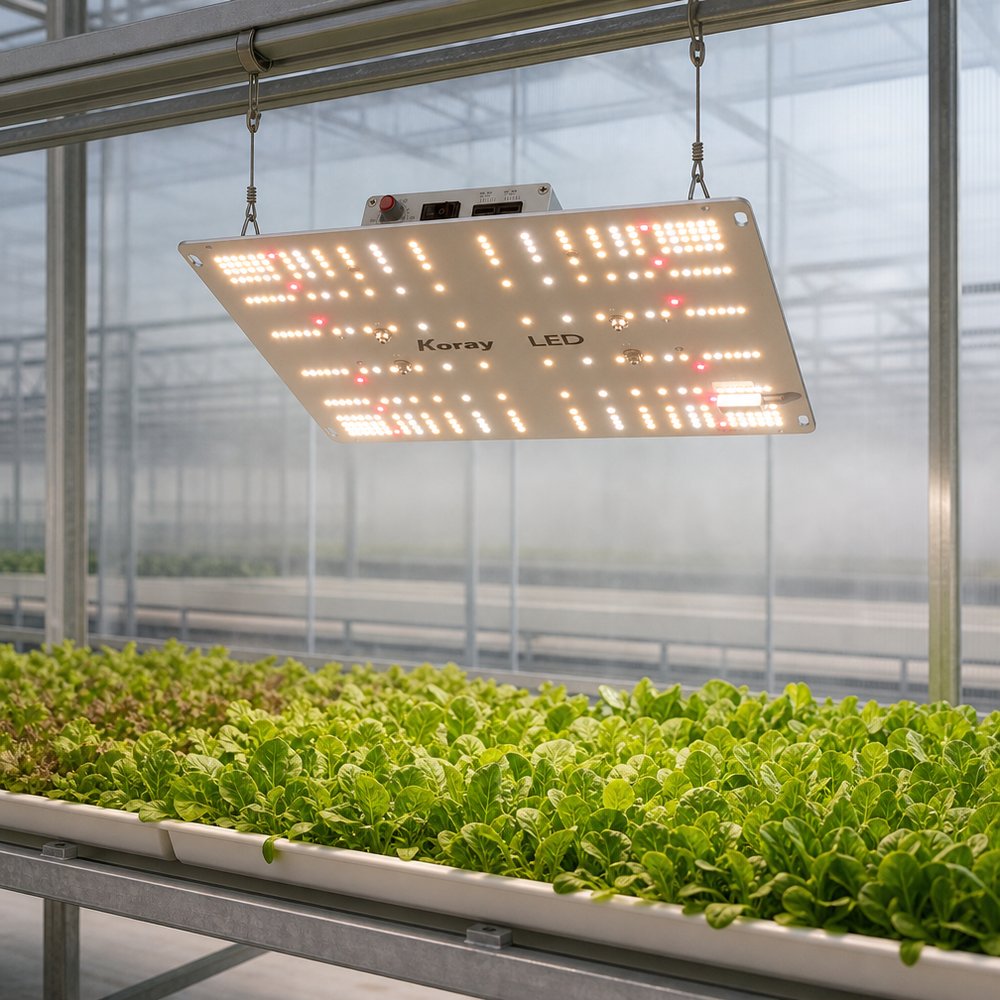
Most horticultural LED luminaires on the market are described as waterproof somewhere in the listing, but the word is a marketing term, not a specification. The number that can actually be tested is the IP code, and for a greenhouse bench, a propagation room or a grow tent that gets misted by hand, the gap between IP65 and IP66 is the difference between a fixture that lasts five years and one that fails in the second season.
What an IP rating actually measures
The IP code is defined by IEC 60529, first published in 1976 and maintained by IEC Technical Committee 70. It has two numerals. The first rates protection against solid objects and access to hazardous parts on a scale from 0 to 6, where 6 means dust-tight. The second rates protection against liquid on a scale from 0 to 9, where 9 covers high-pressure hot water from different angles. The standard also defines the test that must be performed to claim each level, which is why a rating can be verified but a marketing claim cannot (IEC, IP ratings).
Intertek, which performs these tests on lighting products, publishes the same two-digit scale for lighting specifically: the first digit runs from objects larger than 50 mm (IP1x) to dust-tight (IP6x), and the second from vertically dripping water (IPx1) through sprayed and splashed water (IPx3, IPx4) and water jets (IPx5, IPx6) to temporary and continuous immersion (IPx7, IPx8) (Intertek, IP testing per IEC 60529).
One detail matters more than the table itself: the water levels above IPx6 are independent tests rather than cumulative steps. A fixture that passes immersion testing for IPx7 is not automatically resistant to water jets, and a product tested for both is normally printed as IPx5/IPx7. Water resistance and jet resistance are different questions, and a grow room only asks the jet question.
IP65, IP66, IP67 and IP68 side by side
| Rating | Solid protection | Water test | Water exposure it covers | Typical grow-room duty |
|---|---|---|---|---|
| IP54 | Dust protected | Splashing water from any direction, 10 minutes | Splash, no direct jets | Dry grow tent, hand watering, no overhead misting |
| IP65 | Dust tight | Water jets, 6.3 mm nozzle, 12.5 L/min at 30 kPa from 3 m, at least 3 minutes | Directed low-pressure jets, condensation drip | Greenhouse bench with fogging or overhead irrigation |
| IP66 | Dust tight | Powerful water jets, 12.5 mm nozzle, 100 L/min at 100 kPa from 3 m, at least 3 minutes | Heavy spray, hose-down of the whole room | Propagation house, bench wash-down between crops |
| IP67 | Dust tight | Immersion, 30 minutes, lowest point 1,000 mm below the surface | Short-term flooding of a low-hung fixture | Ebb-and-flow and flood trays, low-hung racks |
| IP68 | Dust tight | Continuous immersion, depth and duration agreed with the manufacturer | Permanent submersion | Floating rafts and reservoir-mounted hardware |
The numbers show why the choice is not arbitrary. Moving from IP65 to IP66 does not add a category of protection so much as multiply the flow of water the enclosure survives: 12.5 litres per minute becomes 100 litres per minute, at more than three times the pressure. If a room is cleaned with a hose rather than a watering can, IP65 is the wrong specification even though both ratings are printed as "water jet protected".
Where water actually gets into a grow light
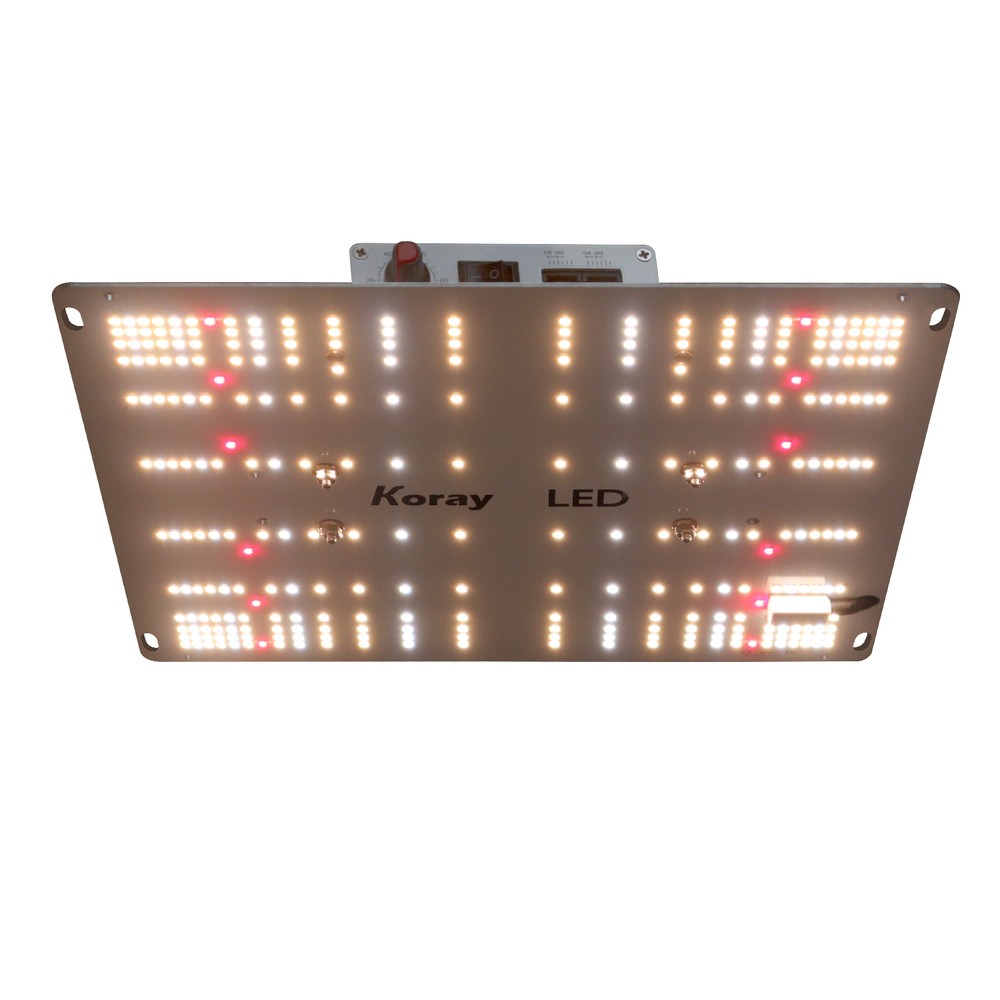
Water almost never enters through the LED board. In fixtures returned from service, the failure points are predictable:
- Cable entry and glands. The gland is often rated lower than the housing, so a light marked IP66 can leak at the point where the cable leaves the body.
- The driver compartment. Drivers generate heat and are frequently ventilated, which defeats an otherwise sealed enclosure unless the driver is potted or mounted remotely.
- The lens gasket. Compression seals relax with thermal cycling. A silicone gasket that is correct on day one can lose compression after two years of 12-hour on/off cycles.
- Condensation, not ingress. A sealed fixture that is warmed during the photoperiod and cooled during the dark period can pull moisture from humid air through a marginal seal. A fixture with a proper breather membrane handles this; a fully potted one avoids it.
This is why the rating has to be quoted for the complete luminaire, with its driver and connectors, rather than for the light engine on its own.
Matching the rating to the room
A practical sequence is to work backwards from the wettest event the fixture will ever see, not from the average humidity:
- Watering can or drip only, no overhead water: IP54 as a floor, IP65 preferred.
- Overhead misting, fogging or spray: IP65 minimum across the whole luminaire.
- Hose-down of benches and walls between crops: IP66, and check the connectors.
- Flooded trays, low-hung racks or drain surges that can reach the fixture: IP67.
- Anywhere fertiliser salts, acid or chlorine-based sanitisers are sprayed: add corrosion resistance, which in North America usually means NEMA Type 4X on top of the IP rating. NEMA ratings are defined in NEMA 250 and include requirements that IEC 60529 does not test (NEMA, Enclosure Types).
How to check a waterproof claim before you buy
- Ask which level was tested, not whether the product is waterproof. "IP65" is a specification; "waterproof" is not.
- Ask for the ingress protection test report, and confirm that it covers the driver, cable entry and connectors as supplied.
- Confirm the safety listing separately. A European or Chinese IP test does not replace a North American wet-location listing, and the two are checked by different inspectors.
- Check the gasket material. Silicone tolerates temperature cycling better than a generic sponge seal, and the seal is the part that ages first.
- For greenhouse use, ask how the luminaire dissipates heat with the seal in place. If the answer is a separate driver, that is usually a good sign.
About the publisher
XineLam is the export brand of Zhongshan Koray Opto-Electronic Co., Ltd., an LED lighting manufacturer with 17 years of experience in horticultural and architectural lighting and 300+ patents in China and internationally. The company builds quantum-board and multi-bar grow luminaires for greenhouses, propagation rooms and vertical farms, including sealed models intended for wash-down environments.
Frequently asked questions
Are LED grow lights safe in a humid greenhouse?
A fixture rated IP65 or better is normally sufficient for a greenhouse with normal transpiration and misting, because IP65 covers dust protection plus water jets from any direction. What usually fails first is not the LED board but the driver compartment, the cable entry and the lens gasket, so the rating has to be stated for the complete luminaire rather than for the board alone.
Can I hose down a grow light rated IP65?
IPX5 and IPX6 are both jet tests, but IPX6 uses a much larger nozzle and roughly eight times the flow: 12.5 litres per minute at 30 kPa for IPX5, against 100 litres per minute at 100 kPa for IPX6. An IP65 fixture tolerates light splash and gentle rinsing, not a pressure washer or a direct end-of-bench hose-down. For that duty specify IP66 or higher, and check that the connectors and cable glands carry the same rating.
Does a higher IP rating reduce light output or efficiency?
The LED junction is sealed behind the lens either way, so the rating itself does not change photons per watt. What changes is thermal design: a fully sealed housing holds heat in, so a high-output IP66 or IP67 luminaire needs a larger heat sink or a separated driver to keep the same efficiency, and placing the driver outside the wet zone is often the cheaper engineering answer.
Is IP65 enough for an ebb-and-flow or flooded tray system?
Not usually. IP65 covers jets, not immersion, so a fixture hung low enough to be caught by a fill or drain surge should be rated IP67, which is tested by immersing the enclosure for 30 minutes with the lowest point 1,000 mm below the surface. In practice many growers solve the same problem by raising the fixture beyond the flood level instead.
Do I need a NEMA rating as well as an IP rating?
In North America an inspector may ask for both. NEMA ratings are defined in NEMA 250 and add requirements that IEC 60529 does not test, such as resistance to icing and corrosion; Type 4X is the common choice where wash-down water and fertiliser salts are both present. The two systems are not directly interchangeable, so a fixture sold as IP66 is not automatically NEMA 4X.
References
- International Electrotechnical Commission. Ingress Protection (IP) ratings.
- Intertek. IP Testing - Ingress Protection per IEC 60529.
- National Electrical Manufacturers Association. NEMA Enclosure Types.