Which Light Is Best for Seedlings and Cuttings? A Propagation Lighting Guide
Propagation is the stage where a lighting decision has the longest downstream effect. Light during germination, rooting and plug production shapes stem length, leaf size and how quickly a crop reaches transplant. This guide sets out the criteria that matter, compares the light source options still in use, and explains how to approach photoperiod and distance without guessing.
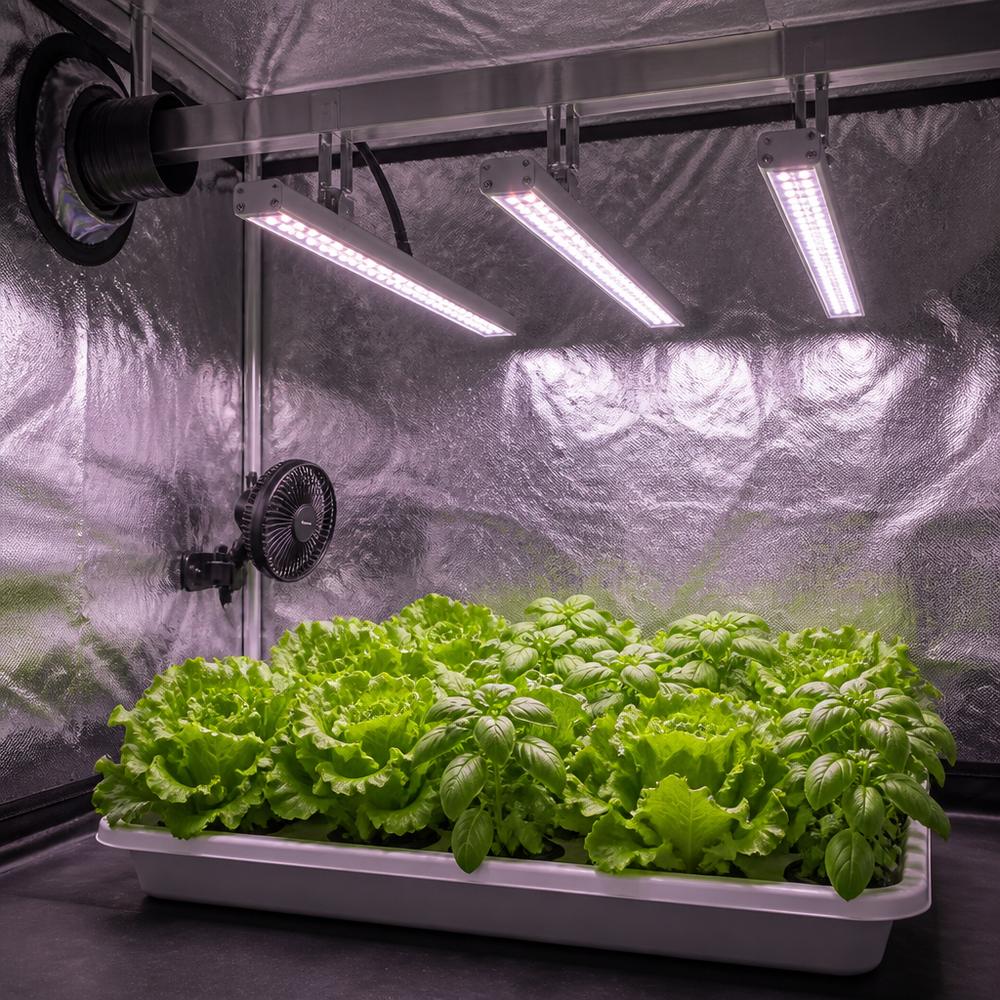
Why propagation is a separate lighting decision
Light is essential for plant growth, and supplying the right type in sufficient amounts is critical to producing healthy seedlings. Ideally, sufficient natural lighting is available for germinating seeds, which carries several advantages: the plants become acclimated to full solar exposure, natural light provides the complete spectrum needed for growth, and it costs nothing.
That ideal is not always available. When seed is started early in the season, or when greenhouses are not available for transplant production, artificial lighting has to be used. Michigan State University Extension sets out the selection criteria plainly: when choosing a light source, consider the cost of the equipment, the light spectrum, the electrical requirements, the heat output and the coverage.
Comparing the light source options
The four source types still found on propagation benches differ in ways that matter more at this stage than at finishing, because young plants sit close to the fixture and are sensitive to both light and heat.
| Source | Typical rating | Spectrum character | Heat output | Practical mounting |
|---|---|---|---|---|
| Fluorescent (T5 / T8) | Tube diameter designated T5 (five-eighths inch) and T8 (one inch); the most commonly used sizes | Available from 2700K (warm white) to 8000K (cooler white) | Minimal heat | Needs to sit relatively close to the seedlings for maximum effect |
| Metal halide (MH) | Typically from 250 W, exceeding 1000 W for commercial horticultural use | More blue and green light | Much more heat than fluorescent | Can be positioned further away, giving greater coverage per bulb |
| High-pressure sodium (HPS) | Typically from 250 W, exceeding 1000 W for commercial horticultural use | More red and orange light | Much more heat than fluorescent | Can be positioned further away, giving greater coverage per bulb |
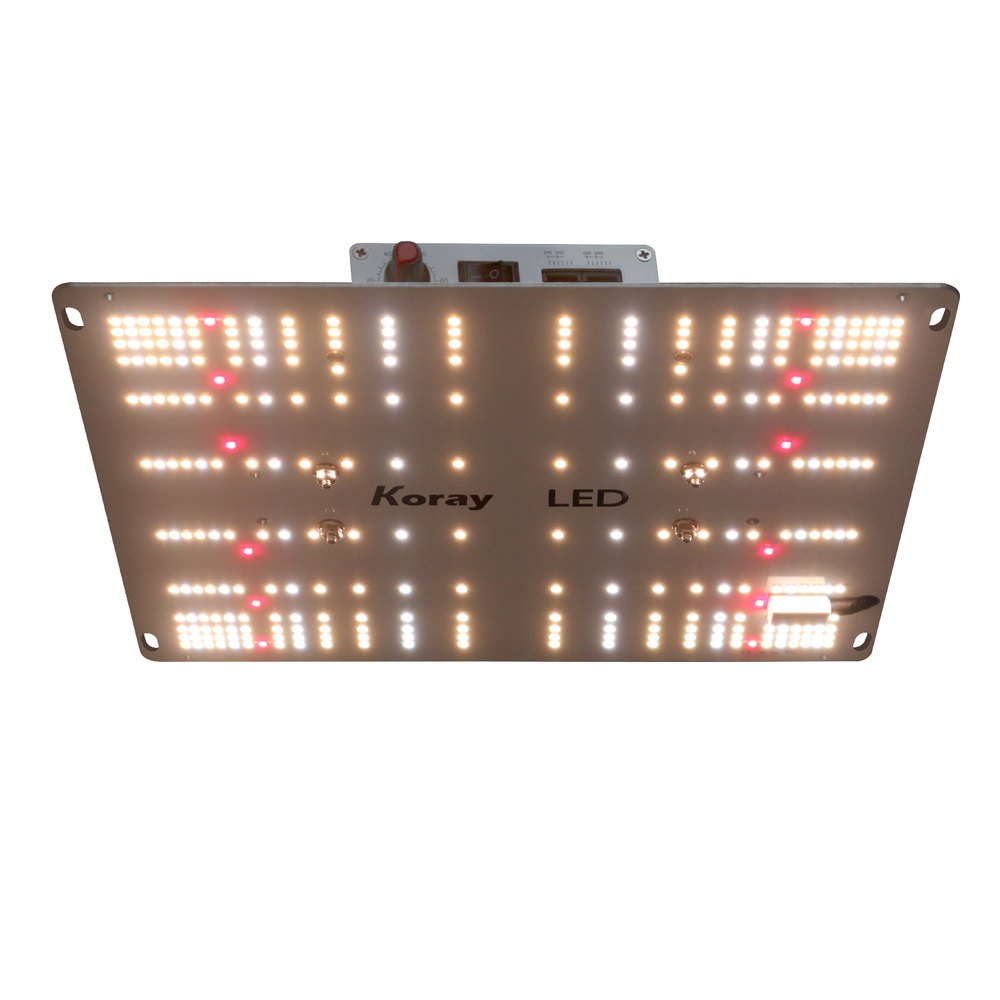
| LED | Fixture-dependent; higher upfront cost than fluorescent | Wide spectrum available | Little electricity for the light delivered; long operating life | Fixture-dependent, which is why measuring at the canopy matters |
Source: Thompson, Michigan State University Extension, “Transplant production: Light considerations” (2017). MH and HPS fixtures require a ballast matched to the bulb wattage.
Photoperiod during propagation
Propagation photoperiod is usually discussed in terms of supplemental lighting rather than a simple hours figure. Michigan State University's plug-production work compares continuous 16-hour supplemental lighting with instantaneous threshold supplemental lighting from high-pressure sodium lamps and LEDs, and treats both as variables that influence plug quality and the flowering that follows.
For rooted cuttings the controlling variable is arguably the daily light integral rather than the instantaneous intensity, because what the cutting accumulates over the day is what drives rooting and establishment. That is a different way of specifying the same fixture, and it is worth choosing deliberately rather than by habit.
Distance, intensity and heat
Source type largely determines how close the fixture has to sit. Fluorescent bulbs put out minimal heat, which is important because they need to be relatively close to growing seedlings for maximum effect. Metal halide and high-pressure sodium fixtures put out much more heat, but they provide more usable light than fluorescent and can be situated further away, which gives greater coverage per bulb.
The practical consequence is that the three quantities trade against each other. A bench can be under-lit while running too warm, or brightly lit with leaves that never reach a useful temperature. Distance changes intensity, but it does not change heat in the same proportion, so the two have to be checked separately rather than assumed to move together.
A selection checklist
Work through this list whenever a propagation area is set up or re-lit.
- Start by using natural light where it is available and adequate; it is free and provides the complete spectrum.
- Evaluate the five criteria in order: equipment cost, spectrum, electrical requirement, heat output and coverage.
- Decide proximity before buying. Fluorescent fixtures must sit close, while MH and HPS can be further away and cover more per bulb.
- Choose the spectrum deliberately. On a multi-bulb fluorescent fixture, growers commonly run bulbs at opposite ends of the colour range, for example a 2700K tube beside a 6500K tube, to widen the spectrum.
- Set the photoperiod as a decision, not a default. Continuous 16-hour supplemental lighting is one documented approach for plug production; if cuttings are being rooted, manage the daily light integral instead.
- Re-check when the crop leaves propagation. Finishing requirements differ from rooting requirements, and the fixture that suited the bench may not suit the bench's next occupant.
Frequently asked questions
Do seedlings need a grow light?
Not necessarily. Sufficient natural light is the preferred option for germinating seed, because plants raised under it are already acclimated to full solar exposure and receive the complete spectrum at no cost. Artificial lighting becomes necessary when seed is started early in the season or when greenhouse space is not available.
How long should propagation lights be on?
There is no single answer that fits every crop, so the honest approach is to choose a documented method and then measure the response. Michigan State University's plug-production work compares continuous 16-hour supplemental lighting with instantaneous threshold supplemental lighting provided by HPS lamps and LEDs, and reports that the choice affects both plug quality and subsequent flowering. For rooted cuttings, the daily light integral is the variable to manage.
Are LED grow lights suitable for propagation?
Yes. LED fixtures are described as the most modern addition to horticultural lighting: they cost more upfront than fluorescent fixtures but use very little electricity, can provide a wide spectrum and have a long operating life. MSU research has examined propagating perennial cuttings under sole-source LEDs, which is the most demanding propagation case because there is no daylight contribution at all.
How far should propagation lights be from seedlings?
It depends on the fixture, which is why a fixed distance rule is unreliable. Fluorescent fixtures emit minimal heat and need to be relatively close to the seedlings for maximum effect, while MH and HPS fixtures emit much more heat but deliver more usable light from further away. Measure the intensity at canopy height and adjust the height from that reading instead of copying a number from another bench.
Do fluorescent lights still make sense for seedlings?
For small operations they often do. Fluorescent fixtures are usually the least expensive and most readily available option, they come in a range of sizes and configurations, and they put out minimal heat, which suits a bench that has to sit close to the plants. The trade-off is that a fixture with a fixed spectrum and limited output per tube has to be placed close, so coverage per fixture is smaller than with MH or HPS.
About the publisher
XineLam designs and manufactures LED grow lights and horticultural lighting for controlled-environment agriculture. The company has 17 years of experience in the LED lighting industry and holds 300+ patents in China and internationally. This article is published as neutral technical guidance; product guidance is limited to the applicable scenarios discussed above.
Sources and further reading
External sources referenced in this article:
- Thompson, C. (2017). “Transplant production: Light considerations.” Michigan State University Extension. https://www.canr.msu.edu/news/transplant_production_light_considerations
- Hurt, A., & Lopez, R. (2017). “Producing High Quality Plugs Part 2.” Michigan State University Extension. https://www.canr.msu.edu/resources/producing-high-quality-plugs-part-2
- Lopez, R. (2017). “LEDs for Propagation?” Michigan State University Extension. https://www.canr.msu.edu/resources/leds-for-propagation
- “Rooting Herb Cuttings: Why Daily Light Integral Matters.” Michigan State University Extension (2020). https://www.canr.msu.edu/resources/rooting-herb-cuttings-why-dli-matters