Can a Short Light Break at Night Replace a Long Photoperiod?
For a short-day crop the grower has two ways to stop flowering: extend the day at both ends, or interrupt the middle of the night. The second approach can use a fraction of the energy, and it is one of the few places in horticultural lighting where a very dim source is deliberately the point. The trade-off is that the effect is non-linear, and measured data shows that going brighter can reverse the result.
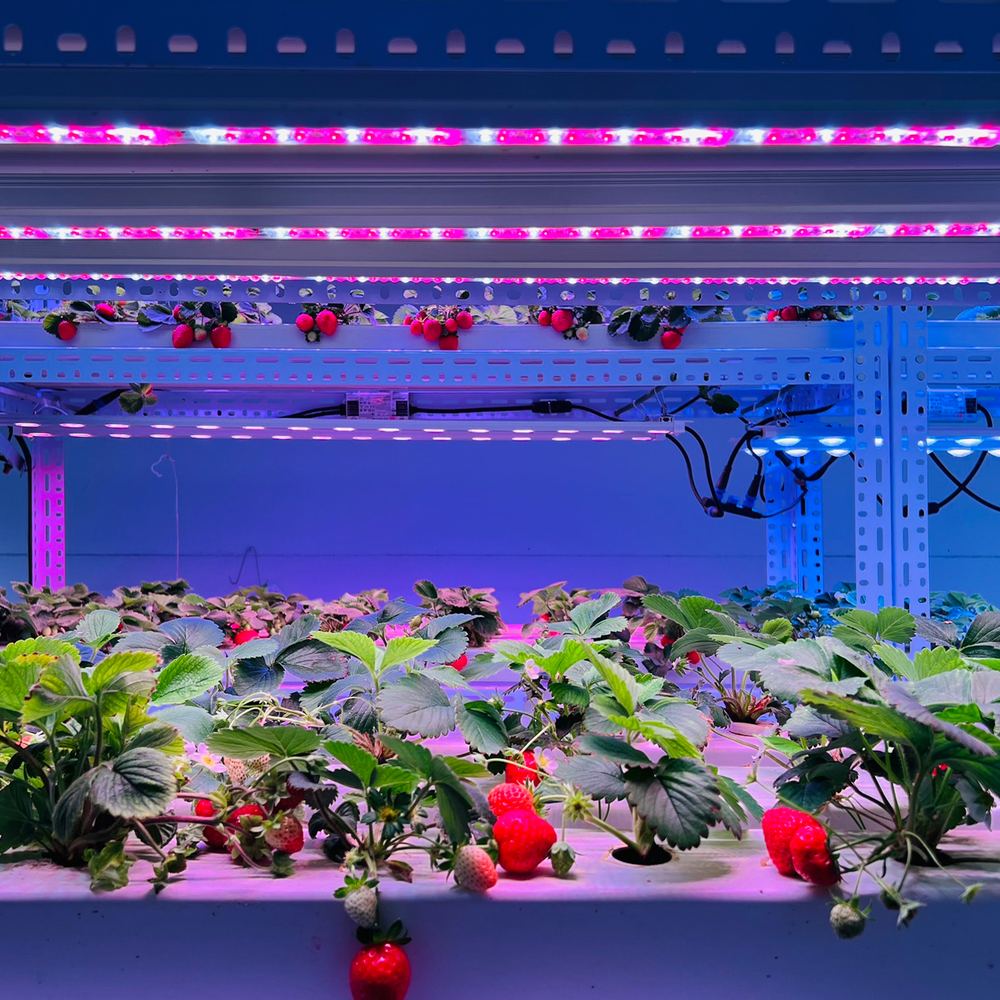
What a night break actually does
Photoperiodism is measured in uninterrupted darkness, not in hours of light. In a short-day plant, flowering is induced when the night exceeds a critical length; break that night into two shorter dark periods with a brief exposure and the plant reads the night as short. This is why a night break works at intensities far below those needed for photosynthesis.
The signal is perceived in the leaves and transmitted. Phytochromes switch between a red-absorbing and a far-red-absorbing form, and their balance at the end of the dark period is what the plant interprets. Cryptochromes add a second channel sensitive to blue light. The result is a change in the expression of florigen and anti-florigen genes, which is why the same interruption can promote flowering in one background and inhibit it in another.
Chrysanthemum is the standard test case because it is an obligate short-day plant: flower buds are induced when the night reaches roughly 12 hours or more, with cultivar-level variation around that threshold.
What the chrysanthemum trial measured
A 2022 study grew chrysanthemum under two background daylengths, a 10-hour short day and a 13-hour long day, with white LED light at 300 micromoles per square metre per second. On top of that it applied four hours of blue light either as day extension or as a night interruption, at 0, 10, 20, 30 or 40 micromoles per square metre per second. Plants were assessed after 60 days.
The results are more nuanced than the usual "night break stops flowering" summary:
- Under the 10-hour short day, flowering occurred earliest, as expected for an obligate short-day plant.
- Flowering response to interruption intensity was progressive from 10 to 30 micromoles per square metre per second, then inhibited at 40 micromoles, regardless of the background photoperiod.
- Under short days, the same intensity of supplemental or night-interruptional blue light did not significantly change flowering, whereas under long days differential inhibition appeared.
- At 30 micromoles, floral meristem identity and florigen gene expression were up-regulated along with chlorophyll content, photosynthetic efficiency and carbohydrate accumulation. At 40 micromoles the same physiological traits rose but florigen and anti-florigen expression became unbalanced.
The practical reading: intensity is a variable with an optimum, not a switch. A night break that is too weak does nothing, and one that is too strong can push the plant back the other way.
| Method | Typical duration | Tested intensity | Primary mechanism | Main risk |
|---|---|---|---|---|
| Day extension at both ends | Several hours | Photosynthetic levels, hundreds of micromoles | Adds light integral as well as photoperiod signal | Energy cost, and heat load during an already warm period |
| Night interruption, single block | 4 hours in the cited trial, shorter in practice | 10 to 30 micromoles per square metre per second | Breaks the dark period; phytochrome and cryptochrome signalling | Non-monotonic response; over-lighting can reverse the effect |
| Cyclic or intermittent interruption | Repeated short blocks | Low, as above | Repeats the dark-break signal with lower total energy | Control complexity; uneven coverage between cycles |
| Unintended stray light | Uncontrolled | Very low | Acts as an accidental night break | Silently cancels a scheduling programme |
Why intensity is not monotonic
Two systems run in parallel. The photoreceptor system reads the spectrum and its timing; the photosynthetic system supplies the carbon that flowering consumes. Increasing interruption intensity feeds both, which is why flowering improved up to 30 micromoles and why the same traits continued to improve at 40 micromoles while the gene balance broke down. The plant was not short of carbon at 40 micromoles; the signal had overshot.
A second paper on night-interrupting blue light in chrysanthemum reported flowering under a 13-hour day with a four-hour blue supplement and under the equivalent night interruption, with the highest cryptochrome 1, phytochrome A and phytochrome B expression in those treatments. That is consistent with the same conclusion: the interruption works through photoreceptor signalling at low fluence, not by adding growth light.
Control-gear rules that actually decide the outcome
- Put the break in the middle of the dark period, not at its edge. An interruption close to dawn merges into day extension and stops being a night break.
- Size for uniformity, not for output. Because the target is 10 to 30 micromoles per square metre per second, the engineering problem is even coverage across the canopy at very low output, which favours many small sources or wide-distribution optics over a few powerful fixtures.
- Dim, do not switch heavy loads. A 0 to 10 volt or PWM dimming interface lets one luminaire family serve both the main photoperiod and the night break; the alternative is a separate low-power circuit.
- Treat timers and contactors as safety-critical. A missed night break can trigger flowering in a crop scheduled to stay vegetative; the cost of that failure dwarfs the cost of the control hardware.
- Audit the dark period. Walk the house at night with the working lights off. Indicator LEDs, unshielded task lighting, and light leaking through doors all deliver a photoperiodic signal.
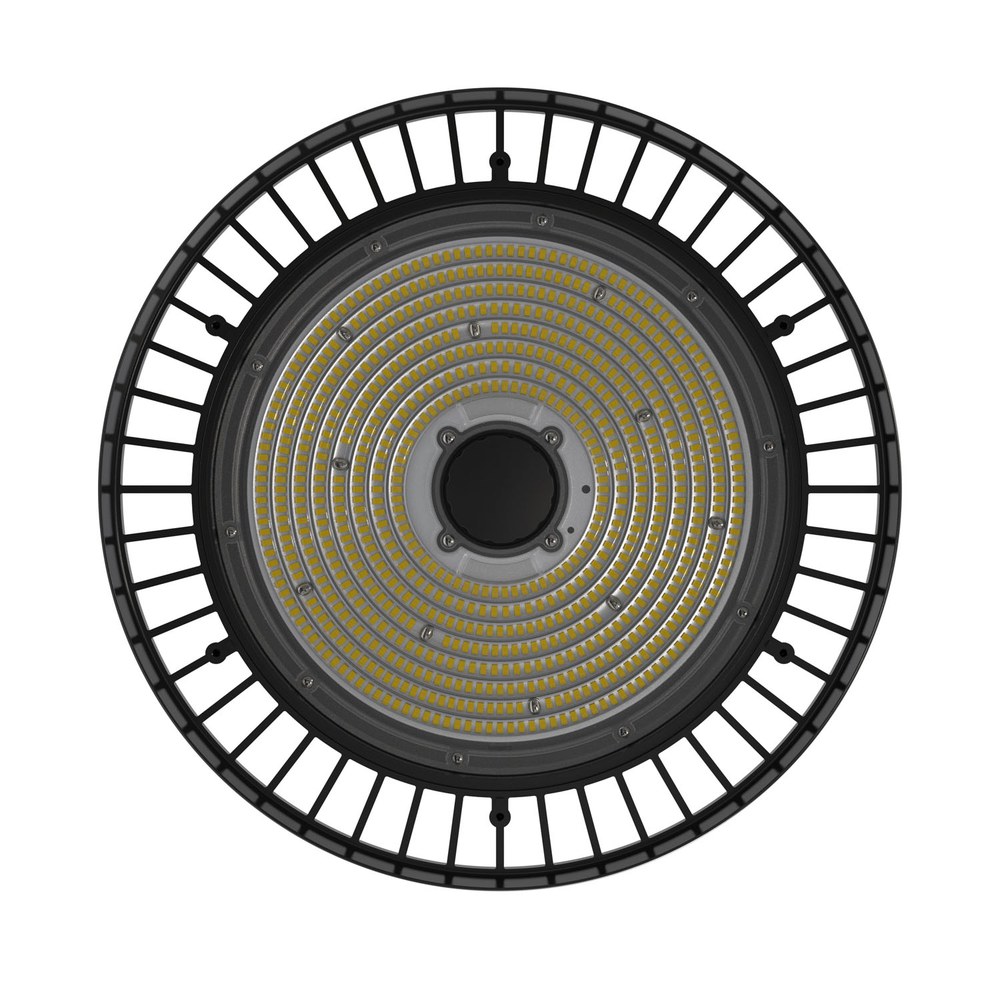
A luminaire of this class is normally dimmed for photoperiod work rather than run at full output. Where a single fixture family must cover both a high-fluence vegetative period and a low-fluence night break, the dimming range and the low-end stability of the driver matter more than the peak efficacy figure on the datasheet.
Four mistakes that show up in commissioning
- Assuming a night break replaces the light integral. It replaces the photoperiod signal. If the crop is also light-limited, the interruption does not fix that.
- Using the same intensity for every cultivar. The threshold and the direction of the response are cultivar-dependent; the trial itself found the effect differs between short and long background days.
- Specifying a night break without specifying the dark period. The control that matters is the ability to keep the night dark, not only the ability to switch a lamp on.
- Ignoring the spectrum of the "off" state. Dim indicator lights and standby glow are enough to act as a continuous weak interruption in sensitive crops.
Frequently asked questions
How long does a night break need to be?
The published chrysanthemum work used four hours per night, which is a research protocol rather than a cost-optimised schedule. What matters is that the dark period is broken, so a shorter block placed near the middle of the night follows the same principle. Test a shorter window on your own cultivar before committing a crop to it.
How bright does a night break need to be?
Low. In the trial the interruption was applied at 10, 20, 30 and 40 micromoles per square metre per second against a 300 micromole background, roughly 3 to 13 percent of the daytime level. Flowering was progressively promoted from 10 to 30 micromoles and inhibited again at 40, so more light was not better.
Does a night break work for every short-day crop?
No. The response depends on species, cultivar and whether the plant is an obligate or facultative short-day type. In the trial, the same interruption that inhibited flowering under long days had no significant effect under short days, so the background daylength is part of the treatment.
Is red or blue light better for a night break?
Both can work through different receptors. Red is the classic night-break wavelength because phytochrome is the photoperiodic switch, and a following far-red exposure can reverse a red break. Blue acts through cryptochromes and was effective at very low intensity in the chrysanthemum trials. In practice, choose whatever gives uniform low-level coverage for the least installed power.
What breaks a night-break schedule in a real greenhouse?
Stray light and control failure. One unshielded lamp, a security light or a maintenance head torch can deliver the same signal as an intentional break. Timer and contactor reliability, and a genuinely dark night, matter more than the last few percent of fixture efficiency.
Sources
Yang, J., Song, J., and Jeong, B. R. (2022). The flowering of SDP chrysanthemum in response to intensity of supplemental or night-interruptional blue light is modulated by both photosynthetic carbon assimilation and photoreceptor-mediated regulation. Frontiers in Plant Science 13:981143. PMC9523439
How Supplementary or Night-Interrupting Low-Intensity Blue Light Affects the Flower Formation, Gene Expression, and Morphogenesis of Chrysanthemum. Plants 9(12):1694 (2020). PMC7761529
About the publisher
XineLam is an LED lighting manufacturer with 17 years of experience and 300+ patents in China and internationally. The company produces horticultural LED luminaires and architectural LED lighting, including dimmable cultivation fixtures and multi-tier grow bars. Photoperiod scheduling is treated here as a control and uniformity problem, because at night-break intensities the distribution of light across the canopy decides whether the treatment works.