Do Seeds Need Light to Germinate? Light, Darkness and Phytochrome Explained
The short answer is: for most crop species, no. A seed carries its own energy reserve and germinates when moisture, temperature and oxygen are right, with or without light. But the answer is species-specific, because a pigment inside the seed — phytochrome — lets some seeds read the light environment before they commit to growing. Lettuce is the classic example of a seed that will not germinate well in the dark, while a few weed species are the opposite: light stops them.
The short answer
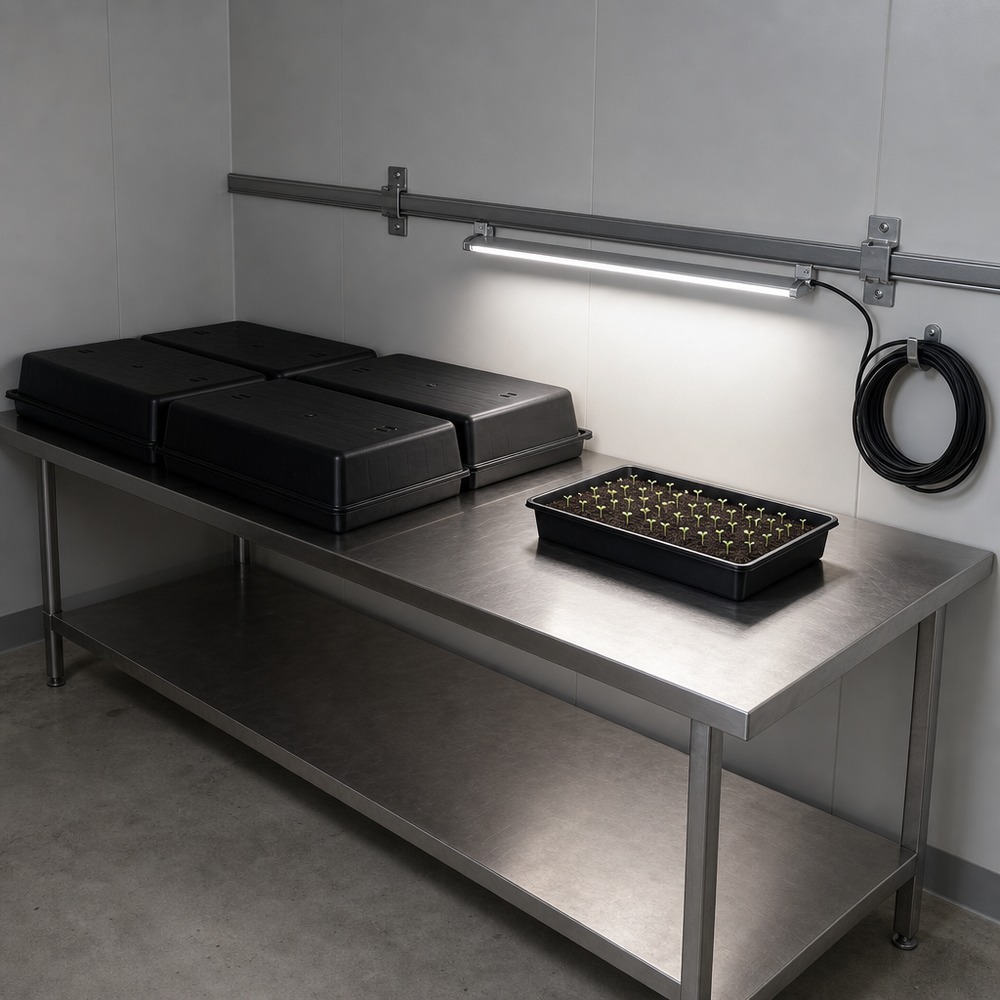
Germination is triggered by water uptake, a suitable temperature range and oxygen, not by light in the great majority of field and greenhouse crops. Tomato, pepper, cucumber, maize, wheat and most legumes germinate reliably in complete darkness, which is why commercial growers at a large scale germinate seed in dark chambers to keep trays compact and reduce moisture loss from the surface.
Light becomes decisive for two smaller groups of species: seeds that germinate poorly or not at all in darkness (positive photoblastic), and seeds whose germination is suppressed by light (negative photoblastic). The behaviour is not an opinion about good practice; it is the output of a light-sensing system built into the seed.
How a seed reads light: phytochrome and the Pfr form
Seeds of light-responsive species use phytochrome, a protein photoreceptor that exists in two interconvertible forms. Absorbing red light around 660 nm converts the inactive Pr form into the active Pfr form; absorbing far-red light around 730 nm converts it back. Because daylight is rich in red relative to far-red, a seed at or near the surface accumulates Pfr and, in light-requiring species, that is the signal to germinate. A seed buried under a leaf canopy receives relatively more far-red, the Pfr fraction falls, and germination is held back.
Phytochrome signalling in germination is well characterised in the model plant Arabidopsis thaliana, where phytochrome A mediates germination promotion under very low fluence rates and under canopy shade light, and phytochrome B contributes under higher fluence rates. The photoreceptor system is broadly conserved across seed plants, which is why the same red / far-red logic explains light-requiring lettuce and light-inhibited weeds.
Three germination categories and how to sow them
| Category | Response to light | Documented examples | Sowing practice |
|---|---|---|---|
| Light-promoted (positive photoblastic) | Germination is promoted by light; in darkness germination is slow, uneven or fails | Lettuce (Lactuca sativa) is the classic case | Surface-sow and press into the medium; do not bury. A short exposure to low-intensity light is enough — strong light is not required and dries the surface. |
| Light-inhibited (negative photoblastic) | Germination is reduced or prevented by light; darkness promotes it | Brassica tournefortii (Saharan mustard) is a documented example | Cover the seed with 3–5 mm of medium, or germinate in a dark chamber, and minimise disturbance after sowing. |
| Light-neutral | Germinates in light or darkness; light is not the limiting factor | Most cereals, pulses, tomato, pepper and cucurbits | Standard sowing depth of roughly 5–10 mm; manage moisture and temperature, not light. |
A practical consequence: the same tray rack cannot be treated as one environment. If you run light-requiring and light-inhibited species side by side, the former belongs on the surface under a low light level and the latter under a blackout dome or in a dark trolley.
What this means for your grow light schedule
For light-neutral crops, keeping a high-output LED on during imbibition buys nothing. Germination in those species is driven by substrate temperature and moisture, and a light that warms and dries the surface can make results worse, not better. The economically sensible sequence is to keep the room dark and humid through germination, then switch on the fixture at emergence.
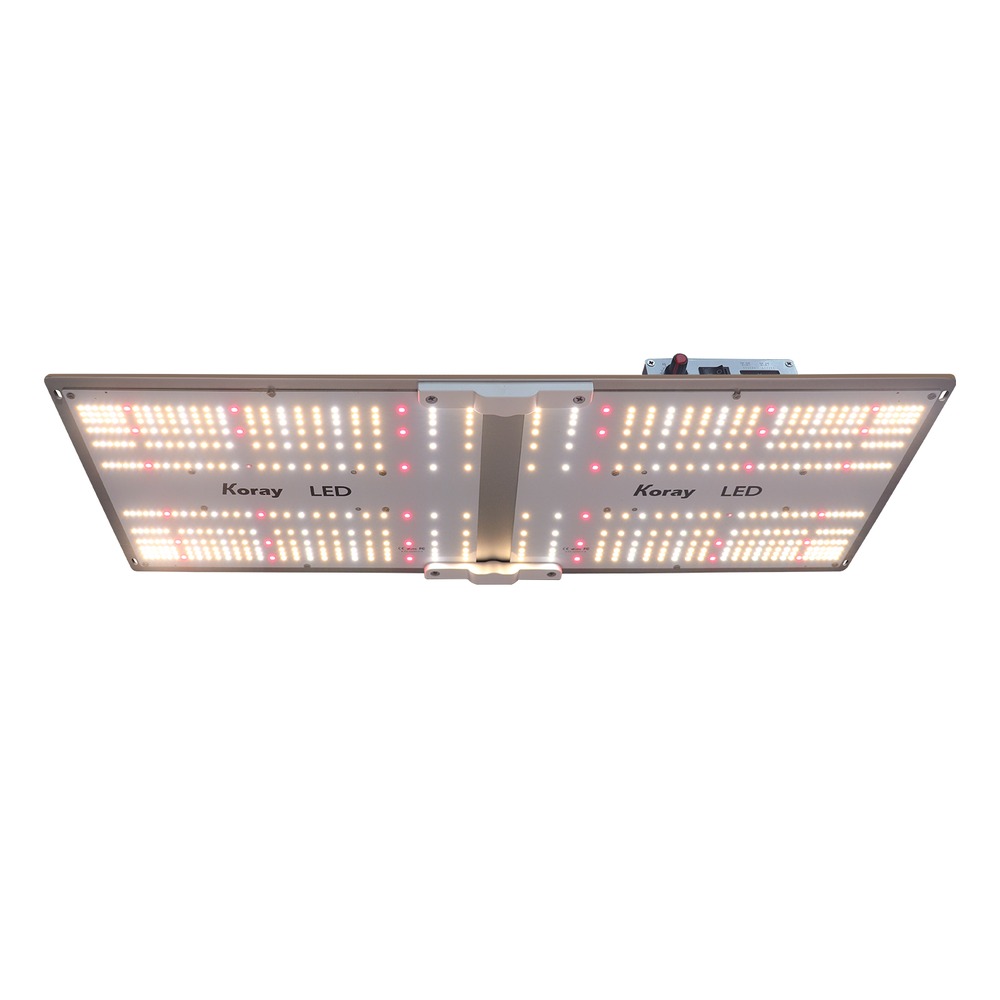
Once the hypocotyl and cotyledons are above the medium, the plant switches from reserve-driven growth to photosynthesis, and light becomes the limiting resource. This is the point at which intensity, spectrum and photoperiod start to matter, and it is where a dimmable fixture earns its place: young seedlings are easily over-lit, so the first days are usually run at a low output and a moderate photoperiod rather than at full power.
Practical checklist for the germination stage
- Identify the species first. Check whether the crop is light-promoted, light-inhibited or light-neutral before deciding on burial depth and on whether the lamp is on.
- Surface-sow light-promoted species. Lettuce and similar crops should sit on the surface with good seed-to-medium contact and constant moisture.
- Bury light-inhibited species. A few millimetres of cover or a dark chamber gives a more uniform emergence.
- Hold the light until emergence. For light-neutral crops, moisture and temperature are the levers during imbibition.
- Start low after emergence. Begin at a low dimming level and increase as true leaves appear; watch for stretching, which signals that intensity is too low for the photoperiod in use.
- Keep the medium surface moist, not saturated. Light-requiring seed on the surface is the most exposed to drying, so mist rather than drench in the first days.
Frequently asked questions
Do seeds need light to germinate?
For most crop species, no. Seeds of tomato, pepper, cereals, pulses and cucurbits germinate in complete darkness as long as moisture, temperature and oxygen are adequate. Light is essential only for the smaller group of light-promoted species, and it actively inhibits germination in a few others.
Which seeds need light to germinate?
Lettuce is the best-known light-promoted species. Some herbs and many small-seeded wild species also germinate better in light, while documented light-inhibited species include Brassica tournefortii. Because the list is species-specific and sometimes variety-specific, the seed supplier's sowing instructions remain the most reliable reference for a given lot.
Should I leave my grow light on while seeds germinate?
For light-neutral crops there is no benefit, and a lamp that raises surface temperature and dries the medium can reduce germination. Keep the germination area dark and humid, then switch the fixture on when the seedlings emerge and begin photosynthesising.
How much light do seedlings need after they emerge?
Seedlings are fragile and easily over-lit, so the usual approach is to start at a low dimming level and a moderate photoperiod and increase gradually as true leaves expand. The correct level is the one that keeps internodes short without bleaching or curling the leaves; a light that runs at full output from day one is a common cause of stalled, pale seedlings.
Do seeds need darkness to germinate?
Only the light-inhibited species genuinely require darkness; for them, a few millimetres of cover or a dark chamber improves uniformity. Light-neutral species do not need darkness either — they simply do not respond to it.
References
- Phytochrome and Seed Germination — light-inhibited germination of Brassica tournefortii. PMC6244342
- Phytochromes and photomorphogenesis in Arabidopsis — phytochrome control of germination under low fluence and canopy shade light. PMC1692349
- Michigan State University Extension, floriculture and greenhouse crop production — background on how light and photoperiod are managed in controlled environments. canr.msu.edu
About the publisher
XineLam is a grow light manufacturer with 17 years of experience in the LED lighting industry and 300+ patents in China and internationally. The company designs and produces horticultural LED fixtures for greenhouses, vertical farms and plant factories, and publishes technical guides for growers who need to specify lighting on measurable parameters rather than marketing language.