Does Light Intensity Change Nitrate Levels in Leafy Greens?
Nitrate in a lettuce leaf is the difference between how fast the plant takes nitrogen up and how fast it can reduce and build it into protein. Light drives the second half of that balance. The practical question is not whether intensity matters, but how much it moves tissue nitrate in a real growing room, and whether the change is big enough to matter against a buyer specification.
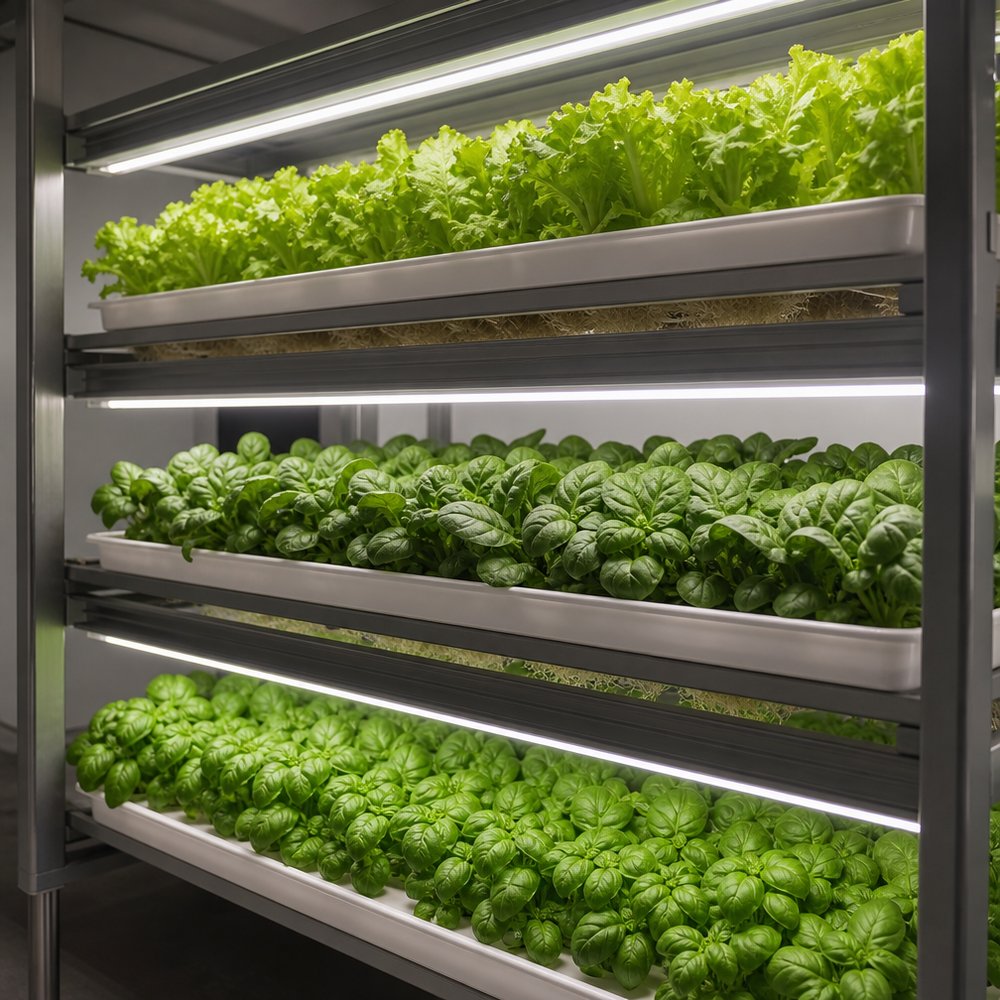
The short answer is yes, and the effect is measurable. In a controlled-chamber study on six vegetable species, raising light intensity increased fresh weight by an average of 50% and nitrate content generally fell. Changing the spectrum as well produced further reductions. The size of those reductions is what most summaries leave out, so the numbers are set out below.
Why light intensity moves tissue nitrate
Nitrate is taken up by the roots and has to be reduced before it can be used. That reduction and the subsequent assembly of amino acids consume energy and carbon skeletons from photosynthesis. When light is limiting, uptake can outrun assimilation and nitrate accumulates in the vacuole. Raise the photosynthetic photon flux density, and the plant gains both the energy to reduce nitrate and the biomass to dilute what remains.
Reviews of leafy vegetables grown in controlled environments catalogue light intensity and quality, photoperiod, temperature and nitrogen supply among the environmental factors that govern nitrate accumulation, which is why two rooms with the same nutrient recipe can produce very different tissue tests. Light is one lever among several, but it is the one a grower can change without reformulating the feed.
What the controlled-chamber data show
The most directly usable dataset for a lighting decision comes from a chamber trial with two experiments. The first used six nitrate-accumulating species: arugula, spinach, lettuce, escarole, radish and beetroot. The second used four lettuce cultivars: Batavia, cogollo, romaine and iceberg. Plants were grown in coconut fibre pots under a 16/8 hour photoperiod at 28/18 °C, and harvested 35 days after transplanting.
Two spectra were compared: a white LED control at 85 and 117 µmol m-2 s-1 for the low and high intensity, and a horticultural spectrum at 52 and 95 µmol m-2 s-1. Every combination was measured for fresh biomass and tissue nitrate.
| Trial | Crops | Intensity, low → high | Nitrate change from the horticultural spectrum | Fresh weight |
|---|---|---|---|---|
| Experiment 1 | Arugula, spinach, lettuce, escarole, radish, beetroot | White 85 → 117; horticultural 52 → 95 µmol m-2 s-1 | 18% lower at low intensity, 35% lower at high intensity | Mean increase of 50% across species when intensity rose |
| Experiment 2 | Four lettuce cultivars: Batavia, cogollo, romaine, iceberg | Same two spectra and two intensities | 10% lower at low intensity, 21% lower at high intensity | Not reported separately in the summary |
| Limit check | All species | — | All values below the cited EU maximum levels except spinach at low intensity | — |
Percentages are the reduction in tissue nitrate with the horticultural spectrum relative to the white control at the same intensity level. The two spectra differed in intensity as well as in quality, so the figures should be read as a combined spectrum-and-intensity effect rather than a pure colour effect.
Two things in that table deserve attention. First, the spectrum effect was larger at the higher intensity, which suggests the two factors compound rather than substitute for each other. Second, the effect was roughly halved in the lettuce cultivar trial compared with the six-species trial, so a figure quoted for one crop should not be transferred to another without testing.
The authors also report the regulatory backdrop they worked against: maximum levels cited from European Commission rules of 5000 and 4000 mg nitrate per kg fresh weight for winter- and spring-harvested lettuce, 3500 and 2000 for spinach, 7000 and 6000 for arugula depending on season, and 2500 for iceberg lettuce. In their chambers, only spinach at the low intensity failed to stay under the applicable limit.
Why intensity alone does not predict the number
Species and cultivar carry a large baseline. The same paper cites reference means of 523 mg kg-1 for escarole, 967 for radish and 1379 for beetroot, and notes that hydroponic production tends to run higher in nitrate than soil-grown crops even under controlled supplementary lighting. A room that produces compliant lettuce can produce non-compliant arugula with the identical light plan, because the starting point is different.
The practical consequence is that a single target PPFD copied from another facility is a weak specification. What transfers between sites is the relationship: how much tissue nitrate falls per unit of added daily light, measured on your own crop. That relationship is cheap to establish with two or three harvest samples and expensive to guess.
How to apply this in a growing room
- Measure the canopy, not the nameplate. A fixture rated at a given output delivers a different PPFD at the tray. Map the canopy at the plant height you actually run before changing anything.
- Raise daily light first, spectrum second. Intensity produced the 50% biomass gain and the general drop in nitrate. Spectrum added 10–35% on top in these trials, which is meaningful but secondary.
- Check the crop's other limits. More daily light also raises growth rate, which is exactly the condition that produces tipburn in sensitive butterhead and iceberg lines, so the nitrate target has to be met inside a light plan the crop can actually carry.
- Test tissue, not inputs. Sample nitrate on the crop and cultivar you sell, at the harvest stage you sell it, before promising a buyer a specification.
- Keep the spectrum stable when dimming. A fixture that shifts colour as it dims makes the nitrate response impossible to attribute, because intensity and spectrum move together.
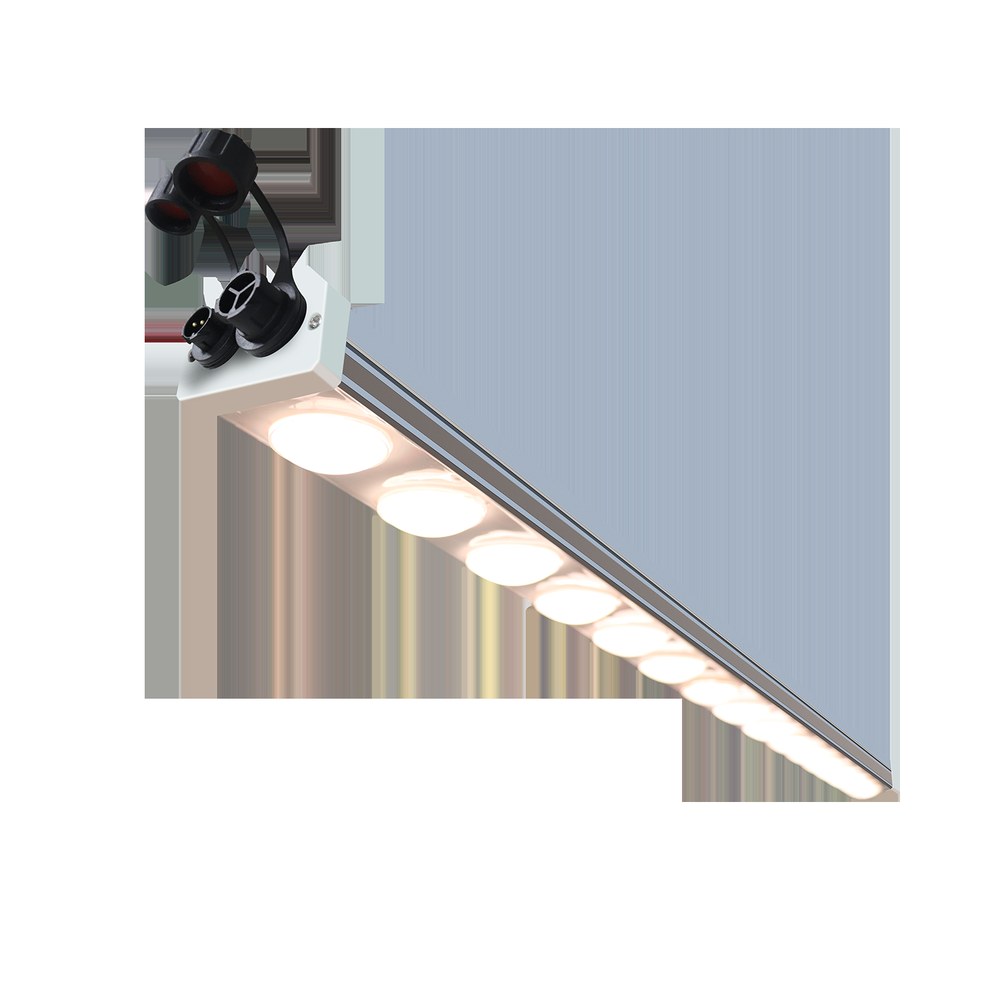
For leafy green rooms, the fixture property that matters most in this context is predictability: a stable spectrum across the dimming range, and a light distribution even enough that a tissue sample from one spot represents the tray. Where a room has to trade yield against a nitrate specification, being able to lower output without changing colour is what keeps the two variables separable.
Frequently asked questions
Does more light always lower nitrate in leafy greens?
In controlled trials the direction is consistent but the size is not. Raising intensity within the same spectrum reduced nitrate generally, while the additional gain from a horticultural spectrum ranged from 10% in a lettuce cultivar trial to 35% in a six-species trial.
Can I fix nitrate by changing the spectrum alone?
Only partly. In the lettuce trial the spectrum change cut nitrate by 10% at low intensity and 21% at high intensity. Intensity and spectrum act on the same process, so a spectrum swap cannot compensate for a daily light integral that is too low.
Why do two crops in the same room test differently?
Species and cultivar set the baseline. Reference means cited in the same paper were 523 mg kg-1 for escarole, 967 for radish and 1379 for beetroot, and hydroponic systems tend to run higher than soil-grown crops.
Do legal nitrate limits apply to indoor-grown lettuce?
The study cites European Commission maximum levels for lettuce, spinach, arugula and iceberg lettuce, and reports that all its values except spinach at low intensity stayed below them. Limits vary by product and season, so check the rule for the market you ship to.
References
- Nájera, C. & Urrestarazu, M. (2019). Effect of the Intensity and Spectral Quality of LED Light on Yield and Nitrate Accumulation in Vegetables. HortScience 54(10): 1745–1750. journals.ashs.org · DOI 10.21273/HORTSCI14263-19
- Bian, Z., Wang, Y., Zhang, X., Li, T., Grundy, S. & Yang, Q. (2020). A Review of Environment Effects on Nitrate Accumulation in Leafy Vegetables Grown in Controlled Environments. Foods, 3 June 2020. pmc.ncbi.nlm.nih.gov
About the publisher
XineLam is the horticultural lighting line of Zhongshan Koray Opto-Electronic Co., Ltd., a manufacturer with 17 years of experience and 300+ patents in China and internationally. We supply LED fixtures to vertical farms, greenhouses and research facilities, and we publish these notes because lighting decisions are usually made against several crop constraints at once, of which nitrate is only one.