Driverless AC Direct-Drive vs Constant-Current DC Power in Horticultural LED Lighting
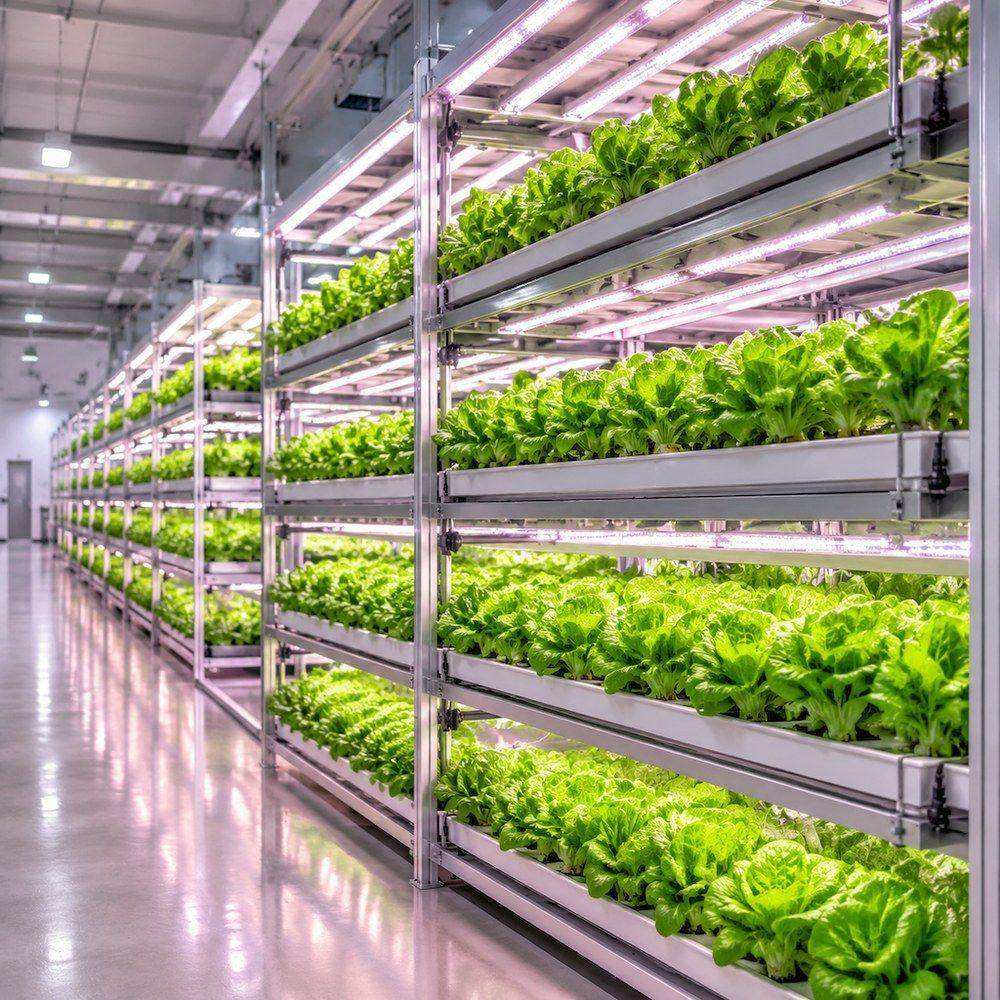
Introduction: Power Conversion Topologies in CEA Lighting
In Controlled Environment Agriculture (CEA) facilities, lighting power infrastructure accounts for 40% to 65% of total operational electrical expenditure. To drive semiconductor LED diodes efficiently from alternating current (AC) grid power (120V–480V AC), horticultural luminaire designers must evaluate two divergent power conversion architectures: traditional Switched-Mode Power Supply (SMPS) Constant-Current DC Drivers and Driverless AC Direct-Drive Linear Topologies.
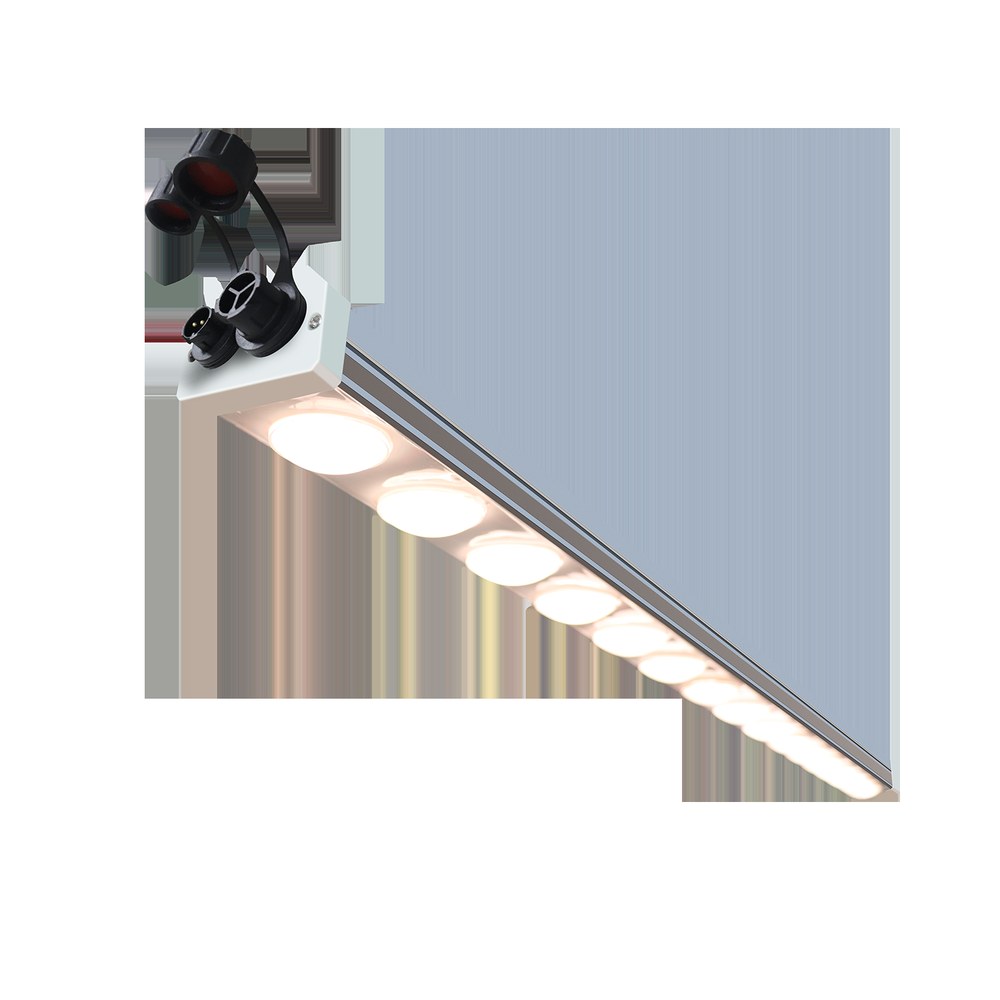
While external constant-current DC power supplies have long served as the commercial industry standard, driverless AC direct-drive solutions—which place solid-state linear controller integrated circuits (ICs) directly onto the LED printed circuit board (PCB)—have emerged as a low-profile, capacitor-free alternative. Deciding between these two topologies requires a rigorous engineering analysis of electrical conversion efficiency, total harmonic distortion (THD), optical modulation ripple (flicker), thermal management, and long-term Mean Time Between Failures (MTBF) under humid greenhouse environments.
Comparative Engineering Matrix: AC Direct-Drive vs. DC SMPS
The table below summarizes the core electrical, photometric, and reliability parameters of both topologies under standardized commercial CEA operating conditions:
| Technical Characteristic | Driverless AC Direct-Drive (Linear IC) | Constant-Current DC Driver (SMPS) |
|---|---|---|
| Electrical Power Conversion Efficiency (η) | 88% – 92% (at nominal grid voltage) | 93% – 96% (High-efficiency isolated/non-isolated) |
| Power Factor (PF) & Harmonic Distortion | PF > 0.95; THD 12% – 18% | PF > 0.98; THD < 10% (Active PFC) |
| Optical Flicker & Current Ripple | High (100 Hz / 120 Hz, 30%–100% modulation) | Low (< 3% modulation, flicker-free DC) |
| Electrolytic Capacitors on Power Path | None (All solid-state silicon ICs) | Present (Liquid electrolyte capacitors) |
| Theoretical Lifespan & MTBF | > 80,000 – 100,000 hours (Silicon limited) | 35,000 – 50,000 hours (Capacitor limited @ 50°C) |
| Thermal Heat Distribution | Driver dissipation heat dumped onto LED heatsink | Driver heat isolated in separate enclosure |
| Grid Voltage Fluctuations (±10% Vac) | PPFD shifts ±15%–25%; efficacy drops at high Vac | Regulated DC output; constant PPFD (±1.5%) |
| Dimming Flexibility & Smart Controls | Phase-cut (TRIAC) or stepped IC switching | Continuous 0–10V, PWM, DALI, or Digital Bus |
| Form Factor & Vertical Farm Racking | Ultra-slim, ultra-lightweight profile | Requires external driver box and DC cable routing |
Electrical Efficiency and Voltage Variation Dynamics
Linear AC direct-drive ICs operate by sequentially activating segments of LED strings in steps as the AC sinusoidal line voltage rises above the forward voltage threshold of each segment. The instantaneous electrical power efficiency ηlin is expressed as:
ηlin = ∑ (Vf,string · ILED(t)) / (Vin(t) · Iin(t))
When the instantaneous AC line voltage Vin(t) exceeds the forward voltage Vf of all active LED segments, the excess voltage (Vin(t) - Vf) is dropped across the linear regulator ICs and dissipated entirely as heat. As a result, when mains grid voltage fluctuates upward by +10%, driverless fixture thermal dissipation increases significantly, reducing overall luminaire photosynthetic photon efficacy (PPE, μmol·J-1).
Optical Flicker and Biological Photobiology Implications
A central question in CEA engineering is whether the 100 Hz (in 50 Hz European grids) or 120 Hz (in 60 Hz North American grids) full-wave rectified stroboscopic optical flicker produced by AC direct-drive fixtures impairs plant photosynthesis.
Photobiological research demonstrates that plant photosynthetic light harvesting through Chlorophyll a and b, as well as downstream carbon assimilation via the Calvin-Benson cycle enzyme RuBisCO, operate with biological integration time constants spanning milliseconds to minutes. Because photosynthetic reaction centers integrate photon arrival over time, a 100 Hz / 120 Hz modulated photon flux delivers identical biomass accumulation and dry weight yield as continuous DC illumination of equivalent integrated Daily Light Integral (DLI, mol·m-2·d-1).
However, high optical modulation indices present severe operational drawbacks for human workers and automated facilities: stroboscopic flicker causes operator headache and visual strain, while automated greenhouse machine vision and crop inspection cameras experience rolling-shutter horizontal banding artifacts.
Thermal Management and Lifespan (MTBF) Analysis
The primary advantage of driverless AC direct-drive technology is the complete elimination of wet aluminum electrolytic capacitors. In traditional switched-mode DC power supplies, electrolytic fluid gradually evaporates through the rubber bung seals under elevated ambient greenhouse temperatures (Arrhenius rate equation: chemical degradation rate doubles for every 10°C increase in temperature), limiting typical SMPS lifespans to 35,000–50,000 hours.
By relying entirely on solid-state silicon ICs, driverless architectures can theoretically achieve operating lifetimes exceeding 80,000 to 100,000 hours. However, because the linear ICs dissipate 8% to 12% of total fixture power directly onto the LED aluminum PCB, fixture thermal heat sinks must be oversized by 15% to 20% to prevent excessive junction temperature (Tj) rise on the adjacent LED diodes.
Frequently Asked Questions
Does the 100Hz/120Hz light flicker of AC direct-drive LED fixtures reduce plant photosynthetic efficiency?
No, plant photosynthesis is not adversely affected by 100 Hz or 120 Hz optical modulation. Photochemical reactions in Photosystems I and II (such as plastoquinone electron transport and carbon fixation via RuBisCO in the Calvin-Benson cycle) operate with integrated response time constants on millisecond to minute scales, seamlessly integrating high-frequency photon fluxes as an average PPFD. However, high optical flicker indices (30% to 100% ripple) cause visual fatigue for human farm operators and severe stroboscopic rolling-shutter banding on camera monitoring systems in automated vertical farms.
Why do traditional switched-mode DC LED drivers fail earlier than LED diodes in greenhouse conditions?
Switched-mode power supply (SMPS) DC drivers rely on wet aluminum electrolytic capacitors to smooth AC ripple and maintain stable DC constant current. Under elevated greenhouse operating temperatures (35°C to 50°C ambient with internal driver potting reaching 75°C to 90°C), liquid electrolyte gradually vaporizes through rubber end seals (governed by Arrhenius' law, where lifetime halves for every 10°C temperature rise). While LED diodes achieve L90 lifespans > 54,000 hours, electrolytic capacitors frequently fail or exceed equivalent series resistance (ESR) thresholds within 20,000 to 35,000 hours.
How does grid voltage fluctuation affect the photon output of AC driverless grow lights?
Because linear AC direct-drive circuits switch LED strings sequentially as instantaneous AC line voltage traverses its sine wave, the current and total optical output vary with RMS mains voltage. A ±10% grid voltage swing can cause a ±15% to ±25% variation in instantaneous photon flux and power consumption. In contrast, constant-current DC switch-mode drivers utilize wide-input active feedback loops (universal 90V–305V AC input) that regulate DC diode current to within ±1.5%, maintaining constant PPFD regardless of local utility line sag.
What surge protection measures are mandatory for AC direct-drive LED installations in commercial CEA facilities?
Linear AC driver ICs mounted directly on aluminum PCBs possess minimal intrinsic surge withstand capabilities. In commercial CEA facilities where heavy inductive loads (such as HVAC chillers, dehumidifiers, and automated irrigation pumps) generate severe switching transients, AC direct-drive luminaire circuits require coordinated multi-stage transient voltage surge suppressors (metal oxide varistors / MOVs and gas discharge tubes) rated for at least 4 kV line-to-line and 6 kV line-to-ground per IEC 61000-4-5 standards.
Academic and Industry Standards References
- Michigan State University Extension (MSU CANR) — Evaluating Greenhouse LED Output and Efficacy: https://www.canr.msu.edu/resources/output-and-efficacy
- DesignLights Consortium (DLC) — Testing and Reporting Requirements for Horticultural Lighting Power Systems: https://designlights.org/our-work/horticultural-lighting/technical-requirements/testing-lab-requirements/