Far-Red 730nm vs Deep Red 660nm in LED Grow Lights: Emerson Effect and Spectrum Ratios
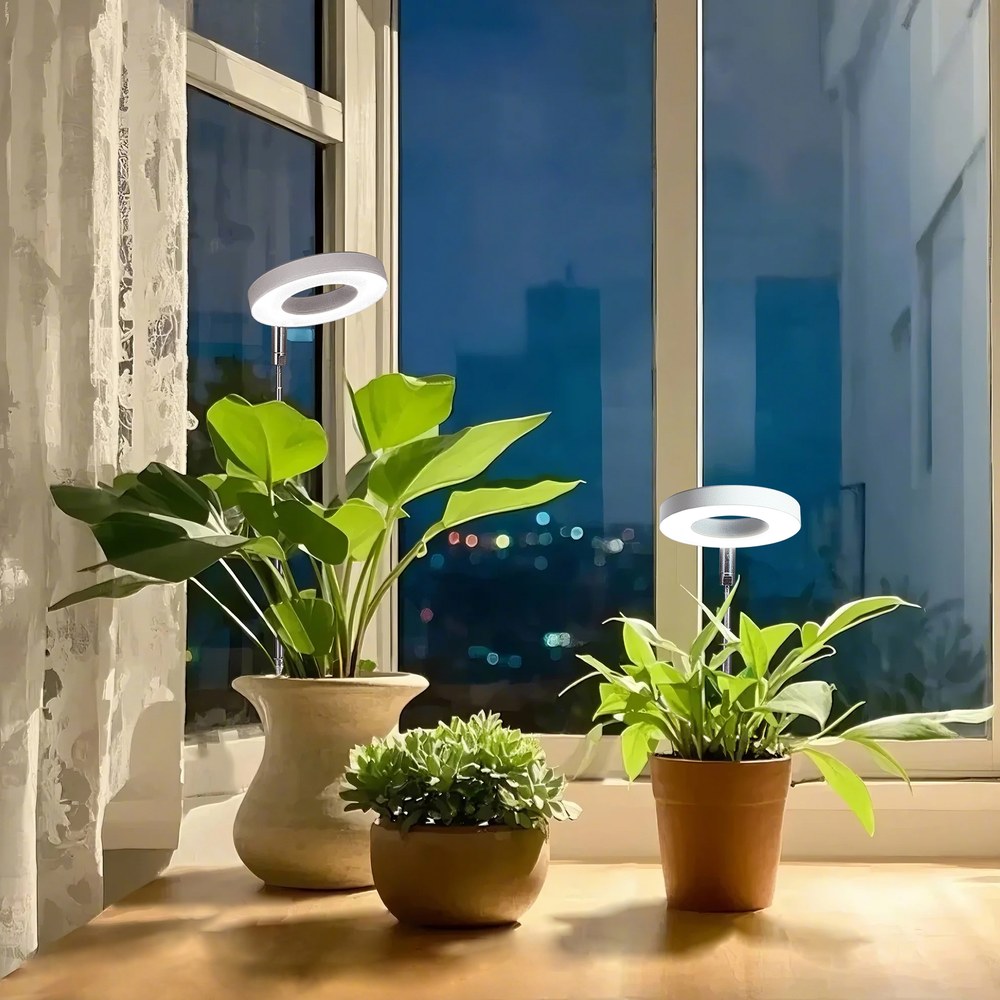
In modern horticultural solid-state lighting, optimizing photosynthetic efficiency requires a detailed understanding of photobiology beyond standard Photosynthetically Active Radiation (PAR, 400–700 nm). The interplay between deep red (660 nm) and far-red (730 nm) wavelengths has emerged as a cornerstone for maximizing crop biomass, accelerating flowering cycles, and tailoring plant morphology in commercial indoor farming and greenhouse environments.
1. Photobiological Mechanisms: Photosystem I vs Photosystem II
Oxygenic photosynthesis operates through two membrane-bound protein complexes in chloroplasts: Photosystem II (PSII, absorbing maximally at ~680 nm) and Photosystem I (PSI, absorbing maximally at ~700 nm). Conventional horticultural lighting predominantly targets Chlorophyll a and b absorption peaks using 660 nm deep red LEDs. However, relying exclusively on 660 nm photon flux over-excites PSII relative to PSI, leading to an excitation bottleneck in the linear electron transport chain.
Far-red photons (700–750 nm, centered at 730 nm) are poorly absorbed by PSII but efficiently absorbed by PSI. When 730 nm far-red photons are delivered alongside 660 nm deep red photons, electron flow between PSII and PSI becomes balanced. This cooperative synergistic stimulation is known as the Emerson Enhancement Effect, originally discovered by Robert Emerson in 1957 and validated in whole-canopy LED trials by researchers at Utah State University.
2. Detailed Wavelength Comparison: 660 nm vs 730 nm
To design an efficient spectrum, horticultural luminaire engineers evaluate optical absorption, photomorphogenic signaling, and electrical-to-optical conversion efficacy (WPE). The fundamental differences between deep red and far-red are summarized in the table below:
| Parameter / Metric | Deep Red (660 nm) | Far-Red (730 nm) |
|---|---|---|
| Primary Photoreceptor Target | Chlorophyll a / b, P680 (PSII) | Chlorophyll a / d-like pools, P700 (PSI), Phytochrome (Pfr) |
| Standard Waveband Classification | PAR (400–700 nm) | ePAR / Extended PAR (700–750 nm) |
| Quantum Yield Efficiency | Direct driver of photosynthetic carbon assimilation | Synergistic co-action via Emerson Enhancement Effect |
| Photomorphogenic Effect | Inhibits elongation, promotes dense leaf structure | Triggers Shade Avoidance Response (leaf expansion, petiole elongation) |
| Phytochrome Photoequilibrium (PSS) | Shifts phytochrome to active Pfr form (~0.88 PSS) | Rapidly converts active Pfr back to inactive Pr form (~0.05 PSS) |
| Typical Diode Efficacy (PPE) | 4.2 – 4.8 μmol/J (High-flux AlInGaP chips) | 3.8 – 4.4 μmol/J (High-flux AlInGaP chips) |
3. Phytochrome Regulation: Pr vs Pfr and Shade Avoidance
Plants monitor their light environment through phytochromes, a family of photoreceptors that toggle reversibly between two conformational states:
- Pr (Red-absorbing state, peak 660 nm): The biologically inactive form synthesized in dark conditions.
- Pfr (Far-red-absorbing state, peak 730 nm): The biologically active form that signals high light conditions, suppressing stem elongation and controlling flowering.
When exposed to high 660 nm irradiance, phytochrome converts to Pfr. Conversely, increasing the proportion of 730 nm far-red photons shifts the equilibrium toward Pr. In nature, dense overhead canopies filter out blue and red light while transmitting far-red, signaling competition to understory plants. Horticultural growers leverage this Shade Avoidance Response to stimulate leaf area expansion during the early vegetative stage, allowing the plant canopy to intercept more light and accelerate early growth.
4. Recommended Spectrum Ratios Across Growth Stages
Balancing deep red and far-red flux depends on crop species and cultivation objectives:
- Vegetative & Microgreen Phase: Maintain a low far-red fraction (5% to 8% of total ePAR). A higher red-to-far-red ratio ensures compact internode spacing, sturdy stems, and high chlorophyll density per unit leaf area.
- Canopy Expansion (Early Vegetative): A brief pulse of 10% to 15% far-red increases specific leaf area (SLA) by 15% to 25%, maximizing total photon capture before flowering.
- Generative & Flowering Phase: Maintain a 12% to 18% far-red fraction alongside deep red. Far-red enhances flower bud differentiation, promotes secondary metabolite accumulation, and drives the Emerson effect for heavy fruiting crops.
- End-of-Day Far-Red (EOD-FR): Applying pure 730 nm lighting for 10–15 minutes immediately following the main photoperiod converts Pfr into Pr, simulating rapid dusk and shortening the critical night period required for floral induction.
5. Thermal and Electrical Design in Horticultural Fixtures
Both 660 nm and 730 nm LEDs are built on quaternary Aluminum Indium Gallium Phosphide (AlInGaP) semiconductor substrates. AlInGaP chips exhibit higher thermal sensitivity than standard InGaN white chips, with a forward voltage temperature coefficient of approximately −1.8 mV/°C. To maintain high photon flux maintenance and prevent premature wavelength shift, fixtures must utilize robust aluminum heatsinks with thermal interface resistance lower than 0.35 °C/W, keeping diode junction temperatures ($T_j$) below 75 °C under full load.
Frequently Asked Questions
What is the difference between deep red 660nm and far-red 730nm wavelengths?
Deep red (660 nm) falls within the traditional 400–700 nm PAR range and directly drives Photosystem II (PSII) absorption. Far-red (700–750 nm, peaking at 730 nm) falls in the extended ePAR waveband and preferentially excites Photosystem I (PSI), regulating phytochrome state transitions and photomorphogenesis.
How does the Emerson Enhancement Effect increase plant growth?
The Emerson effect occurs when plants receive both shorter-wavelength red light (660 nm) and longer-wavelength far-red light (730 nm) simultaneously. Because PSII and PSI are energized in balance, the overall rate of photosynthesis exceeds the sum of photosynthetic rates measured under either spectrum alone.
What is the optimal far-red to deep red ratio for indoor crops?
For vegetative growth and compact canopies, far-red should be kept between 5% and 10% of total photon flux to avoid excessive stem stretching. For flowering, fruiting, and rapid canopy expansion, a far-red fraction of 12% to 18% maximizes biomass accumulation and accelerates flowering.
Can far-red light be used for End-of-Day (EOD-FR) photoperiod control?
Yes, delivering 10 to 15 minutes of pure 730 nm far-red light at the end of the daily photoperiod converts active Pfr phytochromes into inactive Pr. This resets the plant circadian clock faster and promotes rapid floral induction in short-day crops.
About the Publisher
XineLam (Zhongshan Xinelam Optoelectronics Technology Co., Ltd.) is a dedicated LED lighting manufacturer with 17 years of experience and 300+ patents in China and internationally. Specializing in high-efficiency horticultural luminaires, waterproof LED modules, and custom commercial spectrum solutions, XineLam delivers engineered lighting products meeting rigorous international standards.
Authoritative References & Standards
- Zhen, S., & Bugbee, B. (2020). Substituting Far-Red for Traditionally Defined Photosynthetic Photons Results in Equal Canopy Quantum Yield for CO2 Fixation. Frontiers in Plant Science, 11:581156. https://www.frontiersin.org/journals/plant-science/articles/10.3389/fpls.2020.581156/full
- Michigan State University Extension. Far-Red Light in Commercial Greenhouses and Controlled Environments. https://www.canr.msu.edu/resources/fr-light