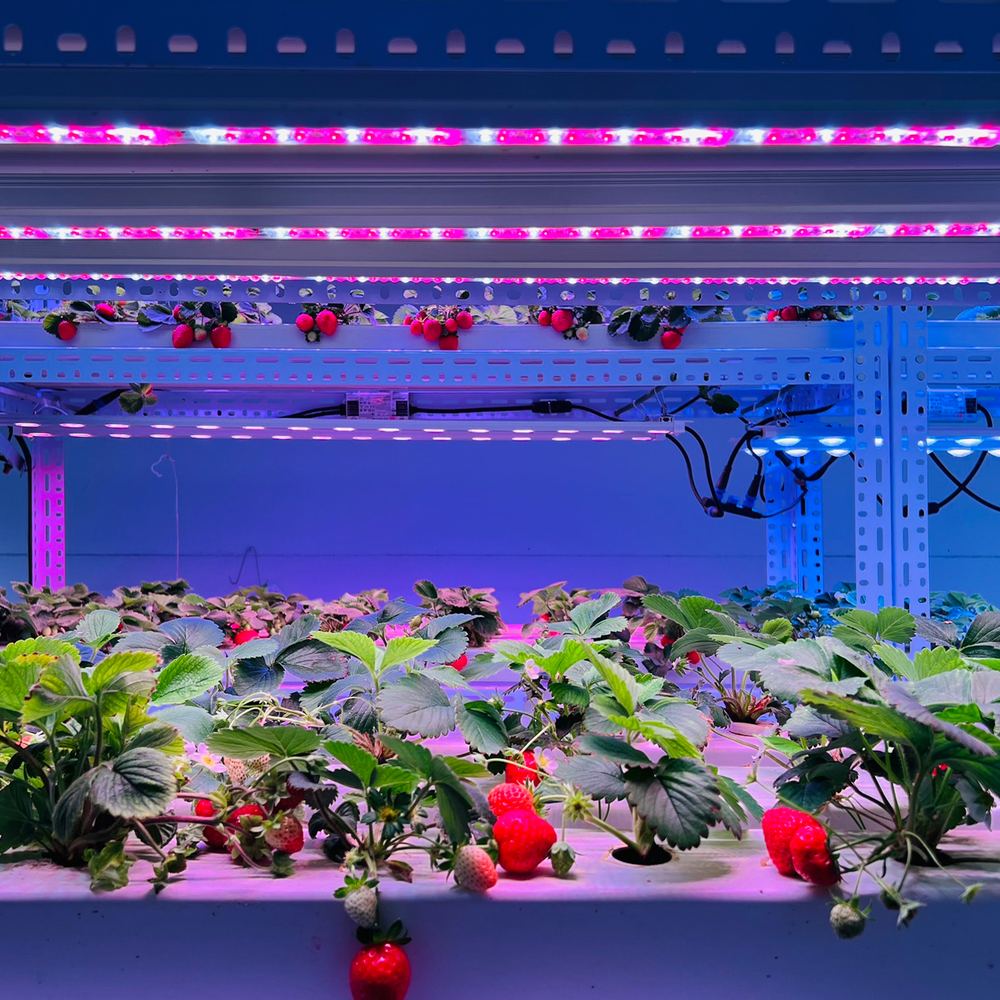
A lit greenhouse is a large area source of light pointed at the sky. When the roof is transparent and the crop needs 16 to 20 hours of supplementary light in winter, a meaningful fraction of that light leaves the building. This article explains what light trespass means in practice, how quickly spill falls off with distance, and which engineering measures genuinely reduce it.
Light pollution is defined as the human-made alteration of outdoor light levels from those occurring naturally. DarkSky International, the organisation that publishes the most widely used guidance on the subject, lists greenhouses among the recognised sources, alongside streetlights, advertising and sports lighting.
Its description of the greenhouse case is specific and worth quoting in substance: residents in North America and Europe increasingly report unusual glows in the night sky, lighted greenhouses in densely populated areas create conditions of light trespass, and the bright glows in unusual colours above greenhouses are sometimes treated as a nuisance by neighbours. The same page notes that governments have largely not yet regulated greenhouse light, partly because it is not clear how to do so, and that operators in some regions light all or most of the night with few legal consequences.
Three distinct effects are usually bundled under the same heading, and they need different remedies:
A streetlight is a small source with a defined optical system. A supplementary-lit glasshouse is the opposite: dozens to hundreds of luminaires spread over thousands of square metres, mounted close to a transparent roof, with no downward optic in the usual sense. Four factors dominate the spill:
Light from a distributed source does not obey a single simple law, but geometry sets the first-order behaviour. For a small source, illuminance falls with the square of distance. Treating a luminaire as a point source and ignoring atmosphere, scattering and reflection, the share of canopy-level intensity that reaches a point at distance d is roughly (h/d)², where h is the mounting height above the crop.
| Distance from fixture | Relative intensity (h/d)² | If canopy PPFD is 200 µmol·m⁻²·s⁻¹ | What it means |
|---|---|---|---|
| 2 m (at canopy) | 1.00 | 200 | Reference level |
| 10 m | 0.04 | 8 | Faint but visible on a wall or window |
| 20 m | 0.01 | 2 | Comparable to a dim interior light |
| 50 m | 0.0016 | 0.3 | Detectable as a colour cast on a ceiling |
| 100 m | 0.0004 | 0.08 | Below most nuisance thresholds, above dark-sky thresholds |
Two practical consequences follow. First, the neighbours most affected are usually the closest ones, not the town in general — which is why screening at the property line is more effective than reducing total output. Second, the colour of the light matters more than its intensity at long range: a low level of saturated magenta is more noticeable on a bedroom ceiling than an equivalent level of broad-spectrum white.
Most horticultural spectra concentrate energy in the red band around 660 nm, with a smaller blue component near 450 nm. To the human eye that mixture reads as magenta or pink, a colour that essentially does not occur in outdoor lighting. DarkSky's greenhouse section describes those unusual colours as part of why the glow attracts complaints even when the measured intensity at the boundary is modest.
Adding broad-spectrum white or green light makes a fixture look less unusual from outside without changing the physics of the spill; it changes perception more than pollution. Screening remains the more reliable measure.
| Measure | What it blocks | Typical effect on spill | Trade-off |
|---|---|---|---|
| Blackout or energy screen closed at night | Upward and sideward paths | Largest single reduction; the roof is the main exit | Traps humidity and heat; needs a screen strategy and ventilation margin |
| Side curtains at the perimeter | Low-angle trespass toward neighbours | High for the first 20–30 m beyond the boundary | Blocks winter ventilation; wind loading on the structure |
| Reflective internal screen (part-closed) | Re-radiated light toward the roof | Moderate; also returns light to the crop | Changes light uniformity if partly closed |
| Louvres and roof baffles | Direct view of luminaires from outside | High for glare, moderate for sky glow | Restricts airflow; adds structural weight |
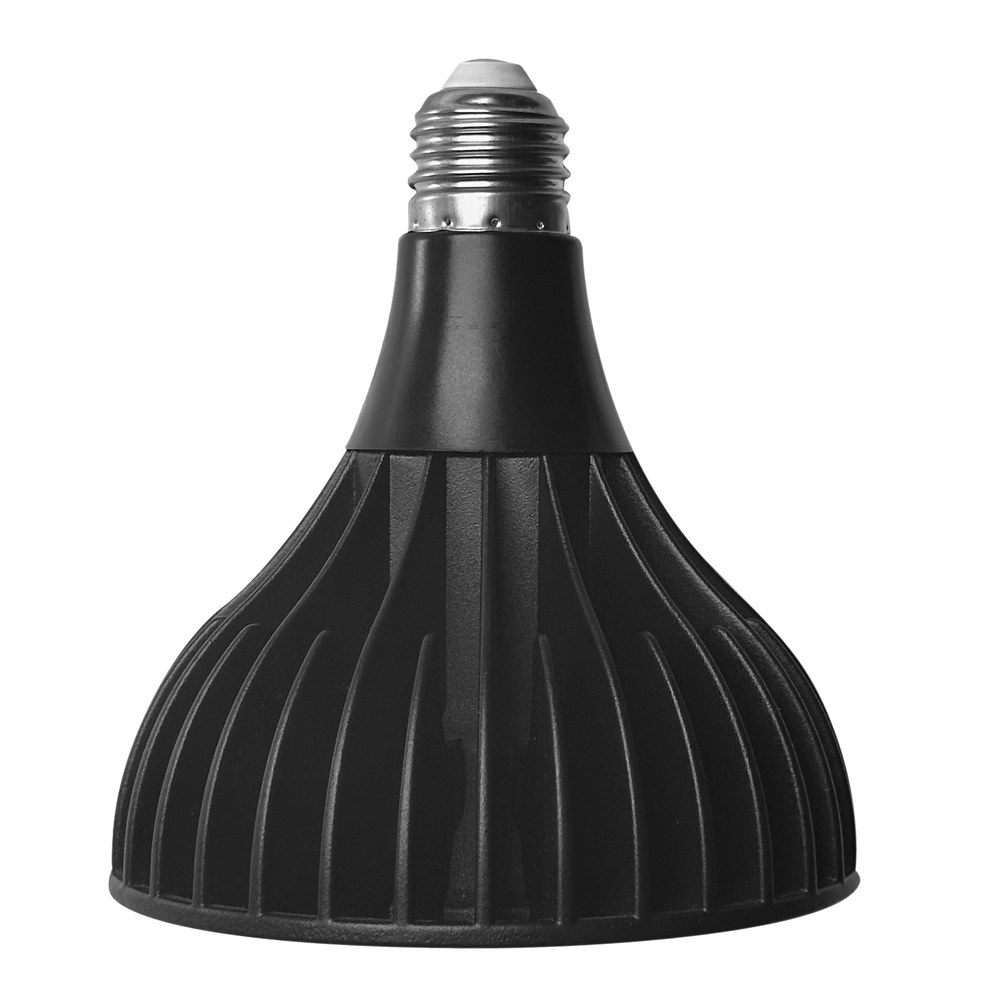
| Hooded or optically controlled fixtures | Upward emission at the source | Moderate to high, depending on beam control | Higher fixture cost; narrower distribution needs more units |
| Scheduling and dimming | Hours of exposure | Reduces total dose, not peak brightness | Must still meet the crop's daily light integral |
| Setback from the boundary | Distance term in the dilution equation | High, and free at the design stage | Land cost; rarely available after construction |
Arguments about light trespass are settled with measurements, not impressions. A workable routine for a commercial site:
There is no single international limit for agricultural light trespass; requirements are set locally, and often not at all. Where a jurisdiction does regulate, the pattern is usually a maximum illuminance at the property line, sometimes combined with a curfew or a requirement to shield sources from direct view.
They are one recognised source. DarkSky International lists greenhouses among the causes of light pollution and describes lighted greenhouses in populated areas creating conditions of light trespass with glows that neighbours treat as a nuisance.
It changes the colour appearance of the glow but not the amount of light leaving the building. Screening and optical control reduce the physical spill; spectrum mainly changes how noticeable it is.
Geometrically, intensity falls with the square of distance, so a fixture 2 m above the crop is already down to roughly 1 % of canopy intensity at 20 m. In practice scattering, reflection and the large number of sources mean visible colour casts can appear further away than a simple calculation suggests.
It is a management decision: closing a screen during the lighting period traps heat and humidity, so it has to be combined with ventilation and humidity control. Many operations close screens only during the hours that matter for neighbours.
It depends on the jurisdiction. DarkSky notes that governments have largely not yet regulated greenhouse light. Where local rules exist they typically take the form of illuminance limits at the property line, curfews or shielding requirements.
Greenhouse lighting does produce light pollution, and the mechanism is structural rather than a matter of careless operation: a large array of bright sources sits under a transparent roof. The defensible engineering response is to close the upward path with a screen, control emission at the fixture with optics, screen the perimeter, and measure the result at the boundary. Spectrum choices and dimming help at the margins, but they do not substitute for keeping the light inside the building.