How Inter-Canopy LED Lighting Boosts Crop Yield and Quality in High-Wire Greenhouse Production
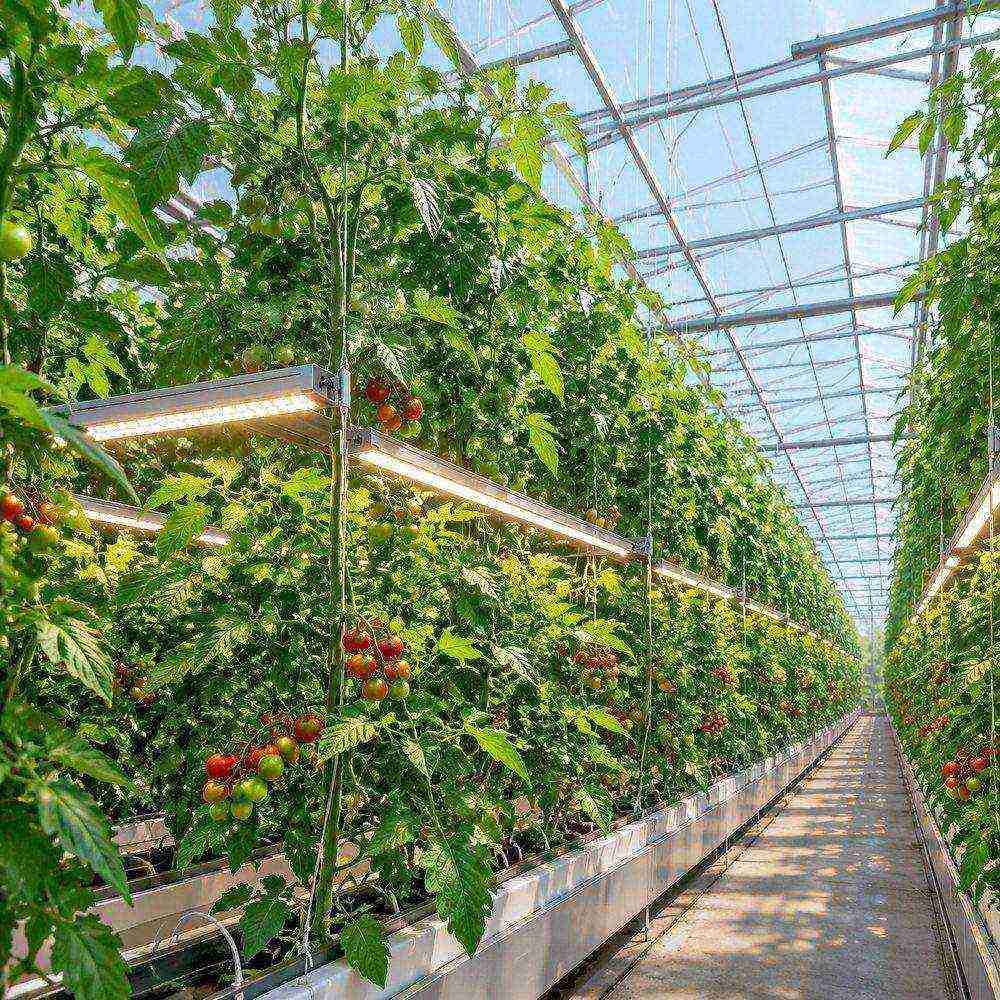
In modern commercial greenhouses producing high-wire crops such as vine tomatoes, cucumbers, and sweet peppers, crop canopies often reach heights of 3 to 4 meters. While traditional overhead supplemental lighting (top-lighting) provides substantial Photosynthetic Photon Flux Density (PPFD) to the uppermost leaf canopy, light attenuation within dense foliage is severe. According to the Beer-Lambert law of light extinction, upper leaves absorb up to 80% to 90% of overhead incident photons, leaving the middle and lower canopy layers severely light-limited below their photosynthetic light compensation point.
Inter-canopy LED lighting (intra-canopy lighting) resolves this structural limitation by positioning slim, low-temperature linear LED fixtures directly within the plant rows. By distributing photosynthetic photons horizontally across the entire vertical profile of the vine, commercial growers can unlock significant gains in biomass accumulation, fruit set, and overall electrical energy efficiency.
The Physiology of Canopy Light Attenuation
In tall indeterminate vine crops, plant photosynthetic capacity is distributed vertically. The top leaves receive saturated sunlight and top-lighting, frequently operating at photosynthetic saturation where additional overhead photons yield diminishing returns in carbon assimilation. Conversely, middle leaves—which are positioned adjacent to developing fruit clusters—remain shaded at PPFD levels of only 50 to 100 μmol/m²/s, well below their photosynthetic capacity of 400 to 600 μmol/m²/s.
Supplying supplemental light directly to these middle canopy tiers yields several physiological advantages:
- Direct Photoassimilate Translocation: Leaves closest to developing fruit trusses directly supply sucrose and carbohydrates. Elevating local photosynthetic rates enhances fruit expansion and reduces blossom-end abortion.
- Delayed Leaf Senescence: Maintaining active irradiance on lower leaves prevents premature chlorosis and leaf drop, expanding the total active photosynthetic surface area per square meter of floor space.
- Optimized Light Use Efficiency (LUE): Spreading 300 μmol/m²/s across both top and middle layers achieves higher total carbon fixation than applying 600 μmol/m²/s exclusively from overhead fixtures due to photosynthetic saturation non-linearities.
Comparative Engineering: Top-Lighting vs. Hybrid Inter-Lighting
Commercial greenhouse lighting designs generally compare an all-toplight approach (HPS or LED top-lighting) against a hybrid system combining top-lighting with inter-lighting. The following technical comparison highlights performance metrics under commercial greenhouse conditions:
| System Architecture | PPFD Distribution Profile | Canopy Penetration Depth | Thermal Impact on Crop | Yield Increase (%) | System Energy Efficacy |
|---|---|---|---|---|---|
| 100% Top-Lighting (HPS) | Steep top-heavy gradient (85% top, 15% lower) | Top 0.5 – 0.8 m only | High radiant IR heat; risk of upper leaf scorch | Baseline (0%) | 1.8 – 2.0 μmol/J |
| 100% LED Top-Lighting | Top-heavy gradient (75% top, 25% lower) | Top 0.8 – 1.2 m | Convective heat upward; minimal crop stress | +8% to +14% | 2.6 – 3.2 μmol/J |
| Hybrid: 60% Top + 40% Inter-Lighting | Uniform vertical profile (balanced top/mid) | Full 3.0 – 4.0 m profile | Even low-temperature distribution inside rows | +18% to +26% | 3.0 – 3.4 μmol/J |
Optical Design and Thermal Management Requirements
Designing linear fixtures for inter-canopy placement requires rigorous optical and mechanical engineering. Because plants grow directly against the luminaire housing, the fixture must meet strict environmental and optical parameters:
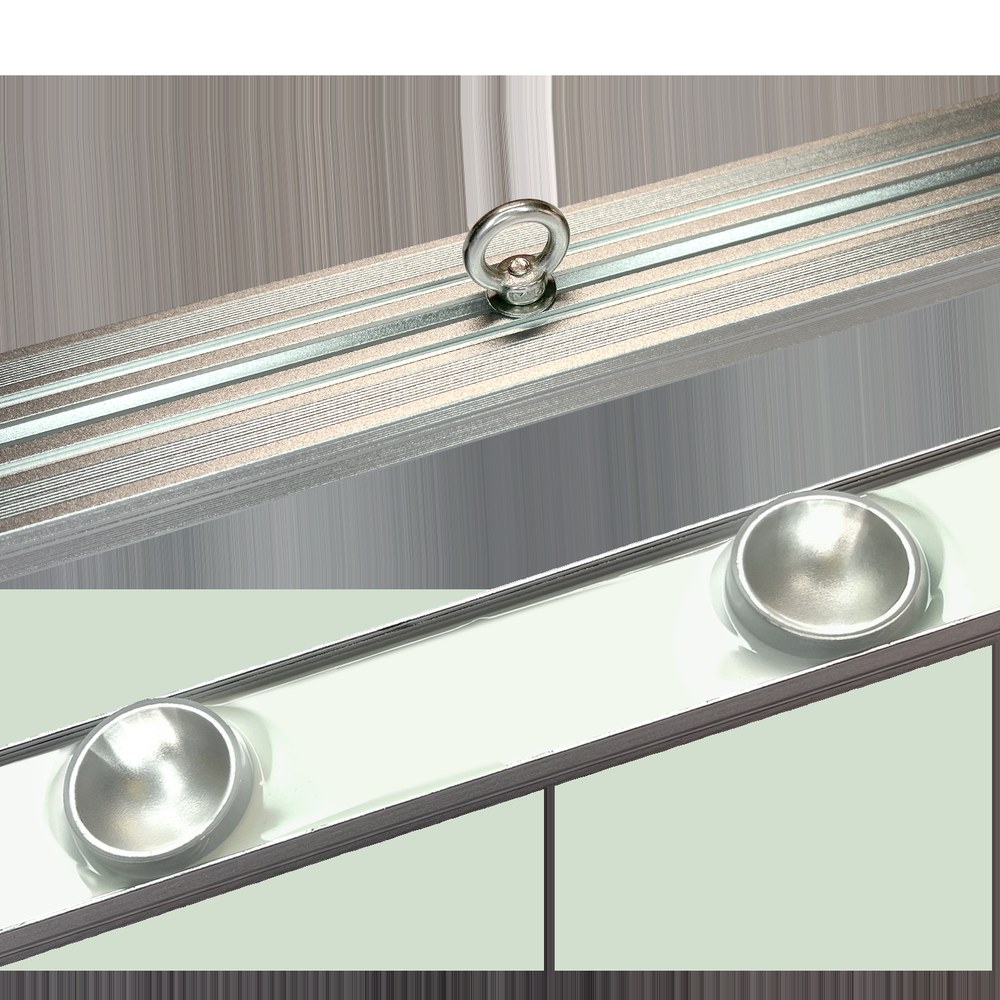
- Bi-Directional Beam Distribution: Fixtures installed between crop rows should project light sideways into both adjacent plant lines, using wide batwing secondary optics (120° to 140°) to avoid localized hotspots on leaves touching the enclosure.
- Low Housing Surface Temperature: To prevent thermal leaf necrosis when foliage touches the fixture, the luminaire must incorporate optimized aluminum heatsink extrusions that maintain housing temperatures below 45°C under ambient 25°C greenhouse conditions.
- IP65+ Water Ingress and Chemical Resistance: Inter-lighting bars are subject to high-pressure greenhouse washdowns, sulfur evaporators, and pesticide sprays. Fixtures must feature sealed silicone potting and corrosion-resistant anodized aluminum.
- Adjustable Height Suspension: As vine crops are lowered in high-wire training systems, inter-lighting fixtures should be mounted on adjustable cable hoists or rail clips to remain aligned with the primary fruit-bearing zone (typically 1.2 to 1.8 m above the gutter).
Frequently Asked Questions
What is inter-canopy LED lighting in greenhouse horticulture?
Inter-canopy LED lighting (or inter-lighting) places linear LED fixtures within the plant canopy between crop rows. Unlike overhead top-lights, inter-lighting delivers photosynthetic photons directly to middle and lower foliage that would otherwise be severely shaded in tall, high-wire crops like tomatoes, cucumbers, and peppers.
How much yield increase can growers expect from inter-canopy lighting?
Academic research and commercial greenhouse trials demonstrate yield increases of 15% to 25% in high-wire vine crops when combining overhead lighting with inter-canopy modules, primarily through increased fruit size, faster ripening, and prolonged photosynthetic activity in lower leaves.
Why is LED technology uniquely suited for intra-canopy placement compared to HPS?
High-Pressure Sodium (HPS) lamps emit high radiant heat (infrared radiation) and operate at extreme surface temperatures, which would scorch leaves placed within inches of the lamp. LEDs operate with low forward thermal dissipation directed away from the optical beam, allowing fixtures to operate safely within 15 to 30 cm of delicate foliage.
What beam angle and spectrum work best for inter-canopy LED modules?
A bi-directional or wide 120° to 150° batwing beam distribution is ideal to illuminate foliage on both adjacent crop rows uniformly. A balanced broad spectrum with 10% to 15% blue (400-500 nm) and 85% to 90% red/deep-red (600-700 nm) provides high photosynthetic photon efficacy (PPE > 2.8 μmol/J) without inducing leaf curling.
- Frontiers in Plant Science: LED Interlighting in Greenhouse Tomato Production — https://www.frontiersin.org/journals/plant-science/articles/10.3389/fpls.2016.01428/full
- Michigan State University (MSU) Extension: Interlighting in Greenhouses — https://www.canr.msu.edu/floriculture/uploads/files/interlighting.pdf
About the Publisher
XineLam is a dedicated manufacturer of precision LED horticultural luminaires and commercial backlighting solutions, backed by 17 years of experience in the lighting industry and 300+ patents in China and internationally. Our engineering team designs robust greenhouse lighting systems engineered for maximum yield, high electrical efficiency, and long-term reliability in commercial glasshouses and indoor farming facilities worldwide.