How LED Driver Ripple and Electrical Efficiency Impact Grow Light Performance and Diode Lifespan
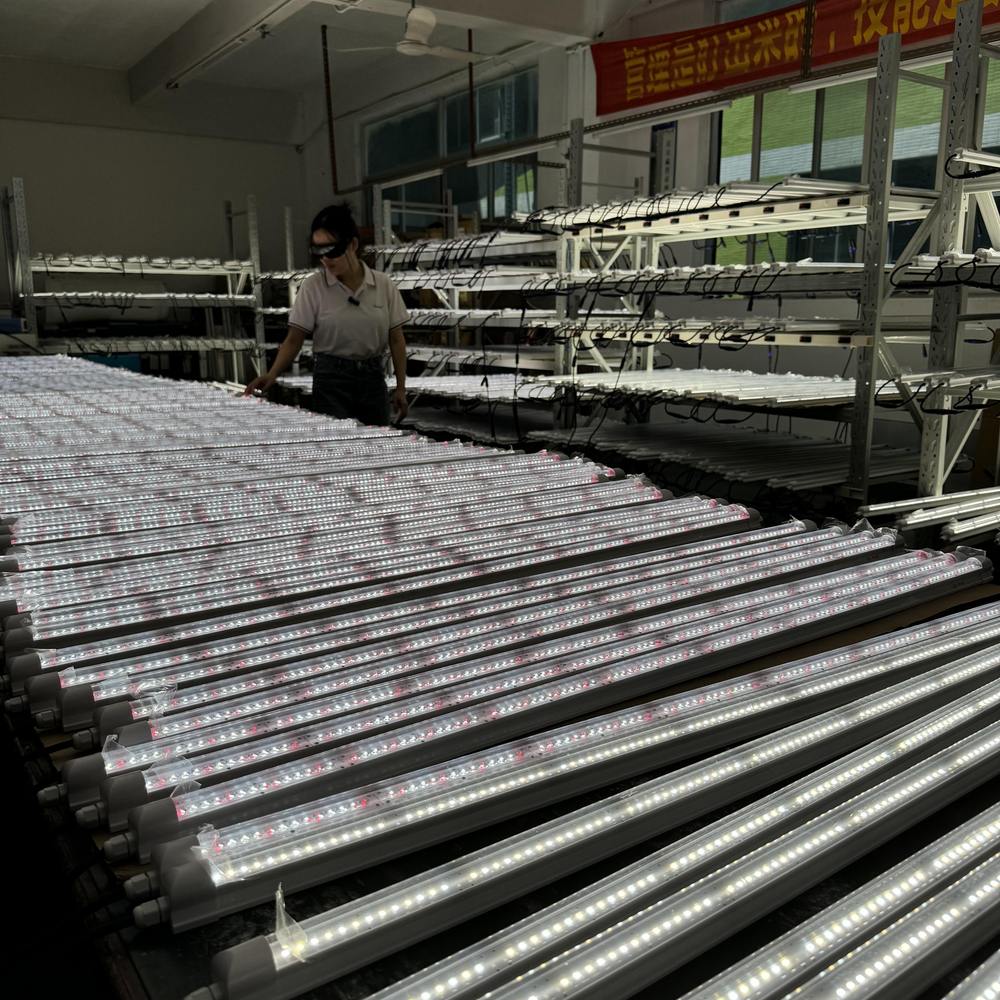
In high-performance horticultural lighting systems, discussions of efficacy often focus exclusively on diode photosynthetic photon efficacy (PPE, measured in μmol/J) and diode binning. However, the LED driver (switched-mode power supply) is the electrical heart of the luminaire. The driver dictates total wall-plug efficiency, power factor (PF), total harmonic distortion (THD), and—critically—the electrical ripple current delivered to delicate LED semiconductor junctions.
Substandard driver topologies with elevated output current ripple not only introduce optical modulation (flicker) that interferes with machine vision and human scouting, but also accelerate diode lumen depreciation (L90/L70) through peak-current thermal stresses. Understanding the electrical interaction between driver output characteristics and LED lifespan is essential for selecting reliable horticultural equipment.
Physics of Output Current Ripple and LED Degradation
When an LED driver rectifies AC mains voltage (50 Hz or 60 Hz) into constant DC current, residual low-frequency modulation remains at 100 Hz or 120 Hz. The amplitude of this oscillation relative to the average DC current is defined as the current ripple ratio:
Current Ripple (%) = [(I_peak - I_valley) / (2 × I_average)] × 100%
While human eyes and plants do not perceive 100/120 Hz flicker directly, the semiconductor diode experiences significant physical consequences:
- Non-Linear Thermal Dissipation (I²R): Resistive joule heating in the semiconductor die scales with the square of the instantaneous current. When a driver has 30% current ripple, peak current reaches 1.3× average, causing peak thermal spikes in the active junction (Tj) that exceed steady-state heat sink dissipation capacity.
- Efficiency Droop: High-power LED diodes suffer from "efficiency droop" at higher instantaneous current densities. During peak ripple current intervals, instantaneous photon conversion efficiency declines, reducing net fixture PPE.
- Phosphor and Encapsulant Degradation: Repetitive thermal cycling on microsecond scales degrades the optical silicone encapsulant and phosphor binding matrix, accelerating color shift and lumen depreciation over 50,000+ hours of operation.
Comparative Topology: Single-Stage vs. Two-Stage vs. Direct-AC Drivers
The electrical architecture inside the driver dictates both its manufacturing cost and output ripple performance. The table below compares the dominant driver topologies used in commercial LED grow lights:
| Driver Topology | Output Current Ripple (P-P) | Power Factor (PF) | Electrical Efficiency | Electrolytic Capacitor Stress | Typical Driver MTBF / Lifetime |
|---|---|---|---|---|---|
| Linear / Direct-AC Driver (DOB) | 100% (Full 100/120 Hz modulation) | 0.85 – 0.92 | 82% – 86% | No capacitors (IC on-board) | 15,000 – 25,000 hrs (diode thermal limit) |
| Single-Stage Flyback / Buck PFC | 20% – 40% | 0.95 – 0.98 | 88% – 91% | High ripple current on output caps | 30,000 – 45,000 hrs |
| Two-Stage Isolated (PFC + LLC / Buck) | < 3% to 5% (Low Ripple) | > 0.98 | 93% – 96% | Balanced low ripple stress on caps | 60,000 – 100,000 hrs |
Thermal Aging of Electrolytic Capacitors and the Arrhenius Rule
Within switched-mode power supplies, aluminum electrolytic capacitors are universally recognized as the primary component limiting operating lifespan. The electrolyte inside these capacitors gradually evaporates through the rubber end-seal under operating heat.
The thermal degradation of electrolytic capacitors closely follows the Arrhenius Rule:
For example, a high-grade capacitor rated for 10,000 hours at 105°C operating at an internal case temperature of 65°C yields an expected operating life of:
Life = 10,000 × 2^{(105 - 65)/10} = 10,000 × 2^4 = 160,000 hours
Conversely, in poorly ventilated fixtures where internal driver temperatures reach 85°C to 95°C, capacitor lifespan drops precipitously to less than 20,000 to 40,000 hours, causing premature power supply failure long before the LED diodes reach their rated L90 threshold.
Engineering Guidelines for Commercial Grow Light Selection
- Demand Isolated Two-Stage Topologies: Ensure horticultural fixtures utilize two-stage power supplies with active Power Factor Correction (PFC > 0.96) and dedicated secondary DC-DC regulation to keep current ripple below 5%.
- Verify Remote Driver Mounting Options: In commercial indoor vertical farms and greenhouse setups, mounting drivers remotely on centralized electrical racks isolates driver heat from the growing zone, reducing HVAC cooling loads and lowering driver ambient temperatures by 10°C to 15°C.
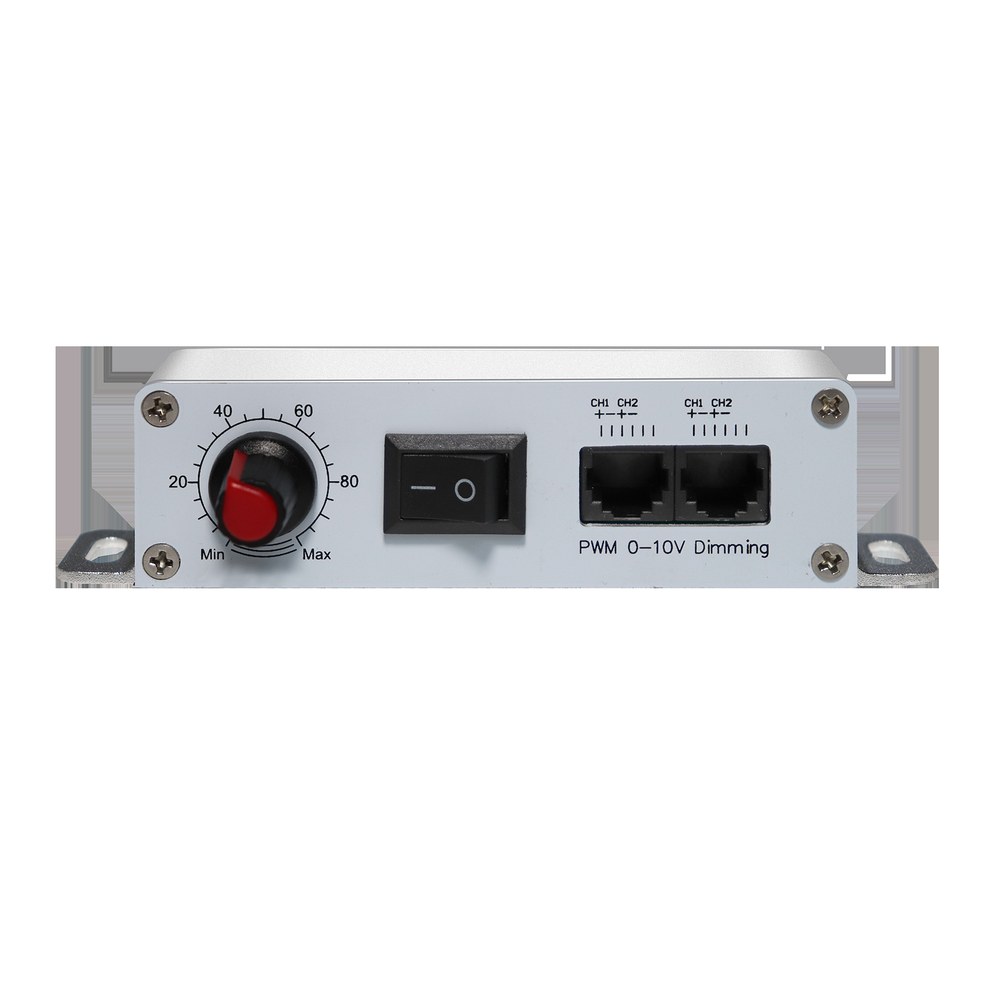
- Look for 0-10V / PWM Dimming Without Frequency Artifacts: Utilize precision dimmers such as the XineLam DM25 that provide linear constant-current reduction without introducing acoustic resonance or uncontrolled duty-cycle ripple.
- Demand DLC-Qualified Drivers: Ensure power supplies meet DesignLights Consortium (DLC) Horticultural Lighting Standards for minimum 5-year warranty, THD < 15%, and power factor > 0.90 across the full dimming range.
Frequently Asked Questions
What is LED driver output current ripple?
Output current ripple is the residual periodic AC variation superimposed on the steady DC output current of an LED driver. It typically manifests at twice the AC mains frequency (100 Hz or 120 Hz) due to imperfect rectifying and filtering across the driver's power conversion stages.
How does high current ripple harm LED chips and accelerate lumen depreciation?
Current ripple causes the instantaneous forward current to peak significantly above the nominal average. Because LED junction temperature rise is proportional to I²R heating and diode photon efficacy droops at higher instantaneous currents, high ripple generates elevated thermal cycles that accelerate phosphor degradation, bond wire fatigue, and shorten L90/B10 operational lifetime.
What current ripple percentage is recommended for commercial horticultural LED luminaires?
For commercial horticultural fixtures, a low current ripple of under 5% (peak-to-peak) is strongly recommended. Premium two-stage constant current drivers achieve <3% ripple, preventing stroboscopic optical flicker and maximizing diode longevity.
What component is the primary failure bottleneck inside an LED driver?
Aluminum electrolytic capacitors are the primary failure point. Electrolyte dry-out follows the Arrhenius equation: every 10°C rise in capacitor core temperature halves its operating lifespan. Specifying 105°C-rated long-life capacitors (10,000+ hours) is critical to match the 50,000 to 100,000-hour rating of LED diodes.
- U.S. Department of Energy (DOE) Solid-State Lighting Program: Solid-State Lighting Technology & Reliability — https://www.energy.gov/eere/ssl/solid-state-lighting
- DesignLights Consortium (DLC): Horticultural Lighting Technical Requirements — https://www.designlights.org/horticultural-lighting/
- MEAN WELL Technical Knowledge Base: Understanding Ripple and Noise in LED Power Supplies — https://www.meanwell.com/newsInfo.aspx?c=5&i=645
About the Publisher
XineLam is an established manufacturer of high-reliability LED horticultural lighting and engineered backlighting solutions, with 17 years of experience in LED lighting design and 300+ patents in China and internationally. Our products integrate premium industrial-grade drivers and high-PPE optical systems to ensure continuous, high-efficiency operation under demanding commercial cultivation environments.