How Many Hours Should LED Grow Lights Be On? A Photoperiod Guide
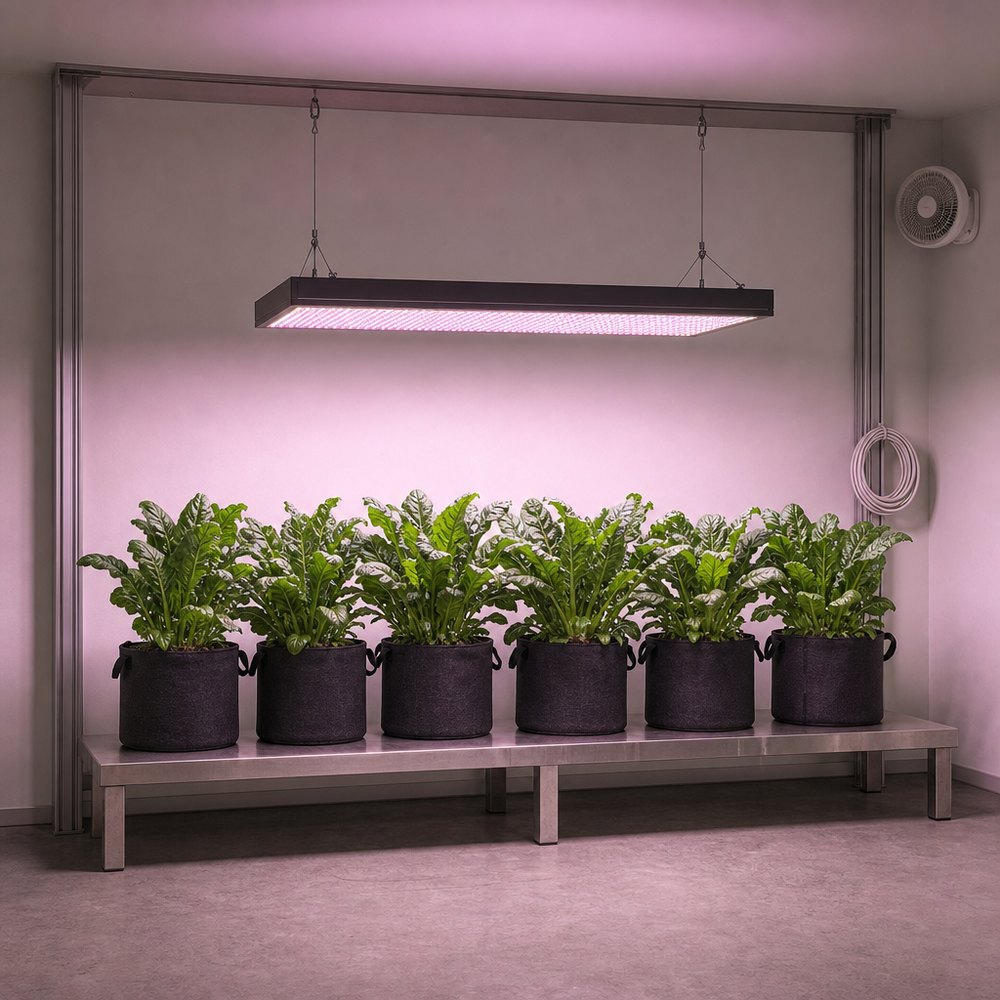
The short answer is that most indoor plants do well with 12 to 14 hours of light a day, and the workable range for home growers sits between 10 and 16 hours. That figure comes from Iowa State University Extension, which also notes that some plants have specific flowering responses to day length. The longer answer is that "how many hours" is only half of a two-part question, because hours and intensity together determine how much light a plant actually receives.
Why the number of hours is only half the answer
A grow light schedule controls two separate things. The first is the photoperiod: the length of the uninterrupted dark period, which many plants read as a seasonal signal. The second is the daily light integral, or DLI, which is the total amount of photosynthetically active light delivered over 24 hours, measured in moles per square metre per day.
Michigan State University Extension draws this distinction explicitly in its guidance on supplemental lighting, separating lighting used to create a long photoperiod from lighting used to raise the DLI. A low-intensity fixture can satisfy a photoperiod requirement without contributing much to the DLI, while a high-output fixture running a short schedule can deliver a large DLI. This is why two growers can both "run 12 hours" and end up with very different crops.
The photoperiod signal itself is not a simple count of daylight hours. Research in Communications Biology on the vegetative-to-reproductive transition describes how plants measure the length of the night through circadian regulation of light-signalling molecules, and a review of daylength recognition models in PubMed Central makes the same point: the dark interval, not the light interval, is what many flowering species actually time.
What the published ranges say
Extension guidance converges on a moderate range. Iowa State University Extension recommends supplying light 12 to 14 hours a day when growing plants indoors, and places the practical limits for home gardeners at no less than 10 hours and no more than 16 hours a day. Michigan State University Extension classifies plants as short-day, long-day or day-neutral for flowering purposes, and notes that short-day species are often described as flowering when the light period is about 12 hours or less.
Those two statements describe different things and should not be averaged. The 12 to 14 hour figure is a general indoor-growing recommendation; the 12 hour figure is a flowering threshold for a specific group of species. A lettuce seedling and a short-day flowering crop are not on the same schedule even though both are "around 12 hours".
Photoperiod and light target by purpose
| Growing situation | Light per 24 hours | What the setting controls |
|---|---|---|
| General indoor growing (vegetables, foliage plants, seedlings) | 12 to 14 hours | Steady photosynthesis and compact growth; the standard recommendation from Iowa State University Extension |
| Home-gardener working limits | 10 to 16 hours | Below 10 hours the daily light integral usually becomes the limiting factor; above 16 hours, continuous light stresses some species |
| Short-day (long-night) flowering species | Around 12 hours or less of light | Floral initiation; the classification and the approximate threshold are from Michigan State University Extension |
| Long-day flowering species | Longer than the critical night, often with a night-interruption pulse | Floral initiation; Michigan State University Extension notes that photoperiodic lighting needs only low intensity, unlike lighting used to raise the DLI |
| Greenhouse supplemental lighting for yield | Hours are secondary; the target is a DLI in mol/m²/day | Total accumulated light; Michigan State University Extension separates this from photoperiod lighting entirely |
How to set a schedule in five steps
- Fix the dark interval first. Decide the one period in 24 hours that will always be dark, then place the light hours around it. A dark interval that moves every day defeats the point of a photoperiod schedule.
- Start from the extension range for the crop type. Use 12 to 14 hours as the starting point for general indoor growing, and treat 10 to 16 hours as the outer limits rather than targets.
- Check whether flowering is photoperiod-controlled. If the species is short-day, the light period needs to fall to roughly 12 hours or below for flowering to be triggered; if it is long-day, the night must instead be interrupted.
- Then adjust intensity, not hours, to raise growth. Once the schedule is inside the recommended band, additional light is usually better added through output or mounting height, which raise the DLI without disturbing the dark period.
- Watch the plants, not the clock. Stretching, pale new growth and long internodes usually indicate too little light per day; leaf edge burn and bleaching under a long schedule usually indicate too much. Change one variable at a time.
Three schedule mistakes that look like a light problem
Treating 24 hours as "more is better". Continuous light removes the dark interval that both respiration and photoperiodic signalling depend on, which is why the extension guidance caps home use at 16 hours even though the recommended figure is lower.
Leaving the timer indoors in the dark. A photoperiod schedule only works if it is uninterrupted. Light leaking into the room during the dark period, from a door, a window or a status LED on another device, can register with a plant the same way a light pulse does.
Confusing a long photoperiod with a high daily light integral. Running a low-output fixture for 16 hours may satisfy the flowering signal while still leaving the plant short of the light it needs to build mass. If growth is slow, compute the DLI rather than extending the timer.
Frequently asked questions
Can I leave LED grow lights on for 24 hours?
Continuous light is not recommended for most plants. Iowa State University Extension advises 12 to 14 hours a day for indoor growing and puts the practical home range at 10 to 16 hours. Plants need a dark period for respiration and for photoperiodic signalling, so the dark interval should be treated as part of the schedule rather than as lost growing time.
Do flowering plants need fewer hours of light than seedlings?
It depends on the species rather than on the growth stage alone. Michigan State University Extension classifies plants as short-day, long-day or day-neutral and notes that short-day plants flower when the light period falls below a critical length often taken as about 12 hours. Seedlings of most vegetables and foliage plants grow well on the 12 to 14 hour schedule used for general indoor growing.
Is 18 hours of light better than 12 hours for vegetative growth?
Longer light periods raise the daily light integral, which can increase growth in vegetatively propagated crops, but the gain is not automatic. Once the DLI is sufficient for the crop, extra hours mainly add electricity cost and heat. The reliable method is to estimate the DLI and extend hours only while light is still the limiting factor.
Does the number of hours change the spectrum I should choose?
Photoperiod and spectrum act on different processes. Hours per day determine when light is received and how much accumulates; spectrum influences morphology and, in photoperiodic crops, the flowering signal. A fixture combining white and deep-red diodes allows long-hour vegetative schedules and short-hour flowering schedules on the same hardware.
About the publisher
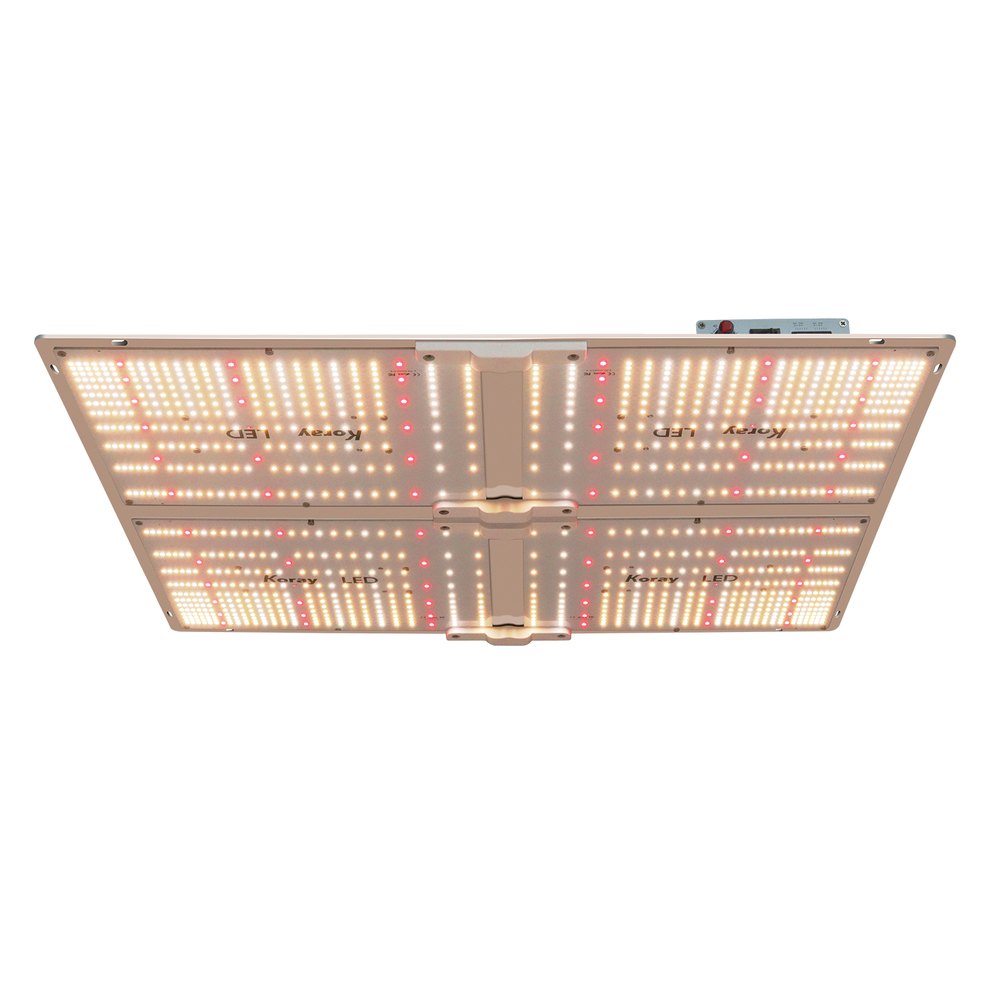
XineLam manufactures LED grow lights and LED lighting modules, with 17 years of experience in LED lighting and 300+ patents in China and internationally. The fixtures shown in this article are examples of the multi-panel and bar formats used for indoor cultivation; this guide is written as a technical explainer and the schedule values above come from the cited extension and research sources, not from product testing.