How Much Electricity Does a Grow Light Use? A Practical kWh and Cost Guide
The bill is decided by three things: input watts, hours of operation and the tariff you pay. Everything else is arithmetic.
Growers usually ask this question after a first full billing period, when the lighting line item turns out to be larger than the fixture quote suggested. The answer is not a single number, because the same 320 W fixture costs three times as much to run at 0.25 US dollars per kWh as at 0.08. What can be answered precisely is the relationship between the fixture, the schedule and the meter.
What the meter is actually measuring
Electricity is billed in kilowatt-hours, which is energy, not power. A 320 W fixture running for one hour consumes 0.32 kWh. Run it for sixteen hours and it has consumed 5.12 kWh, whatever the spectrum, the brand or the photosynthetic photon flux density it produces.
The number to start from is the input power at the wall. Datasheets sometimes quote the LED load instead, which excludes driver losses; the driver sits between the mains and the array, so its conversion loss is paid for by the grower but does not appear on the LED figure. If a datasheet only gives LED load, ask for the input power or the driver efficiency before estimating a bill or sizing a circuit. University extension guidance on controlled-environment lighting uses the same approach: fixture wattage multiplied by operating hours gives the kilowatt-hours, and kilowatt-hours multiplied by the local price gives the cost.1
The four numbers you need
Every estimate on this page comes from four inputs: input watts (W), hours per day (h), days in the billing period, and the price per kWh. The arithmetic is:
kWh per month = kWh per day × days
cost = kWh per month × price per kWh
Worked once by hand: a 320 W fixture on a 16-hour photoperiod uses 0.32 × 16 = 5.12 kWh per day. Over a 30-day month that is 153.6 kWh. At 0.15 US dollars per kWh the lighting line is 23.04 US dollars. Nothing in that calculation depends on whether the fixture is a bar, a panel or a quantum board.
Four fixture classes, side by side
The table below applies the same formula to four common fixture sizes. Two run a 16-hour photoperiod, as in vegetative and propagation rooms; the two larger fixtures run 12 hours, as in a flowering or fruiting schedule. Costs are shown at two tariffs so the reader can see how much of the answer is local price rather than hardware.
| Fixture class | Input power | Hours/day | kWh/day | kWh/month | Cost at $0.15/kWh | Cost at $0.25/kWh |
|---|---|---|---|---|---|---|
| Single-bar propagation light | 150 W | 16 | 2.40 | 72.0 | $10.80 | $18.00 |
| Mid-size full-spectrum panel | 320 W | 16 | 5.12 | 153.6 | $23.04 | $38.40 |
| High-output flowering fixture | 480 W | 12 | 5.76 | 172.8 | $25.92 | $43.20 |
| Twin-bar high-bay fixture | 720 W | 12 | 8.64 | 259.2 | $38.88 | $64.80 |
Figures are arithmetic from input watts and hours. They exclude cooling, dehumidification, circulation fans and any standby load, which are treated separately below.
From watts to moles: what one kWh of light buys
Two fixtures with the same wattage can deliver different amounts of usable light. The bridging quantity is photosynthetic photon efficacy, quoted in micromoles per joule (µmol/J). Because one kilowatt-hour is 3.6 megajoules, the moles of photons delivered per kilowatt-hour are simply the efficacy multiplied by 3.6.
At 2.8 µmol/J a fixture delivers about 10.1 mol of photons per kilowatt-hour. At 2.4 µmol/J the same kilowatt-hour buys about 8.6 mol, so the electricity cost per mole of delivered light is roughly 17 percent higher. If electricity is 0.15 US dollars per kWh, that is about 1.5 US cents per mole at the higher efficacy and about 1.7 cents at the lower one. This is why an efficacy figure belongs next to the price on any fixture comparison: the purchase price is paid once, the electricity is paid every month.
Where the rest of the bill comes from
In a sealed room, essentially all of the electrical energy that enters the fixture leaves as heat, and the cooling system has to remove it. One watt of lighting load is equivalent to about 3.41 BTU per hour, so a 10 kW lighting installation presents the cooling system with roughly 34,100 BTU per hour before any solar gain or equipment heat is counted. In a greenhouse the ratio is more favourable in winter, but in summer the chiller or pad-and-fan system is doing the same work.
Dehumidification, circulation fans, irrigation pumps and controllers add their own consumption. A common reason a calculated bill comes out lower than the utility invoice is that the estimate covered only the fixtures.
Five ways to reduce consumption without losing DLI
- Compare efficacy, not wattage. A lower-wattage fixture at higher µmol/J can deliver the same photon flux for less energy. Compare at the same mounting height and coverage area.
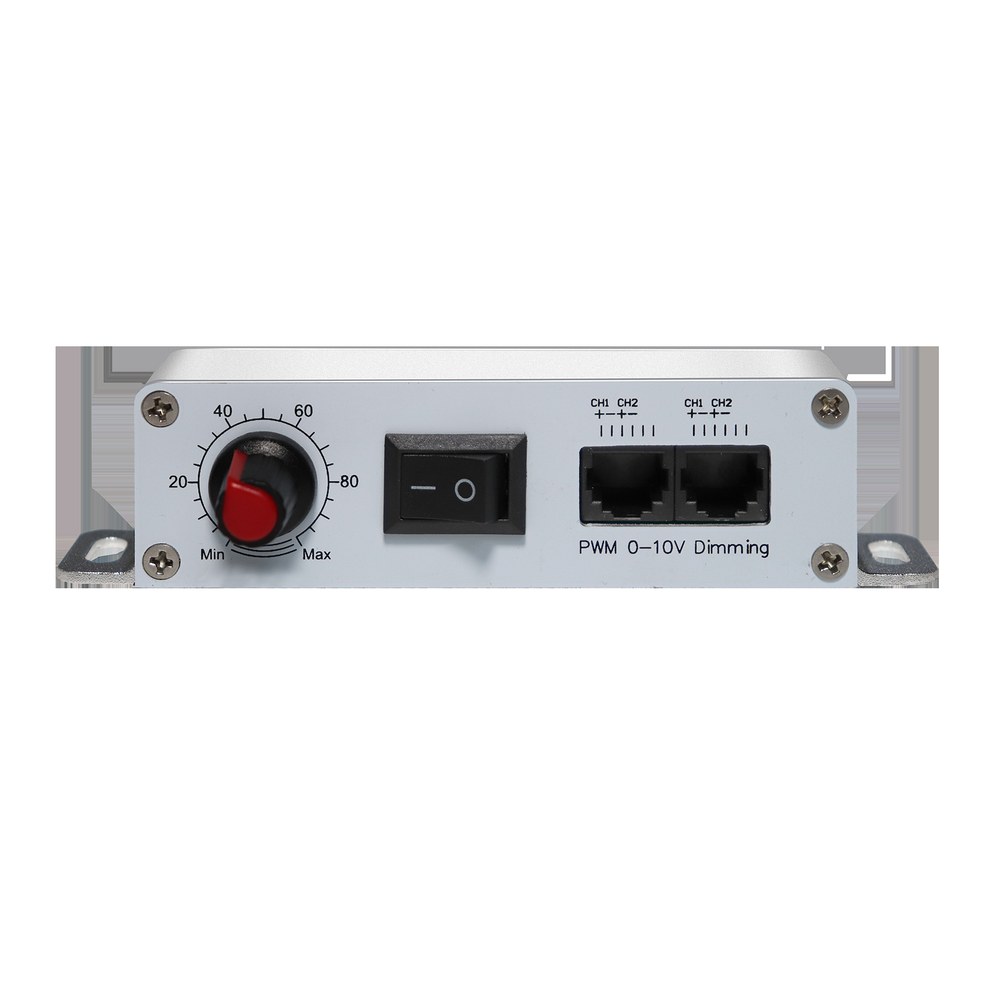
- Dim instead of switching fixtures off. Where a driver reduces input power in proportion to output, dimming the array during low-demand periods or the last hour of the photoperiod saves energy; where it does not, the saving is illusory. Verify with a clamp meter at two setpoints.
- Match the photoperiod to the crop's DLI target. Daily light integral is PPFD multiplied by hours and by 0.0036. Two schedules can reach the same DLI; the one that needs fewer fixture-hours is cheaper to run.
- Choose the heat path deliberately. Air-cooled or ducted fixtures move heat out of the canopy zone with fans rather than with compressor energy, which changes the cooling load more than the lighting load.
- Maintain output. Dust on lenses and aged diodes both reduce the light delivered per kilowatt-hour, so a dirty installation quietly buys fewer moles for the same bill.
What the arithmetic cannot tell you
Three things sit outside the formula. First, tariff structure: time-of-use bands, tiered blocks and demand charges can make the same kilowatt-hour cost very different amounts depending on when it is drawn. Second, metering: a whole-room reading includes everything on that circuit, and sub-metering the lighting circuits is the only way to separate them afterwards. Third, output depreciation: a fixture that has lost part of its initial photon output is delivering fewer moles for the same kilowatt-hour, so the effective cost per mole rises over the installation's life even though the meter reading is unchanged.
Questions growers ask
Does a 1,000 W grow light draw 1,000 W from the wall?
Only if 1,000 W is the input power rating. Many fixtures quote the LED load, and the driver adds loss between the LED array and the socket, so the meter can read higher than the LED figure. Ask the supplier which number the datasheet states before you size a circuit or a bill estimate.
How much does a grow light cost to run per month?
Multiply input watts by hours per day, divide by 1,000 to get kWh per day, multiply by the days in the billing period, then multiply by the price per kWh. A 320 W fixture at 16 hours uses 5.12 kWh per day, about 153.6 kWh in a 30-day month, which is 23.04 US dollars at 0.15 US dollars per kWh.
Is an 18/6 schedule more expensive than 12/12?
Yes, in direct proportion to the hours: the same fixture at 18 hours uses 50 percent more energy than at 12. Whether that is worth it depends on the DLI the crop needs, because a long photoperiod at low PPFD and a short photoperiod at high PPFD can deliver the same DLI at different electricity cost.
Do dimmers actually reduce electricity use?
Only when the driver reduces input power along with output. Constant-current drivers with 0-10 V or PWM control normally do; a triac dimmer on a cheap driver may burn the surplus as heat instead. Compare meter readings at full and reduced output before assuming a saving.