How to Calculate PPFD Uniformity and Edge Falloff for Vertical Farming LED Racks
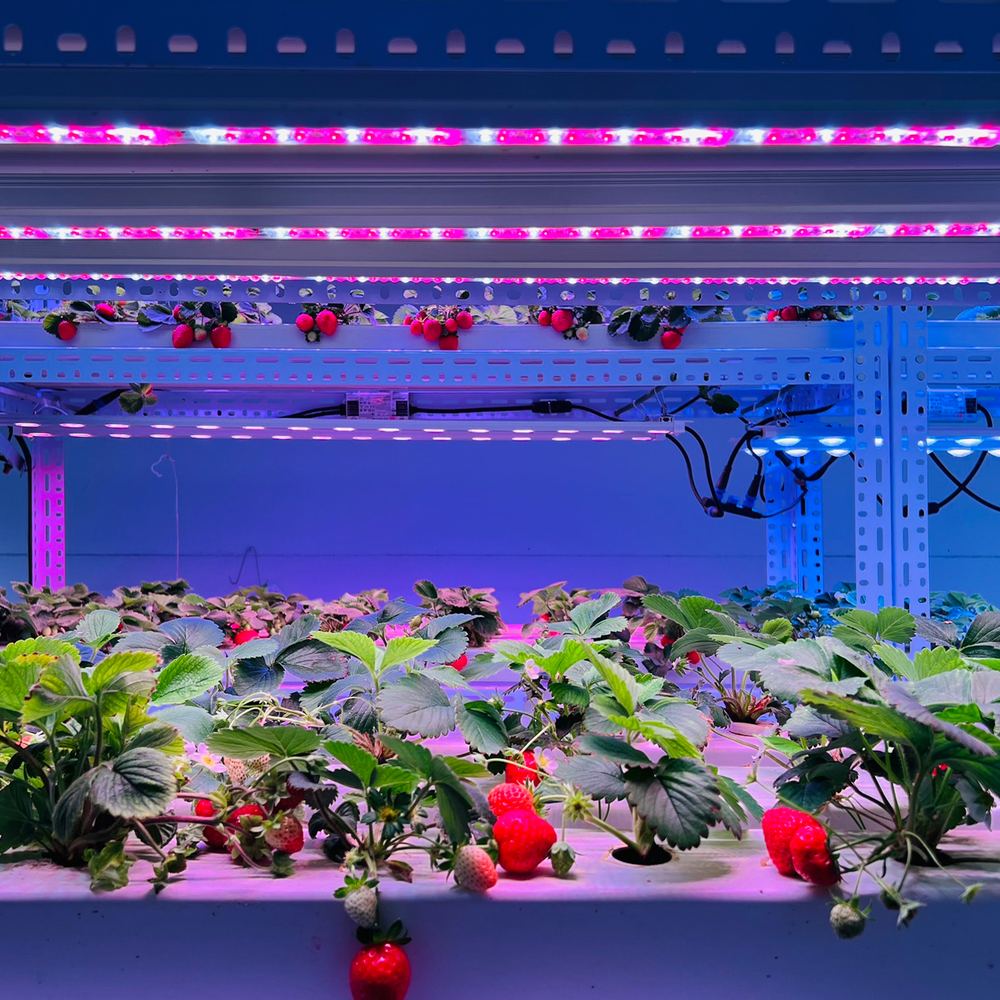
In multi-tier vertical farming facilities, delivering uniform Photosynthetic Photon Flux Density (PPFD, expressed in μmol·m-2·s-1) across every square centimeter of the growing bench is vital to achieve synchronized crop growth cycles, consistent fresh weight, and predictable harvest scheduling. When light distribution is non-uniform, crops under central high-irradiance zones mature faster or develop tip-burn, while perimeter crops suffer from delayed development due to edge falloff.
According to photobiological measurement standards defined by ANSI/ASABE S640 (Quantities and Units of Electromagnetic Radiation for Plants), PPFD quantifies the instantaneous rate of photosynthetic photons (400–700 nm) incident per unit area per second. This guide provides optical formulas, grid sampling protocols, and calculation procedures for measuring and optimizing PPFD uniformity across vertical cultivation tiers.
1. Key Metrics of PPFD Uniformity: U1, U2, and CV
To evaluate spatial light distribution across a growing tray or rack, lighting designers rely on three primary statistical metrics calculated from an evenly spaced grid of quantum sensor measurements:
- Min-to-Average Uniformity (U1): The ratio of minimum measured PPFD to average PPFD across all grid points. Recommended threshold:
U1 ≥ 0.85for commercial vertical farming. - Min-to-Max Uniformity (U2): The ratio of minimum to maximum measured PPFD. Recommended threshold:
U2 ≥ 0.75. - Coefficient of Variation (CV): The ratio of the standard deviation (σ) of all grid measurements to the mean (μ), expressed as a percentage. Recommended threshold:
CV ≤ 10%.
1. Average PPFD: PPFD_avg = (Σ PPFD_i) / N
2. Minimum-to-Average Uniformity: U1 = PPFD_min / PPFD_avg
3. Minimum-to-Maximum Uniformity: U2 = PPFD_min / PPFD_max
4. Coefficient of Variation: CV (%) = (σ / PPFD_avg) × 100%
where σ = sqrt( [Σ (PPFD_i - PPFD_avg)^2] / (N - 1) )
2. Grid Measurement Protocol (ASABE & DLC Alignment)
Following guidelines from the DesignLights Consortium (DLC) Horticultural Lighting Technical Requirements, PPFD mapping must follow a structured grid protocol:
- Grid Resolution: Divide the growing area (e.g., 1.2 m × 2.4 m bench) into equal square cells of no greater than 15 cm × 15 cm. For a standard 4×8 ft tray, this yields a grid of at least 8 × 16 = 128 measurement points.
- Sensor Level: Position a calibrated cosine-corrected quantum sensor (e.g., LI-COR or Apogee ePAR sensor) at the anticipated crop canopy plane (typically 15 cm to 30 cm below the LED light bars).
- Boundary Offset: Ensure grid points extend to within 5 cm of the tray perimeter to capture boundary edge falloff accurately.
3. Optical Edge Falloff and Overlap Pitch Calculation
In vertical farming racks, ceiling and shelf clearances are restricted (typically 30 cm to 50 cm between shelf tiers). This ultra-short hanging distance (H = 15–25 cm from fixture to canopy) limits the natural lateral beam spread of each LED bar.
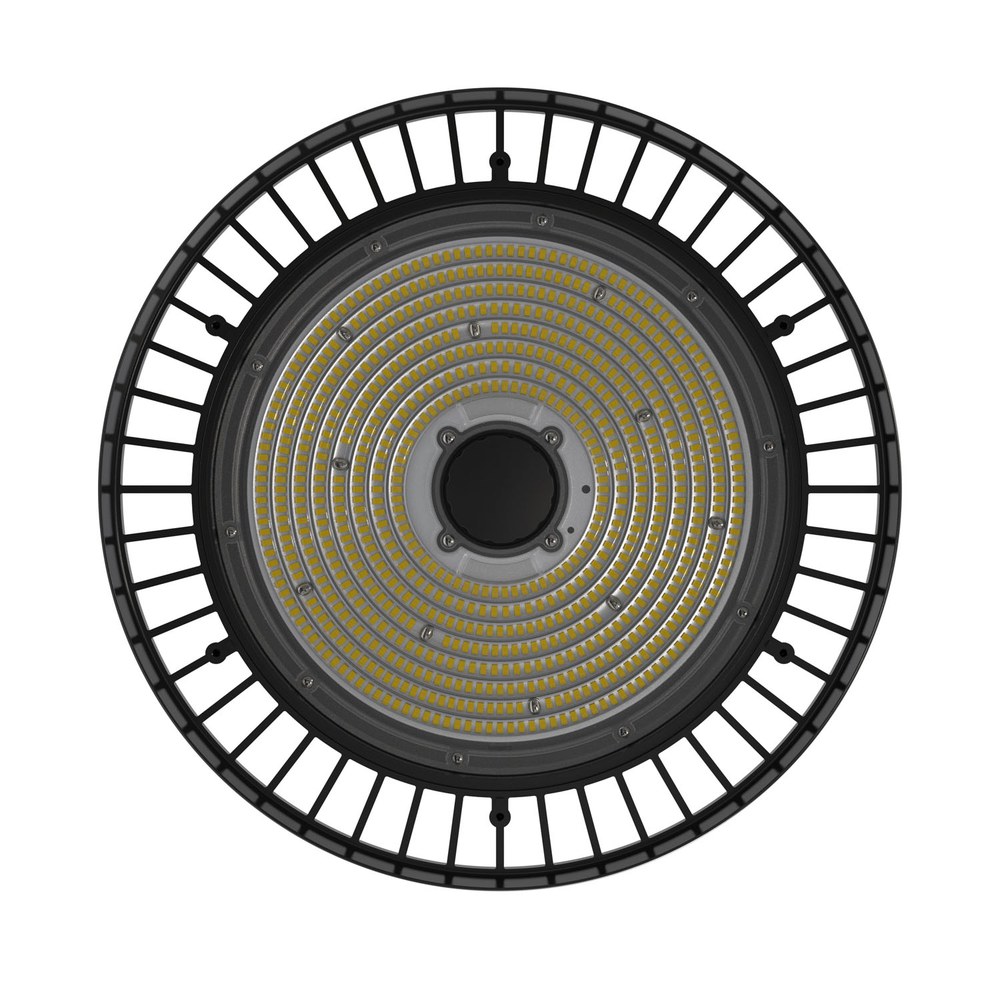
To eliminate optical troughs and compensate for edge falloff without wasting electrical power, lighting engineers must calculate the optimal bar-to-bar spacing (pitch, S) and edge-to-bar offset (S_edge):
1. Central Bar Pitch: S_center ≤ 1.2 × H (for 120° Lambertian distribution)
2. Edge Bar Offset: S_edge = 0.5 × S_center - 0.1 × H
3. Edge Falloff Gradient: Gradient_edge (%) = [(PPFD_center - PPFD_edge) / PPFD_center] × 100%
As documented in controlled-environment lighting research by the Utah State University Crop Physiology Laboratory, maintaining optimal photon distribution at high crop canopy densities directly correlates with uniform photosynthetic nitrogen uptake and biomass accumulation.
4. Benchmark Uniformity Data for Vertical Farming Configurations
The table below compares three common LED bar layouts over a standard 1.2 m × 2.4 m (4 ft × 8 ft) vertical farming cultivation tray at a 20 cm canopy distance:
| Configuration Parameters | Layout A (3 Bars, Equal Spacing) | Layout B (4 Bars, Equal Spacing) | Layout C (4 Bars, Variable Edge Pitch + Reflectors) |
|---|---|---|---|
| Fixture Count & Wattage | 3 × 65W (195W total) | 4 × 50W (200W total) | 4 × 50W (200W total) |
| Bar Pitch (Center-to-Center) | 40 cm uniform | 30 cm uniform | Center: 32 cm | Edge Offset: 14 cm |
| Average PPFD (μmol·m-2·s-1) | 242 μmol/m²/s | 255 μmol/m²/s | 268 μmol/m²/s |
| Minimum PPFD (μmol·m-2·s-1) | 148 μmol/m²/s (Edge) | 192 μmol/m²/s (Edge) | 236 μmol/m²/s (Edge) |
| Maximum PPFD (μmol·m-2·s-1) | 312 μmol/m²/s (Center) | 288 μmol/m²/s (Center) | 282 μmol/m²/s (Center) |
| Min/Avg Uniformity (U1) | 0.61 (61.1%) - Poor | 0.75 (75.3%) - Moderate | 0.88 (88.1%) - High / Compliant |
| Coefficient of Variation (CV) | 22.4% | 13.8% | 7.2% |
| Edge Falloff Gradient | 52.6% drop | 33.3% drop | 16.3% drop |
5. Engineering Best Practices to Eliminate Edge Falloff
- Variable Bar Pitching: Place the outermost LED bars closer to the rack boundary (e.g., 10–14 cm from the edge) rather than maintaining equal spacing across the shelf.
- High-Reflectance Side Baffles: Install specular or diffuse reflective curtains (micro-cellular PET or white powder-coated aluminum, reflectance ≥ 92%) on rack ends to bounce peripheral photons back onto perimeter crops.
- Wide-Angle Batwing Optics: Utilize fixtures engineered with optical diffusion lenses or batwing beam profiles (130° to 140°) to broaden lateral photon overlap in close-proximity mounting environments.
6. Frequently Asked Questions (FAQ)
What is the recommended PPFD uniformity ratio for commercial vertical farming leafy greens?
For commercial vertical farming of leafy greens and herbs, maintaining a Minimum-to-Average PPFD uniformity ratio (U1 = PPFD_min / PPFD_avg) above 0.85 (85%) across the entire bench area is recommended. This prevents uneven transpiration rates, variable crop harvest weights, and inconsistent leaf pigmentation.
Why does PPFD drop sharply near the edges of vertical farming shelves?
Edge falloff occurs because boundary plants only receive overlapping optical flux from fixtures directly overhead and toward the rack center, missing the complementary photon contribution from adjacent lateral fixtures. Without reflective side curtains or narrower edge fixture spacing, edge PPFD typically drops by 25% to 45% compared to the center.
How does vertical mounting height impact PPFD uniformity in close-canopy tiers?
At ultra-short hanging distances (e.g., 15 cm to 25 cm above canopy), narrow-beam LED bars create hot spots directly under diodes and deep troughs between bars. Increasing the number of lower-wattage bars or utilizing wide-angle beam optics (120 degrees or batwing distributions) restores uniformity without sacrificing vertical tier density.
What standard defines horticultural photon flux density measurement protocols?
The ANSI/ASABE S640 standard ("Quantities and Units of Electromagnetic Radiation for Plants") and ANSI/ASABE S642 define the measurement criteria for photosynthetic photon flux (PPF, 400-700 nm) and photosynthetic photon flux density (PPFD, umol/m2/s), establishing standardized grid point sampling methodologies.
About the Publisher
XineLam is an optical and thermal engineering lighting manufacturer with 17 years of experience and 300+ patents in China and internationally. Specializing in high-uniformity horticultural LED systems, precision backlighting, and commercial agricultural luminaires, XineLam delivers energy-efficient optical solutions validated by standardized photobiological testing.