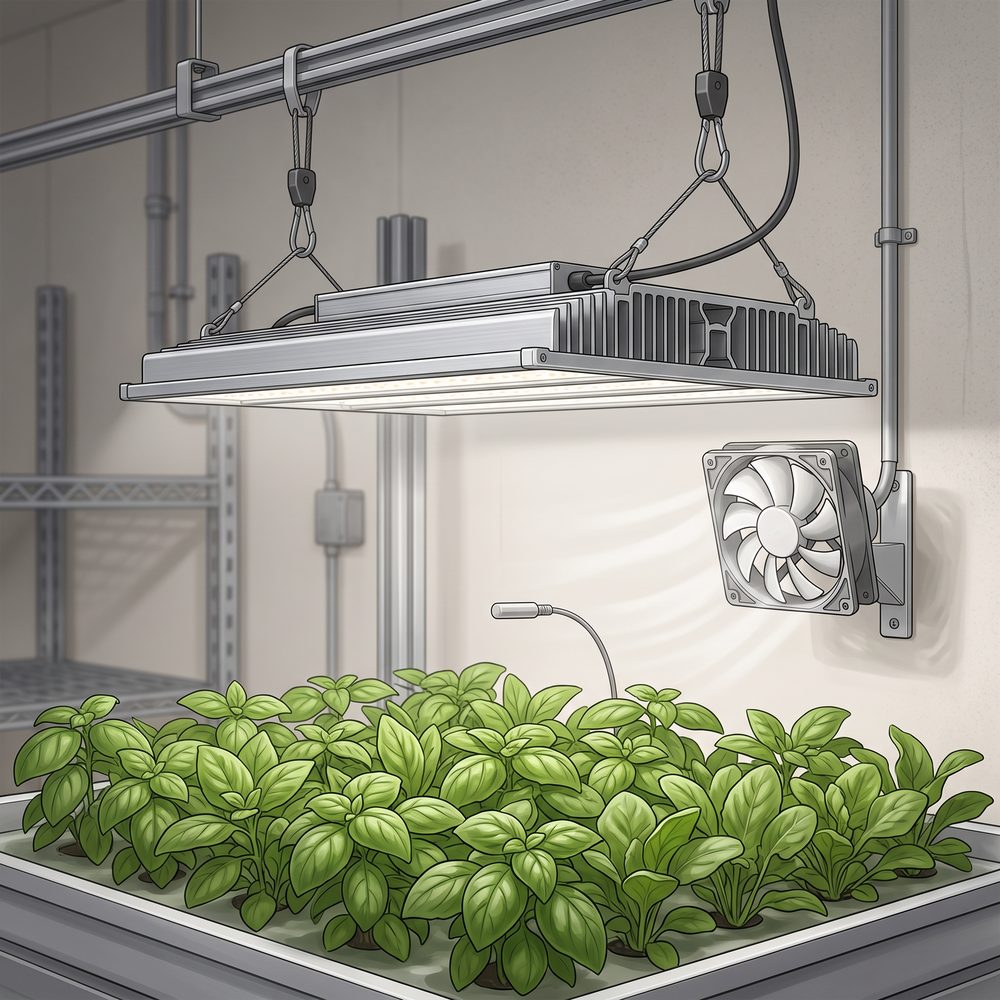
Thermal evaluation is not just a question of whether a fixture feels hot. Put electrical input, heat sink, room air, leaves and canopy measurements on the same heat path.
An LED converts electrical input into light and heat. Energy not absorbed by plants or removed from the room ultimately adds to the room heat load. Check fixture mounting, dust on fins, driver location, airflow direction and the air temperature above the canopy.
| Measurement point | Question answered | Conditions to record |
|---|---|---|
| Electrical input | How much power does the system consume? | Dimming, time and driver state |
| Heat sink | Is fixture heat being released? | Room temperature, dust and airflow |
| Leaf/canopy | What temperature does the crop experience? | PPFD, humidity, air speed and time |
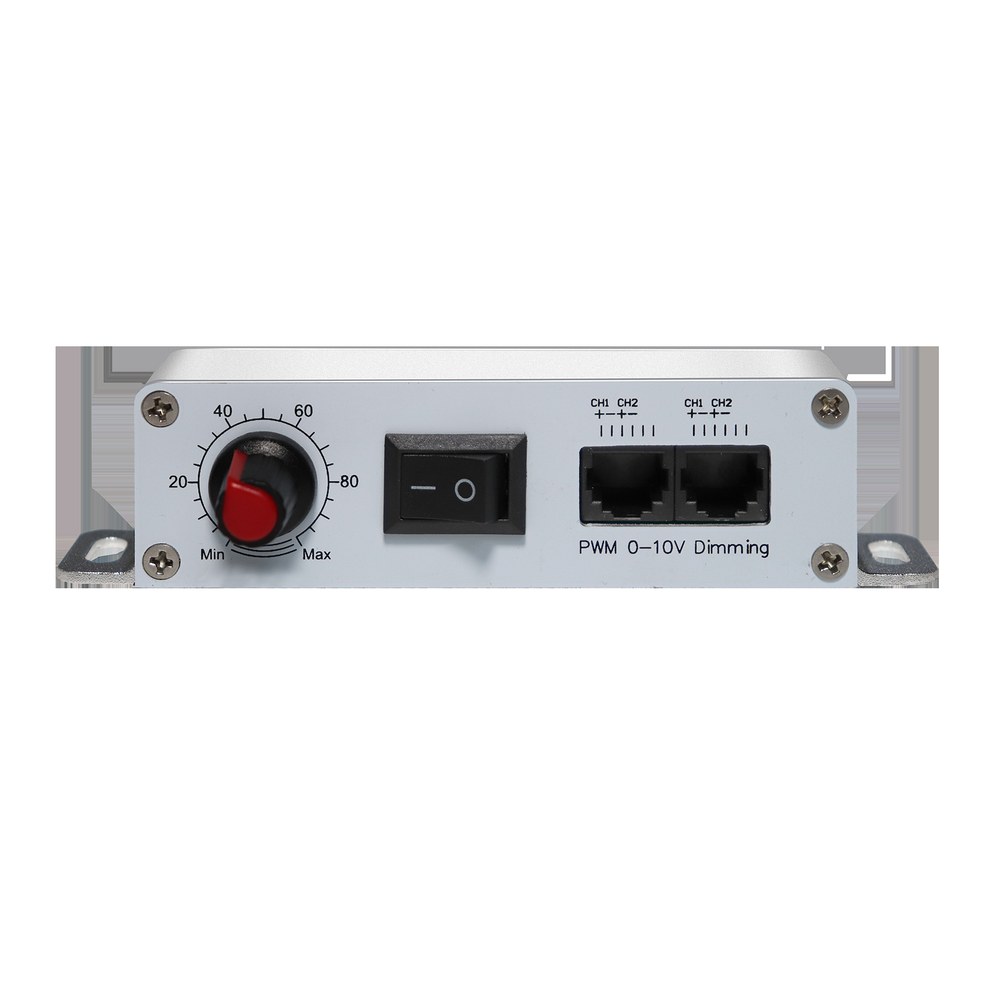
XineLam publishes this guide with 17 years of experience and 300+ patents in China and internationally.
No. Electrical input eventually becomes heat in the room, even when the fixture converts more of it to useful photons.
Measure at representative leaf positions and record air temperature, relative humidity, airflow and light setting at the same time.
No. Heat-sink temperature helps diagnose the fixture, but leaf or canopy temperature and the room environment determine plant conditions.