LED Grow Light Wattage: Actual Power Draw vs Equivalent Rating
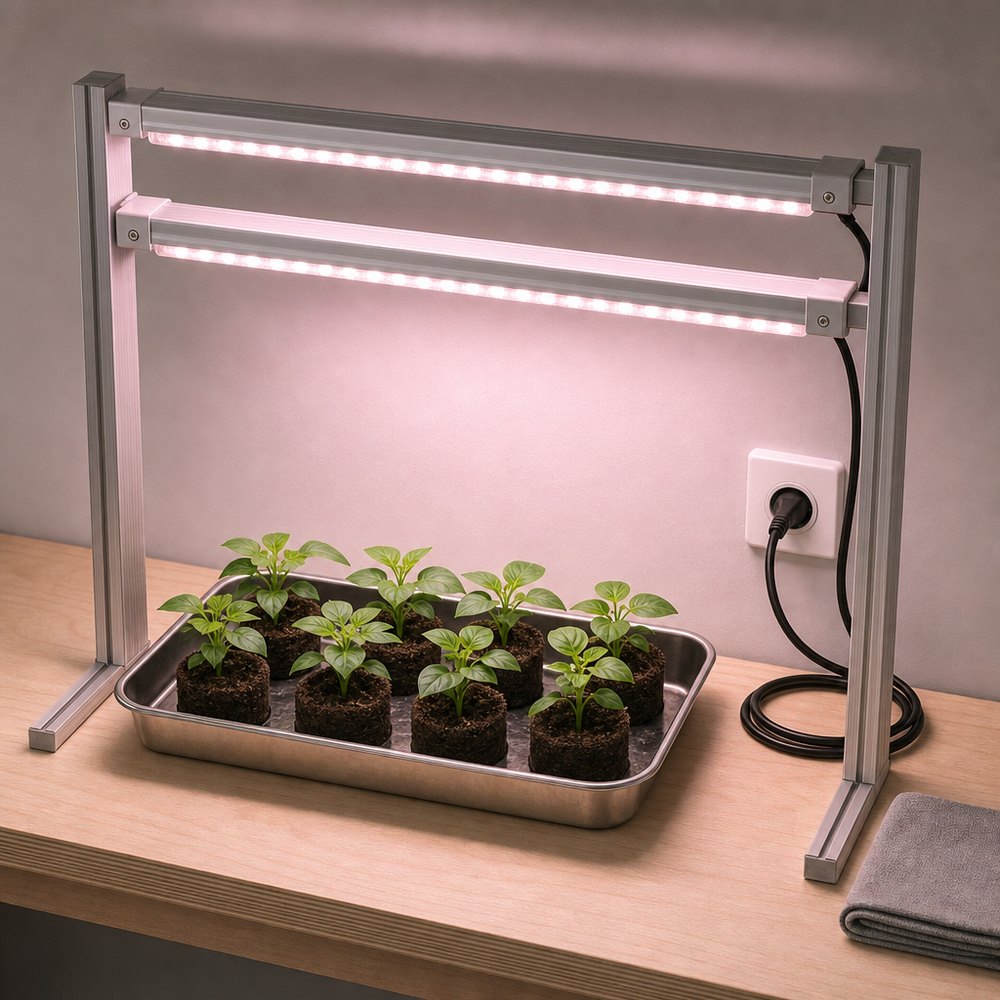
Two LED grow lights can both be sold as "1000 W" and still draw very different amounts of power, because the big number on the packaging is frequently an equivalence claim rather than a measurement of consumption. The figure that decides your electricity bill is input power in watts, and the figures that describe what the plant receives are different again. Separating the three is the whole of this article.
What "equivalent wattage" actually means
Equivalent wattage is a comparison convention inherited from the lamp-replacement market. The U.S. Department of Energy's guidance on purchasing energy-efficient bulbs presents the comparison as a table: a light output of 450 lumens is listed as 40 watts for incandescent but 4.5 to 7 watts for LED, and 1,600 lumens is listed as 100 watts incandescent against 10.5 to 18 watts for LED. In other words, the "equivalent" figure names the older technology the product is meant to replace, not the power the product consumes.
The convention migrated to horticultural lighting, where it is applied against high-intensity discharge lamps. That is legitimate as a rough replacement guide, but it is not an electrical specification. When a grow light is described as "1000 W equivalent", the useful question is not whether the claim is honest, but what the fixture's rated input power is.
How to find the actual input power
Look for input power in watts stated on the fixture label, in the driver specification or in the product data sheet, and treat any figure accompanied by the words "equivalent", "replaces" or "comparable to" as an equivalence claim rather than an input rating. Two checks make the number firmer.
The first is the measurement method. For solid-state lighting, photometric and electrical performance is normally reported from a test report rather than from a calculated value, and the DesignLights Consortium maintains a qualified products list for horticultural lighting precisely so that performance figures can be verified rather than taken on trust.
The second is the unit attached to the output claim. If a listing quotes only lumens, no conclusion about plant light can be drawn from it. As Iowa State University Extension points out, a fixture may provide a large amount of light as measured by lumens, but certain wavelengths such as yellow and green are brighter to the eye, so lumen figures can rank a light highly while saying little about the photosynthetically active light a plant actually receives.
Which metric answers which question
| Metric | Unit | What it measures | Use it for |
|---|---|---|---|
| Equivalent or "replaces" wattage | W (nominal) | A marketing comparison to an older lamp technology | Rough orientation only; not an electrical figure |
| Input power | W | Power the fixture actually draws at the plug | Energy cost and circuit load |
| Photopic lumens / lux | lm, lx | Light weighted to human vision | Room lighting; weak predictor for plants |
| PPF | µmol/s | Total photosynthetic photon flux the fixture emits | Comparing output between fixtures |
| PPFD | µmol/m²/s | Photon flux arriving at a surface | Setting mounting height and coverage |
| DLI | mol/m²/day | Light accumulated over 24 hours | Matching a crop's daily requirement |
| Efficacy (PPE) | µmol/J | PPF divided by input power | Comparing electrical efficiency between fixtures |
Efficacy in micromoles per joule is the metric that ties the electrical side to the plant side, because it is the only one that divides usable output by consumed power. Certification programs use it as a threshold: Michigan State University Extension's summary of the DesignLights Consortium horticultural requirements states that a fixture must have a minimum efficacy of 1.9 µmol per joule to qualify, and the DesignLights Consortium publishes the current technical requirements and qualified products list for horticultural lighting.
Worked example: from input watts to running cost
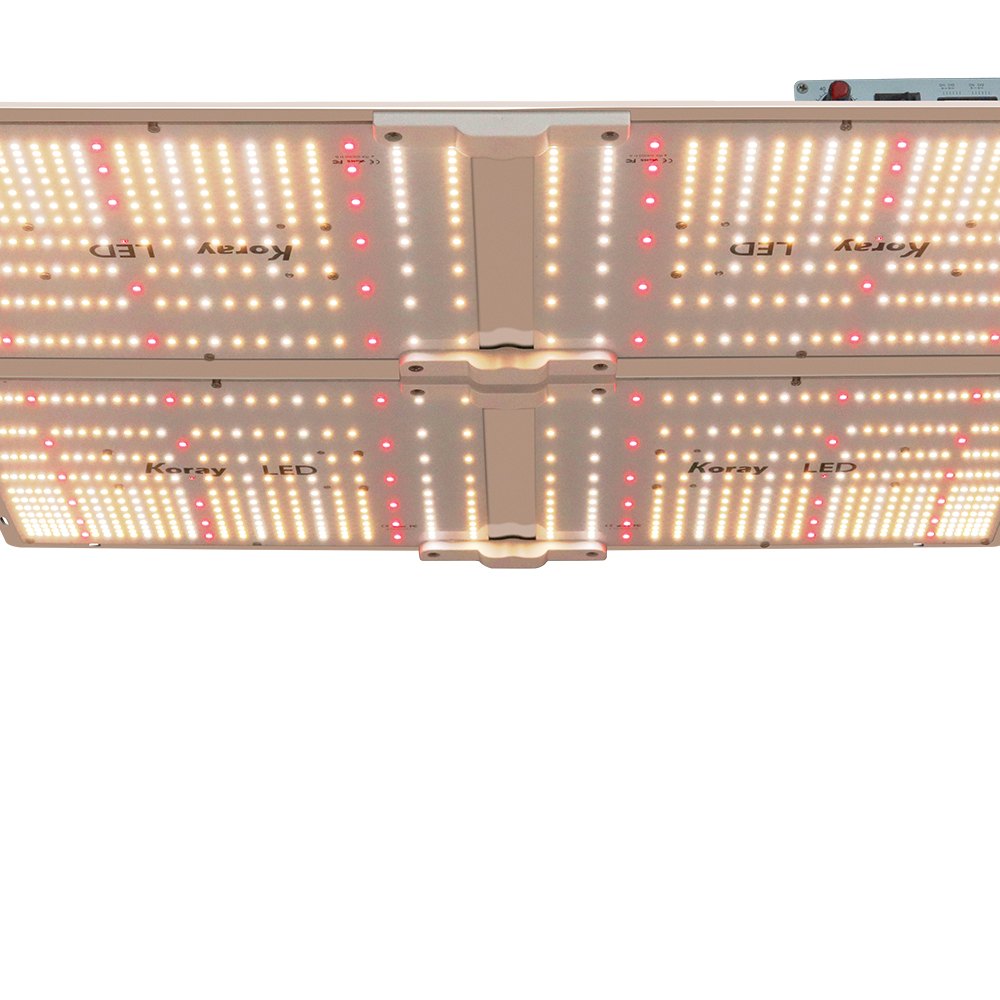
- Start from input power. Take the rated input wattage, for example 240 W, not the equivalence claim on the box.
- Convert to kilowatts. 240 W is 0.24 kW.
- Multiply by the hours per day the timer runs. At 12 hours a day, 0.24 kW × 12 h = 2.88 kWh per day.
- Multiply by your local electricity price. At any given tariff, the daily cost is 2.88 kWh multiplied by the price per kWh.
- Compare fixtures on efficacy, not on watts. If a second fixture emits the same PPF while drawing less input power, its efficacy in µmol/J is higher and its running cost at the same schedule is lower.
The arithmetic above is illustrative and uses a round 240 W figure; the method is what transfers to any fixture once you have its rated input power.
Common mistakes when reading grow light specs
Using the equivalent number to size a circuit. Circuit load is set by input current and input power. Adding up equivalence claims rather than input watts will misstate the load, sometimes by a large margin.
Assuming higher wattage means more plant light. Wattage is an input. Two fixtures with the same input power can differ in PPF and therefore in what reaches the canopy, which is why efficacy is the comparison that matters.
Buying on lumens. Lumens describe how bright the fixture looks to the human eye, weighted toward wavelengths the eye is most sensitive to. That weighting does not match the photosynthetic response.
Ignoring mounting height and coverage. PPFD at the canopy depends on how the emitted photons spread. A high-efficacy fixture mounted too high can deliver less to the plants than a modest fixture mounted correctly.
Frequently asked questions
Does a 1000W LED grow light really use 1000 watts?
Not necessarily. The large number is often an equivalence claim rather than a consumption figure. The number that determines the electricity bill is the rated or measured input power in watts. The U.S. Department of Energy makes the same distinction for household lamps, listing 1,600 lumens as 100 watts for incandescent and 10.5 to 18 watts for LED.
Which number should I compare between two grow lights?
For plant-relevant output, compare PPF in micromoles per second; for electrical performance, compare efficacy in micromoles per joule, which is PPF divided by input power. Wattage alone is an input measure, so two fixtures drawing the same wattage can deliver quite different amounts of usable light. The DesignLights Consortium publishes a horticultural qualified products list so these values can be compared on a verified basis.
Why are lumens a poor way to compare grow lights?
Lumens and lux are weighted to human vision. Iowa State University Extension notes that a fixture may provide a large amount of light as measured by lumens, but that certain wavelengths such as yellow and green appear brighter to the eye, so a lumen figure can rank a light highly for the room while saying little about the photosynthetically active light reaching the plant.
How do I estimate the running cost of a grow light?
Use input watts rather than the equivalent rating. Multiply input power in kilowatts by the hours per day the fixture runs to obtain kilowatt-hours per day, then multiply by the local electricity price. A fixture drawing 240 W for 12 hours a day consumes 2.88 kWh per day under that calculation.
About the publisher
XineLam manufactures LED grow lights and LED lighting modules, with 17 years of experience in LED lighting and 300+ patents in China and internationally. This article explains how to read the electrical and photometric specifications on grow light products; the values used as examples are illustrative arithmetic, and the threshold figures cited are those published by the referenced organisations.