Do LED Grow Lights Need GFCI Protection? Electrical Safety in Wet Grow Rooms
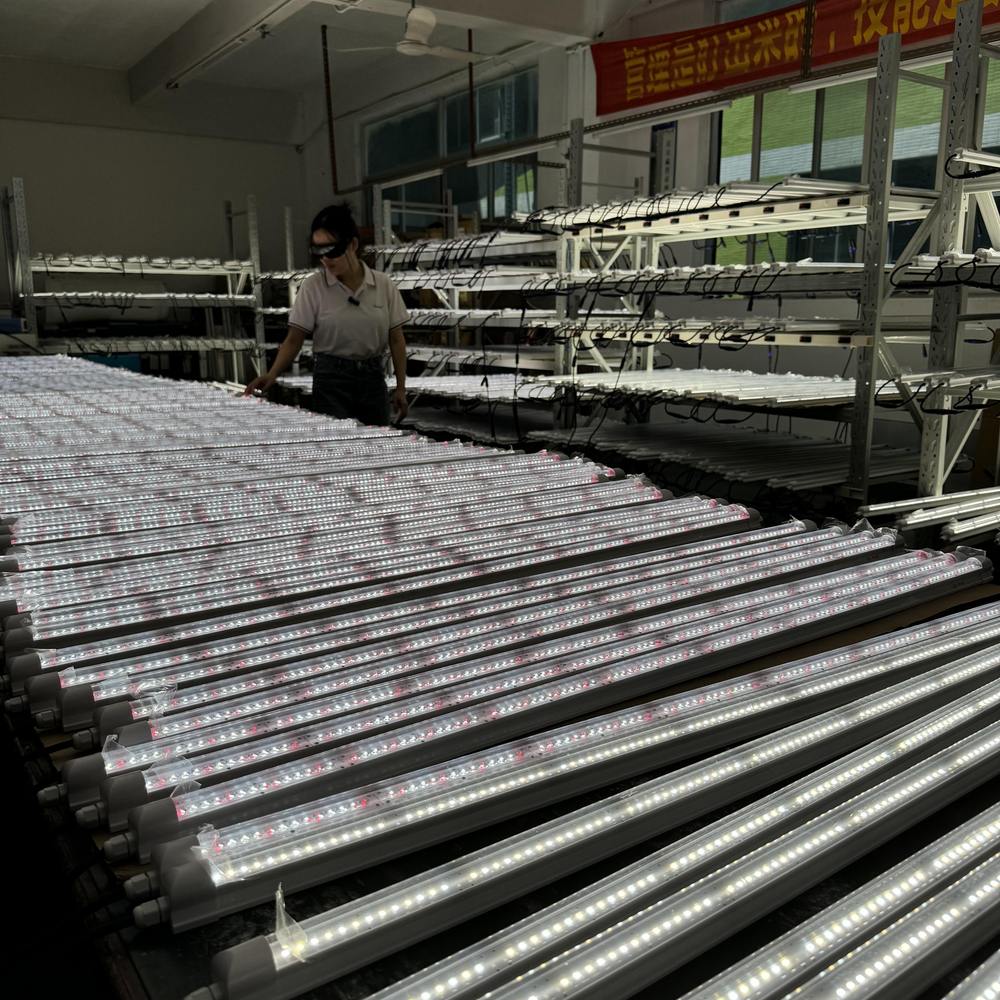
A grow room is an unusual electrical environment: high humidity, condensation that forms on the coldest surface, hand-held hoses, and water on the floor for much of the day. Yet the protection most rooms rely on is a circuit breaker sized for the cable, which will happily pass five amps through a person on its way to tripping at sixteen. The device that addresses that gap is the ground-fault circuit interrupter, and whether you need one is less a matter of taste than of what the wiring is and what code applies.
Why a circuit breaker cannot protect a person
A miniature circuit breaker is an overcurrent device. It watches for current above its rating, or for the very large current of a short circuit, and opens the circuit before the cable overheats. A person receiving a shock is a load of tens of milliamps at mains voltage: far too small for the breaker to notice, and easily enough to stop a heart. A 16 A breaker will not trip on 30 mA of leakage current, and 30 mA through the chest is already in the range where breathing becomes difficult.
The consequence for a grow room is that protective devices must be chosen for what they are protecting. Cable protection, equipment protection and people protection are three different jobs, and only one of them is served by the breaker alone.
What a GFCI actually measures
A GFCI compares the current going out on the live conductor with the current returning on the neutral. In a healthy circuit the two are equal. When current finds another path to earth, through a wet connector, a cracked driver potting compound, a frayed cord lying in a puddle, or a person, the difference appears and the device opens within milliseconds. Personnel-protection devices of the Class A type are built to trip on an imbalance of a few milliamps, typically in the 4–6 mA range, which is well below the level that injures most adults and far below what a breaker responds to.
Two properties follow from that design, and both surprise people. First, a GFCI does not detect an overload or a short circuit, so it never replaces the breaker. Second, a GFCI cannot see a fault that does not return through earth, which is why the equipment grounding conductor still has to be intact: OSHA requires exposed metal parts of fixed equipment to be grounded when they are in a wet or damp location and not isolated (29 CFR 1910.304(g)(6)(iv)(B)). An ungrounded metal fixture housing with a GFCI upstream is better than nothing, but it is not the intended arrangement.
What the standards actually require
The clearest wording on this subject is in the construction standard, because temporary power on a site is exactly the situation a grow room often reproduces: cords, plug strips, and equipment that is not part of the building wiring.
The general-industry standard covers the permanent side. It requires GFCI protection for personnel on 125-volt, single-phase, 15- and 20-ampere receptacles installed in bathrooms or on rooftops (1910.304(b)(3)(i)), and it extends the requirement to 15-, 20- and 30-ampere receptacles on temporary wiring that are not part of the permanent wiring of the building (1910.304(b)(3)(ii)(A)). Two notes attached to that paragraph matter for a grow room. A cord connector on an extension cord set is treated as a receptacle outlet when the cord set supplies temporary power, and cord sets or devices that incorporate the required GFCI are acceptable protection when they are connected at the receptacle closest to the source.
What this means in practice: if the lighting in your room is cord-and-plug connected through distribution that is not permanent building wiring, the GFCI requirement is not a nice-to-have. If the fixtures are hard-wired, the applicable rule is the electrical code adopted in your jurisdiction, and that is a question for a licensed electrician rather than for a fixture supplier.
Where wet grow rooms actually fail
In our experience with horticultural installations, the same five mistakes recur, and none of them is about the fixture's IP rating on the box.
- Daisy-chained plug strips on the floor. A strip lying in a puddle defeats every enclosure rating upstream of it, and it turns one GFCI into a single point of failure for six fixtures.
- Connectors below the irrigation line. Water runs down cables. A drip loop costs nothing and prevents most of the leakage current that trips a device at 3 a.m.
- GFCI at the panel only. A single upstream device protects the whole branch but tells you nothing about which fixture caused the trip, which is why local protection at the point of use is worth the extra cost in a room with twenty fixtures.
- Condensate on cold metal. A fixture that is off overnight is the coldest object in a humid room, so moisture forms inside the housing rather than on it. This is a schedule problem as much as a hardware problem.
- Extension cords as permanent wiring. A cord rated for temporary use, run through a doorway and pinched for two years, is a leakage path waiting for a wet floor.
Circuit loading limits that matter as much as the GFCI
Protection devices are only half of the safety picture; the other half is not asking a circuit to carry more than it should. OSHA's table of maximum cord- and plug-connected loads is a useful discipline for a room where fixtures are added one at a time:
| Circuit rating | Receptacle rating | Maximum load |
|---|---|---|
| 15 or 20 A | 15 A | 12 A |
| 20 A | 20 A | 16 A |
| 30 A | 30 A | 24 A |
The 80 percent relationship in that table is worth internalising. A 20 A circuit with 20 A receptacles is limited to 16 A of connected equipment, and a 15 A receptacle on a 20 A circuit is limited to 12 A. Horticultural LED fixtures are continuous loads by nature, running twelve to eighteen hours a day, so planning to 80 percent of the circuit is not conservatism; it is the normal expectation. It also keeps the connectors cooler, and a cooler connector absorbs less moisture.
Choosing the device
Four device families appear in grow-room panels and neither is a substitute for another. The thresholds below are typical values for the product classes named; confirm the actual rating against the product standard and the code your electrician works to.
| Device | Detects | Typical threshold | Protects people? | Role in a grow room |
|---|---|---|---|---|
| MCB (miniature circuit breaker) | Overload and short circuit | Rated current, magnetic trip far higher | No | Branch cable protection, always required |
| GFCI / RCD, personnel class | Imbalance between live and neutral | A few mA, typically 4–6 mA for Class A | Yes | Point-of-use protection for wet-area receptacles |
| RCD, 30 mA general type | Residual current to earth | 30 mA | Yes, at a higher threshold | Branch or panel protection in IEC-based installations |
| RCBO | Overload, short circuit and residual current | Combined ratings | Yes | One device per circuit, isolates faults per zone |
| AFCI | Arc signature in the waveform | Pattern-based | Indirectly, by fire prevention | Useful where cords are damaged or aged |
For a room with several lighting zones, the practical arrangement is one RCBO or GFCI-protected circuit per zone, so that a single leaky connector takes out one row of lights rather than the whole room. That is a design decision worth making before the cable is pulled, not after the first nuisance trip.
A testing routine that takes five minutes
Press the test button on every GFCI in the room once a month, and record it. The button proves the mechanism moves; it does not prove the trip time, so an annual check with a GFCI analyzer is the measurement that catches a slow device. For cord sets and temporary receptacles, OSHA sets the outer limit at three months, and requires visual inspection for damaged insulation and missing pins before each day of use (1910.304(b)(3)(ii)(C)). In a wet room, treat three months as the maximum rather than the target.
Two habits prevent most of the failures described above. Keep every connection above the high-water mark of the room, with a drip loop on each cable, and keep a log of which fixture was running when a device tripped. The log turns a nuisance into a diagnosis: three trips in a week on the same row is a connector problem, not a device problem, and no amount of replacing GFCIs will fix it.
About the publisher
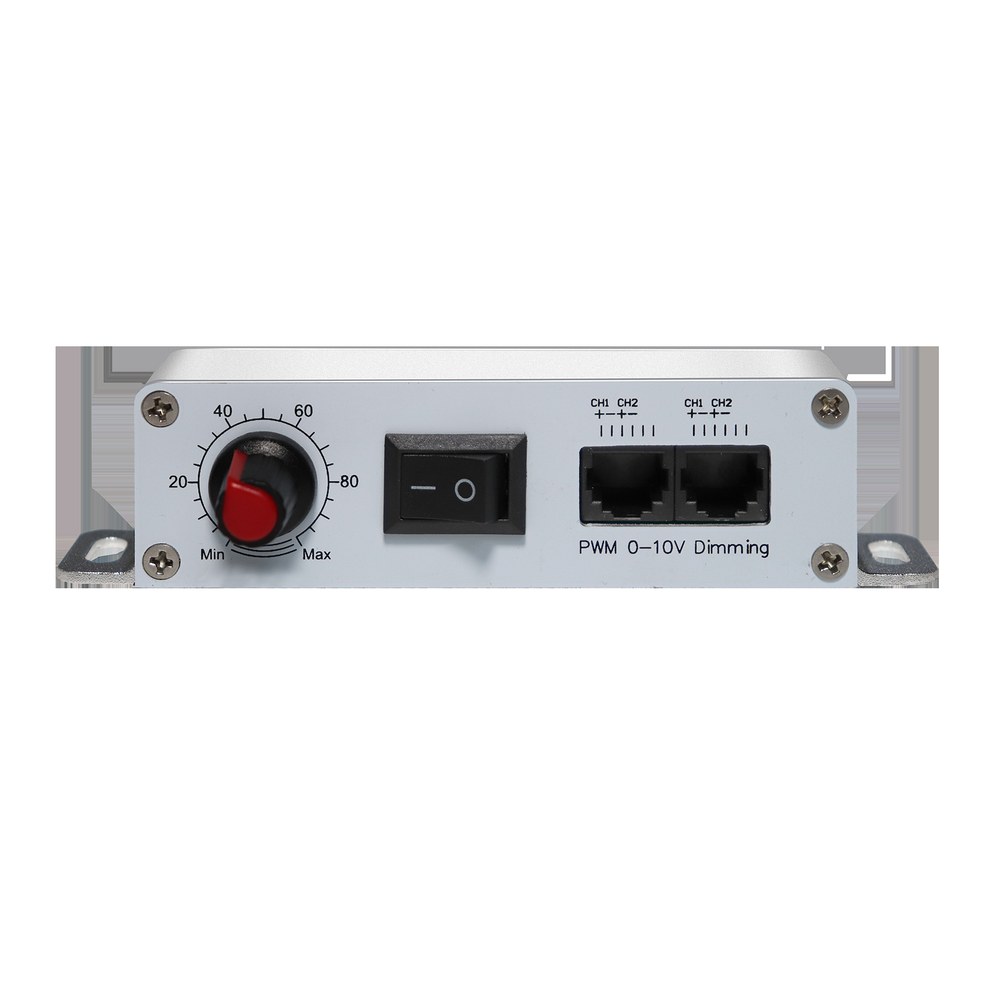
XineLam is a LED lighting manufacturer with 17 years of experience and 300+ patents in China and internationally. We build horticultural luminaires and the control gear that schedules them, including the DM25 dimming controller shown above, and we specify enclosure ratings and driver placement for the room the fixture is actually going into. Installation and protective-device selection remain the responsibility of a licensed electrician working to local code.
Frequently asked questions
Is GFCI protection required for grow lights in a wet room?
For permanently wired fixtures it depends on the electrical code your jurisdiction enforces, which is a question for a licensed electrician. For cord- and plug-connected equipment on temporary wiring, OSHA requires GFCI protection for personnel on 125-volt, single-phase 15-, 20- and 30-ampere receptacles.
Will an IP65 fixture make a GFCI unnecessary?
No. Ingress protection describes how well an enclosure keeps dust and water out of the fixture; a GFCI protects the person who touches a fault. They address different failure modes and neither substitutes for the other.
Why does my GFCI trip when the lights come on?
Usually leakage, not inrush. Moisture in a connector body, a damaged cord, or several drivers leaking a milliamp each can pass the trip threshold as a group. Split the circuit, dry and inspect the connectors, then retest before blaming the device.
How often should a GFCI be tested?
Manufacturers generally call for a push-button test monthly, and OSHA requires cord sets and receptacles on temporary wiring to be tested at intervals not exceeding three months. Pressing the test button is not a substitute for a trip-time measurement with an analyzer.
References
- Occupational Safety and Health Administration. 29 CFR 1926.404, Wiring design and protection (construction). https://www.osha.gov/laws-regs/regulations/standardnumber/1926/1926.404
- Occupational Safety and Health Administration. 29 CFR 1910.304, Wiring design and protection (general industry), including Table S-4. https://www.osha.gov/laws-regs/regulations/standardnumber/1910/1910.304