IP Rating for LED Grow Lights: IP65 vs IP67 in Wet and Humid Rooms
Two fixtures can both be called waterproof and still fail in the same propagation room within a season. The difference is usually not the number on the label but which parts of the fixture the number applies to.
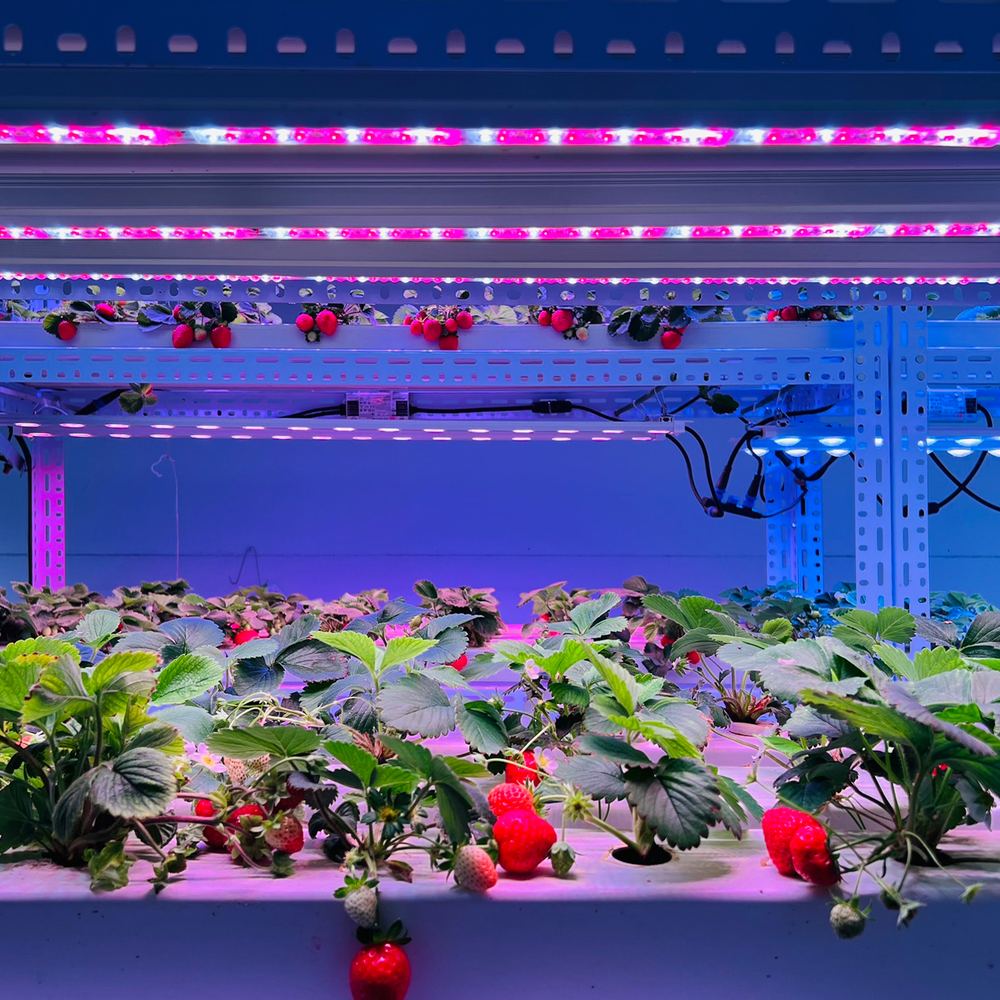
The IP code is one of the few specifications that buyers compare across brands on equal terms, which makes it easy to over-read. It answers a narrow question: how well does an enclosure keep solid objects and water out, under the specific tests of IEC 60529? It says nothing about electrical safety, corrosion, gasket ageing or the behaviour of the connector you plug into the back of the fixture.
What the two digits actually measure
The first digit grades protection against solid objects and access to live parts, from 0 (no protection) to 6 (dust-tight). The second grades water, from 0 to 8, with 9K added through a separate high-pressure cleaning standard. The standard is published as IEC 60529 and adopted nationally in most markets; the US adoption is ANSI/IEC 60529, published by NEMA. A rating therefore has to be read as two independent claims, not one score.
That is why IP65 and IP67 differ in only one dimension. Both are dust-tight. The difference is entirely in how much water the enclosure survives, and for how long.
IP65, IP66 and IP67 under the test nozzle
The water tests are mechanical and repeatable, which is what makes them useful. The figures below are the test conditions defined for each level; they are the numbers a supplier's test report should quote, and the numbers to ask for when a data sheet only says "waterproof".
| Rating | Solids (first digit) | Water test condition | Where it fits in a grow room |
|---|---|---|---|
| IP54 | Dust-protected (5) | Splashing water from any direction, no pressure | Dry propagation racks, sealed climate rooms away from irrigation |
| IP65 | Dust-tight (6) | Water jets, 6.3 mm nozzle, 12.5 L/min, 30 kPa at 3 m, at least 3 minutes | Overhead lighting above drip or ebb-and-flow benches; rooms at 70-85% RH |
| IP66 | Dust-tight (6) | Powerful water jets, 12.5 mm nozzle, 100 L/min, 100 kPa at 3 m, at least 3 minutes | Areas hosed down between crops, fogging and misting zones, wash-down corridors |
| IP67 | Dust-tight (6) | Temporary immersion, 1 m depth for 30 minutes | Deep-water culture rooms, flood clean-up, fixtures mounted low enough to be submerged |
| IP68 | Dust-tight (6) | Continuous immersion, depth and duration agreed between maker and buyer | Submersible or in-reservoir lighting only; rarely relevant to overhead fixtures |
Read the gap between 65 and 66 carefully. The jump from IP65 to IP66 is roughly eight times the water volume at more than three times the pressure. The jump from IP65 to IP67 is a different kind of test altogether. A fixture rated IP67 is not automatically better against a pressure washer, and a fixture rated IP66 is not protected against standing water.
Matching the rating to the room, not to the brochure
In practice, most crop losses attributed to water ingress come from three situations, and none of them needs IP68.
- Overhead irrigation with upward splash. Water rebounds off bench surfaces and pots and reaches the underside of the fixture, where the driver compartment and cable entries usually sit. IP65 covers the jet test at 12.5 L/min, which is well above splash intensity, but only if the cable entry faces down or sideways.
- Fogging and misting. High-pressure fog cools a room quickly and puts fine droplets into the air for minutes at a time. Those droplets behave more like a directed jet than like humidity, and IP66 is the realistic target where fogging runs daily.
- Night-time condensation. This is the case the IP code does not address. A fixture that runs warm during the photoperiod and cools after lights-off will draw moist air inward as the internal pressure falls, and the moisture condenses on the coldest surface, usually the driver housing or the lens. A breathable pressure-equalising vent and a drip loop on every cable solve more of this than a higher second digit.
The rating stops at the housing wall
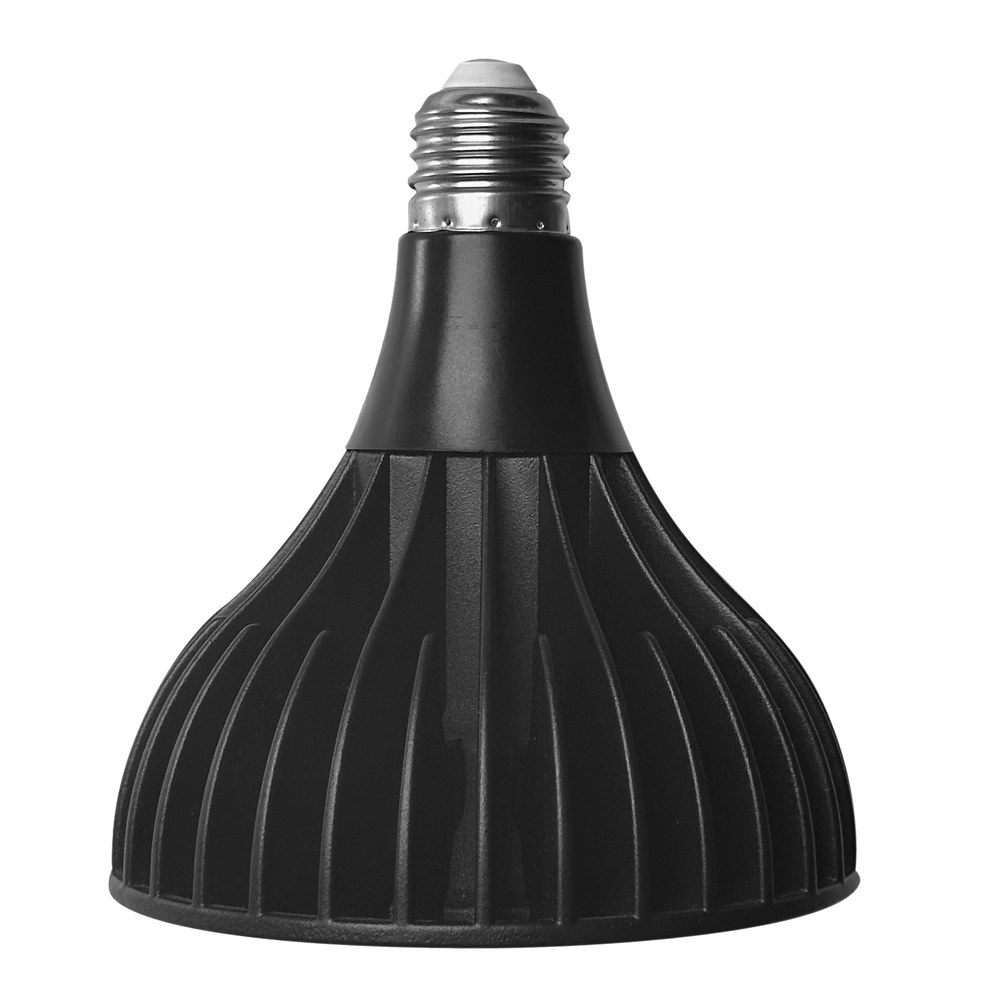
An IP65 housing with an unsealed dimming connector is an IP44 system. The three places where ingress protection is lost in real installations are consistent:
- Cable glands and knock-outs. A gland tightened onto a cable whose jacket is too thin, or a knock-out left open with a blind plug, defeats the enclosure. Glands must be rated for the cable diameter actually used, and unused entries must be closed with the plug supplied by the maker.
- Connectors and daisy-chain links. Push-lock IP65 connectors only reach their rating when fully engaged and locked. A connector left half-turned after a re-lamping job is the single most common field failure, and it is invisible from the aisle.
- Mounting angle. A fixture designed to shed water from its top face will collect it if installed at an angle. Fan-cooled fixtures also move humid air through the housing by design, so their ingress claim depends on the fan and filter being intact.
A practical rule from installation work: treat the fixture rating as the ceiling for the whole assembly, and expect the assembly to score one level lower unless every gland, plug and connector is specified and inspected.
How to check an IP claim before purchase
Ask for the test report rather than the marketing line, and check four things in it. First, the standard cited should be IEC 60529 with the exact level, for example "IPX5", not a generic "waterproof". Second, the report should name the laboratory and the date; a report older than about five years on a product that has since changed its gasket material is not evidence for the current build. Third, the tested sample should be a production unit, not a prototype. Fourth, the report covers the enclosure only, so the electrical safety certificate for the destination market is a separate document and should exist alongside it.
Where a fixture will be installed above an irrigation line, it is also worth asking what the maker specifies for the connector and the driver compartment, since those parts are frequently sourced from other suppliers with their own ratings.
What this means when specifying a room
For a sealed indoor room with drip irrigation, relative humidity between 70 and 85 percent, and no wash-down, IP65 on the fixture plus sealed glands and locked connectors is adequate and is what most commercial propagation rooms use. Where benches are hosed between crops or fogging runs daily, specify IP66 and check that the connectors carry the same rating. Reserve IP67 for genuinely submersible positions, and do not pay for it as a substitute for correct cable routing.
Across the rooms we see, the fixtures that survive five or more seasons are rarely the ones with the highest second digit. They are the ones whose cable entries point down, whose connectors were locked at installation and re-checked at every relamp, and whose drivers sit in a compartment that can breathe.
Frequently asked questions
Is IP67 always better than IP65 for a grow room?
No. IP67 adds 30 minutes of 1 m immersion, which most grow rooms never produce. What matters more is whether cable entries, connectors and the driver compartment are sealed to the same standard, and whether the housing can breathe out condensation. An IP65 fixture with sealed glands and correct cable loops usually outlasts an IP67 fixture with an unsealed dimming connector.
Does an IP rating cover condensation inside the fixture?
No. IEC 60529 water tests apply water from outside the enclosure; condensation that forms inside because of temperature cycling is not part of the classification. In a room that swings between a warm day and a cold night, a sealed housing without a pressure-equalising vent can pull moist air in through the cable gland. A breathable membrane vent plus a drip loop addresses that, an IP number alone does not.
What IP rating do I need above an ebb-and-flow bench?
IP65 is the practical minimum where water only splashes upward and humidity stays below about 85 percent relative humidity. Move to IP66 if the bench is washed down with a hose or a low-pressure sprayer, and to IP67 only where the fixture body can actually be immersed, for example during a flood clean-up or in a deep-water culture room.
Does an IP65 label guarantee the fixture is safe in a wet location?
No. The IP code describes ingress protection of the enclosure and nothing else - not electrical safety, not corrosion resistance, not UV ageing of the gasket. Certification for a horticultural luminaire is a separate assessment under the electrical safety standard that applies in the destination market, and the test report for ingress protection should reference IEC 60529 with the exact test level.
About the publisher
XineLam is an LED lighting manufacturer based in Zhongshan, China, with 17 years of experience in LED lighting and 300+ patents in China and internationally. The company builds horticultural luminaires for greenhouses, vertical farms and controlled-environment rooms, and works with growers on fixture layout, spectrum choice and moisture protection for humid production rooms.
This article is written as general technical guidance. Installation requirements differ by market and by the electrical safety standard that applies locally; the qualified installer and the authority having jurisdiction take precedence over any figure quoted here.
Sources
- International Electrotechnical Commission. IEC 60529:1989+AMD1:1999+AMD2:2013 — Degrees of protection provided by enclosures (IP Code). webstore.iec.ch/en/publication/2452
- National Electrical Manufacturers Association. ANSI/IEC 60529 — Degrees of Protection Provided by Enclosures (IP Code), identical national adoption. nema.org — ANSI/IEC 60529