Optical Silicone vs PMMA vs Glass Lenses in Horticultural LED Lighting: Transmission, Chemical Resistance, and Thermal Stability
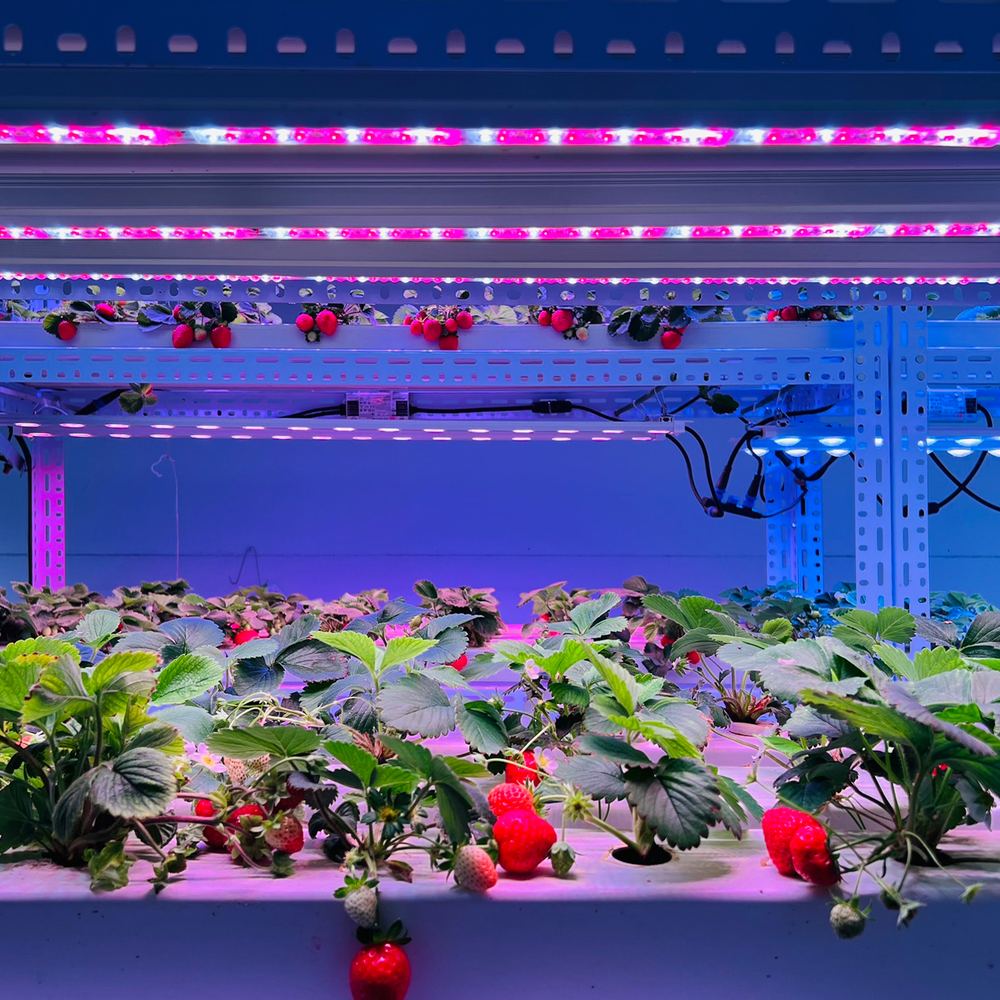
Introduction: The Role of Secondary Optics in Controlled Environment Agriculture
In high-performance horticultural lighting fixtures, secondary optical systems direct emitted photons from light-emitting diodes (LEDs) into the crop canopy, optimizing photosynthetic photon flux density (PPFD, μmol·m-2·s-1) uniformity and minimizing boundary wall losses. While primary packaging lenses establish wide Lambertian emission profiles (typically 120° full-width at half-maximum), secondary lenses shape beam angles (e.g., 60°, 90°, or batwing distributions) required for specific mounting heights in single-tier greenhouses and multi-layer vertical racking systems.
However, greenhouse and indoor vertical farming environments present severe mechanical, thermal, and chemical challenges. High relative humidity (70%–90% RH), thermal junction dissipation from 300W–1000W luminaires, intense photosynthetic active radiation (PAR, 400–700 nm), supplementary far-red (700–750 nm), UV-A flux, and aerosolized agrochemicals (sulfur evaporators, sanitizing peracetic acid, and organic pesticides) continuously degrade optical materials. Selecting between optical grade Liquid Silicone Rubber (LSR), Polymethyl Methacrylate (PMMA acrylic), and Borosilicate Glass requires balancing initial optical transmission, beam-forming precision, chemical resistance, and long-term photon retention over 50,000 operating hours.
Material Comparison: Optical, Physical, and Thermal Properties
Each optical material exhibits distinct molecular architectures that dictate refractive index, thermal boundary limits, and photon transmission spectra across the photosynthetic and photomorphogenic bands:
| Performance Parameter | Optical Silicone (LSR) | PMMA (Acrylic) | Borosilicate Glass |
|---|---|---|---|
| PAR Transmission (400–700 nm) | 92.5% – 94.0% (3 mm thickness) | 92.0% – 93.0% (initial) | 91.0% – 92.5% (uncoated) |
| UV-A Transmission (365–400 nm) | > 91% (no degradation) | Drops sharply < 380 nm; photo-yellowing | > 91% down to 320 nm |
| Refractive Index (nd at 589 nm) | 1.41 – 1.43 | 1.49 | 1.47 – 1.51 |
| Fresnel Reflection Loss (Per Surface) | ~2.9% (Lowest optical loss) | ~3.9% | ~3.6% – 4.1% |
| Continuous Service Temperature | -40°C to +180°C (peaks to 200°C) | -30°C to +85°C (Heat deflection 90°C) | -50°C to +450°C |
| Vaporized Sulfur / Pesticide Resistance | High chemical inertness; permeable | Prone to stress cracking & hazing | Completely impermeable & inert |
| Weight & Mechanical Robustness | Elastic, shatterproof, lightweight | Rigid, shatter-resistant, lightweight | Heavy, brittle, requires gaskets |
| Freeform Optical Molding Capability | Injection liquid molding (micro-arrays) | Precision injection molding (TIR) | Press molding / grinding (limited) |
Spectral Transmission and Fresnel Reflection Dynamics
Photon transmission efficiency through an optical element is governed by bulk internal absorption and Fresnel reflection losses at material-air boundaries. Fresnel reflection loss R for normal incident light is expressed by:
R = ((n - 1) / (n + 1))2
Because optical silicone has a lower refractive index (n ≈ 1.412) compared to PMMA (n ≈ 1.491) and borosilicate glass (n ≈ 1.505), single-surface reflection loss is reduced to 2.91%, compared to 3.89% for PMMA. Over a two-surface lens element without costly anti-reflective coatings, optical silicone transmits up to 1.9% more total photosynthetic photons directly to the crop canopy.
Chemical Resistance and Agrochemical Exposure in Greenhouses
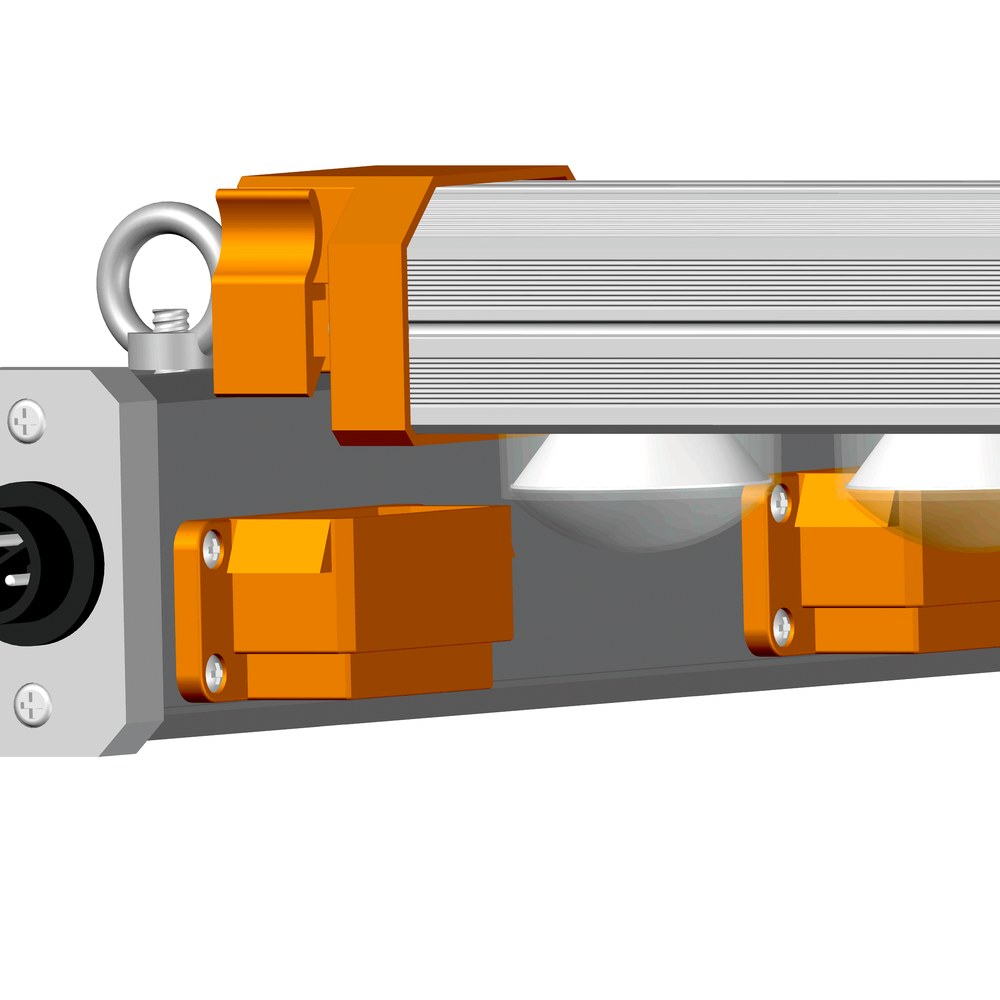
A critical degradation mechanism in commercial CEA facilities is chemical fouling. In commercial greenhouse cultivation, sulfur evaporators are routinely utilized to vaporize elemental sulfur (S8) for powdery mildew control. Hot sulfur vapor and acidic cleaning aerosols (such as quaternary ammonium and hydrogen peroxide formulations) interact aggressively with optical polymers:
- PMMA Acrylic: Susceptible to Environmental Stress Cracking (ESC). When exposed to airborne agrochemical carriers under thermal tension, polymer ester linkages undergo crazing and microscopic cracking. This surface haze permanently diffuses photons and drops usable PPFD output by 6%–12%.
- Optical Silicone (LSR): The polydimethylsiloxane (PDMS) silicon-oxygen (Si-O-Si) inorganic backbone provides high chemical inertness. It does not craze, stress-crack, or oxidize when exposed to sulfur vapor or ozone, preserving lens clarity across multi-year growing cycles.
- Borosilicate Glass: Borosilicate glass offers complete chemical impermeability and non-reactivity. It is immune to all commercial horticultural agrochemicals, but requires elastomeric sealing gaskets that must independently withstand chemical degradation.
Thermal Boundaries and Micro-Lens Array Integration
With modern horticultural fixtures delivering luminaire efficacies above 2.8 to 3.5 μmol·J-1, high-power SMD packages (such as deep red 660 nm and phosphor-converted white LEDs) generate concentrated localized heat fluxes. While aluminum heat sinks dissipate bulk heat, lens surfaces in proximity to LED junction chips operate at 70°C–105°C.
PMMA lenses deployed near high-power LED arrays risk approaching their heat deflection threshold (85°C–90°C), resulting in micro-warping that distorts calculated photometric beam angles. Optical silicone maintains elastic modulus and dimensional stability up to 180°C continuous operation, enabling direct-contact encapsulation and micro-lens molding that eliminates the internal air gap entirely, boosting photon extraction efficiency by 3%–5%.
Frequently Asked Questions
What causes secondary optical lenses to yellow or lose transmission over time in greenhouse environments?
Lens degradation in greenhouse environments is primarily driven by three interacting stressors: high UV-A/blue photon flux combined with elevated ambient temperatures, chemical attack from volatilized agrochemicals (such as vaporized sulfur used for powdery mildew control), and thermal cycling near the LED junction. Standard thermoplastic PMMA degrades via photo-oxidation when exposed to UV radiation below 380 nm, causing polymer chain scission and visible yellowing that reduces PAR photon transmission by 4% to 8% within 20,000 operating hours. Optical grade liquid silicone rubber (LSR) and borosilicate glass are chemically inert and UV-stable, maintaining optical transmission above 92% across 50,000+ hours.
Can optical silicone lenses withstand high-temperature junction proximity in high-power COB LED fixtures?
Yes. Optical grade liquid silicone rubber (LSR) possesses exceptional thermal stability with continuous operating ratings between 150°C and 200°C without mechanical warping, optical discoloration, or cracking. Because high-power chip-on-board (COB) and high-density SMD LED arrays frequently operate at solder point temperatures exceeding 85°C to 105°C, optical silicone can be molded directly adjacent to or over the semiconductor dies without the thermal deformation risks inherent to PMMA (heat deflection temperature ~85°C to 95°C).
Why does PMMA acrylic crack or craze when exposed to greenhouse cleaning agents and pesticide aerosols?
PMMA acrylic is a rigid thermoplastic vulnerable to environmental stress cracking (ESC) when residual internal molding stresses interact with solvent molecules, surfactants, or pesticide carriers containing esters, ketones, or aromatic hydrocarbons. When cleaning agents or pesticide mists settle on warm PMMA lenses under mechanical tension, micro-fissures (crazing) rapidly nucleate on the surface, scattering light and permanently reducing photon delivery to the plant canopy.
How does refractive index difference affect photon extraction efficiency and optical beam shaping?
The refractive index (n) determines surface Fresnel reflection losses according to R = ((n - 1) / (n + 1))^2 and dictates the critical angle for total internal reflection (TIR). Optical silicone has a refractive index of n ≈ 1.41–1.43, resulting in low Fresnel reflection losses of ~2.9% per surface, compared to n ≈ 1.49 for PMMA (~3.9% reflection loss per surface) and n ≈ 1.50 for borosilicate glass. However, PMMA's higher refractive index allows tighter beam shaping in compact total internal reflection (TIR) optical collimators.
Academic and Industry Standards References
- DesignLights Consortium (DLC) — Horticultural Lighting Technical Requirements and Testing Laboratory Specifications: https://designlights.org/our-work/horticultural-lighting/technical-requirements/testing-lab-requirements/
- Utah State University Crop Physiology Laboratory (Extension USU) — Analysis of Secondary Optics and Photon Distribution in Horticultural Fixtures: https://extension.usu.edu/apec/files/publications/publication/pub__8264567.pdf