Why Do LED Grow Lights Corrode in Greenhouses?
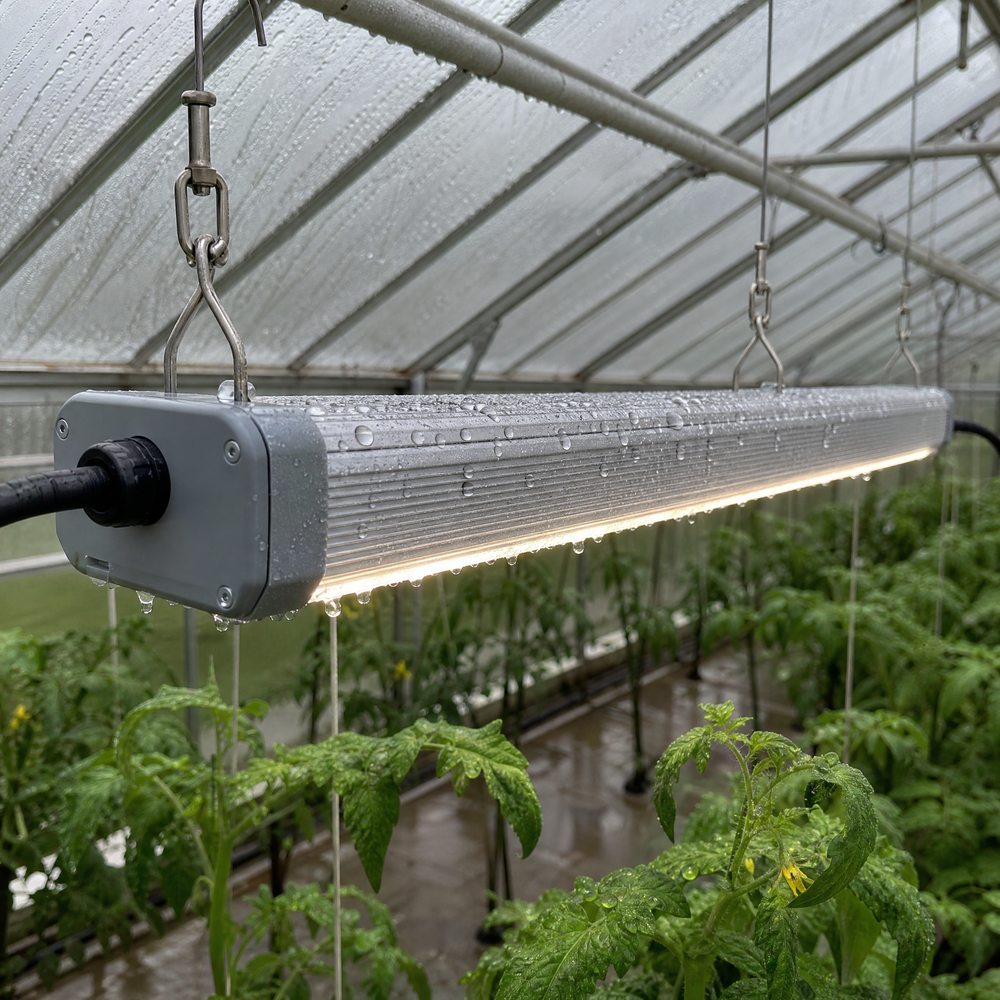
A grow light can carry an IP66 label, pass its jet test, and still be scrap metal after two seasons in a working greenhouse. The reason is that the IP code and the corrosion process measure different things. Ingress protection asks whether water gets inside the housing. Corrosion asks what that water contains, how long it sits on a surface, and which two metals it is bridging.
The IP code does not test chemistry
An IP rating follows IEC 60529 and tests solid objects and water: dust-tight, jet-proof, immersible. Nothing in that test involves salt, sulphur dioxide, fertiliser solution or cleaning chemicals, and nothing in it measures how fast a surface loses metal. Enclosure standards such as NEMA 250 address part of the gap — NEMA 4 is watertight, and NEMA 4X adds resistance to corrosion, as the Steel Tube Institute chart summarises. That is why a datasheet can honestly say “IP66” and say nothing at all about whether the fixture will survive a sulphur programme.
The installation rules point the same way. OSHA’s wiring requirements for damp and wet locations call for enclosures that prevent moisture from entering and accumulating, with an air space behind them. Those clauses exist because standing water is the mechanism: a film of water that stays in contact with a joint, a screw thread or a cut edge is where the metal goes.
The four corrosion loads in a greenhouse
Most greenhouse corrosion is not one process but a rotation of four, and a fixture that resists three of them can still fail on the fourth.
| Exposure | Dominant agent | Where it attacks first | Specification response |
|---|---|---|---|
| Nightly condensation | Water film plus dissolved oxygen | Screw heads, cut edges of extrusions, driver terminals | Drain path on the top surface, sealed cut edges, anodised 6063 extrusion |
| Sulphur evaporators, SO2 | Acidified condensate | Bare aluminium, brass, plated steel fasteners | Anodised surfaces, A4 stainless, sealed driver compartment |
| Fertiliser and irrigation water | Chloride and nitrate salts | Crevices under gaskets, 304 stainless, unprotected copper | 316 stainless in chloride zones, isolating washers, tinned copper |
| Acid sanitation, chlorine | Oxidisers | EPDM gaskets, powder-coat edges, printed labels | Silicone gaskets, full-coverage coating, laser marking instead of labels |
Why the stainless screws are often the first failure
The classic greenhouse failure is not a rusted housing; it is a housing whose fasteners have seized or whose threads have corroded. Two mechanisms do most of the damage. The first is galvanic coupling: a stainless screw in an aluminium body forms a small, intense cell when a water film connects them, and the aluminium around the thread is consumed. The second is crevice corrosion: the gap under a gasket or between two profiles holds stagnant water with a different oxygen concentration from the surrounding surface, and that difference drives the attack.
The practical answers are unglamorous. Use isolating washers or a plated fastener where dissimilar metals meet, specify A4 / 316 stainless rather than A2 / 304 in chloride zones, seal or anodise cut edges rather than leaving bare metal at the end of a profile, and design the mounting so water runs off instead of standing in a joint. None of these change the IP number on the box; all of them change whether the fixture can be opened in year three.
What else fails before the extrusion does
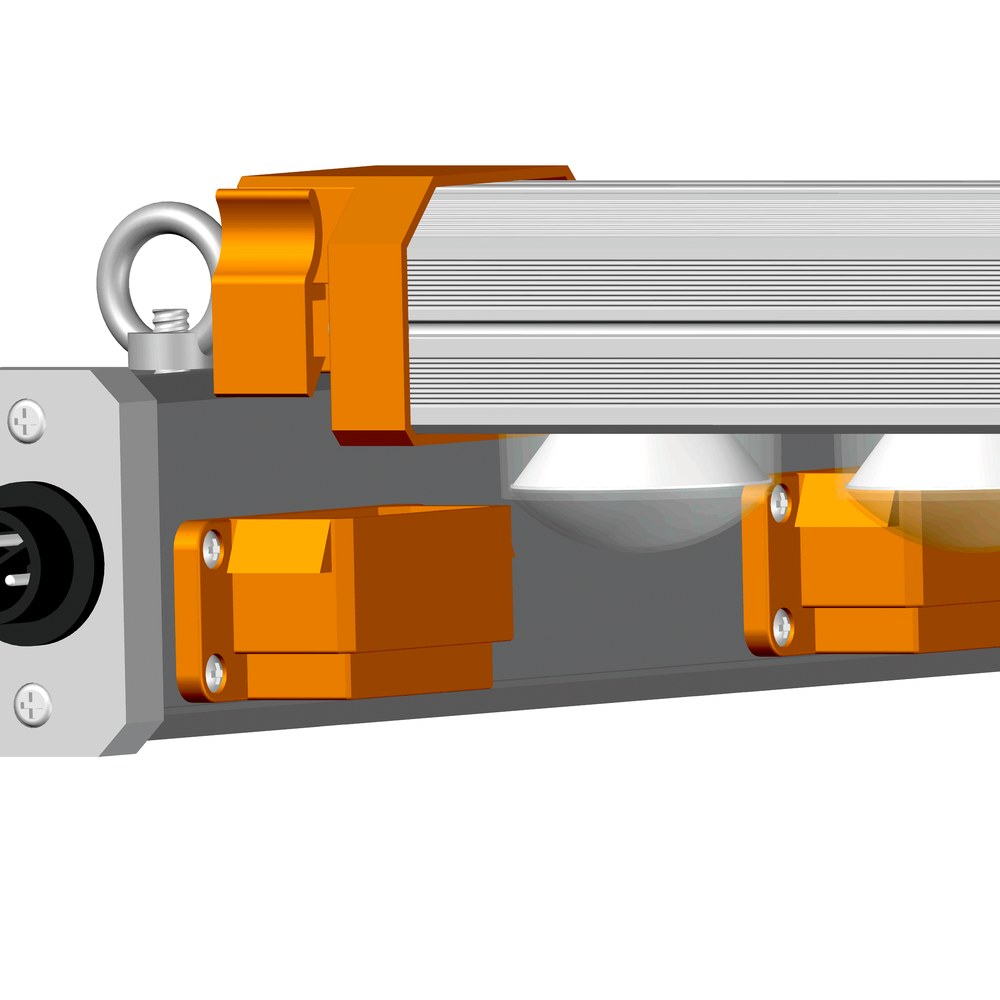
- End-cap gaskets. A compressed flat gasket takes a set and does not recover; once water passes, the interior of the profile becomes a trough. Silicone tolerates heat and UV better than EPDM in most horticultural conditions, but both need replacement intervals.
- Driver terminals and PCB edges. Sulphur and chloride reach the driver compartment through the same cable entry that lets cable in. Conformal coating on the board and a potted or gasketed compartment are the defence.
- Powder-coat edges and fastener seats. Coating is thinnest where a part was cut or drilled; that is exactly where a corrosion cell starts. Masking quality matters more than film thickness on the flat faces.
- Reflectors and optical films. Metallised reflectors can haze or lift at the edges long before the LEDs themselves lose output, which shows up as a slow loss of uniformity rather than an obvious failure.
What to write into a specification
- Both ratings: the IP rating for water, and a corrosion statement — for example NEMA 4X, or a named salt-spray test with hours and method. “Anti-corrosion” without a test is marketing.
- Materials by name: 6063-T5 anodised extrusion, A4 / 316 stainless fasteners in chloride zones, silicone gaskets, tinned copper conductors.
- Chemistry on site: tell the supplier whether sulphur evaporators, chlorine-based sanitisers or ammonia sources are used, because gasket and coating choices follow from that answer.
- Serviceability: fasteners that can be opened after three seasons, spare gaskets available, and a stated replacement interval for seals.
- Drainage: a mounting angle or channel so condensate leaves the fixture instead of pooling on it.
Maintenance that actually delays corrosion
Inspection twice a year, at the change of season, catches most of it: look at screw heads, end caps and the underside of the driver compartment for white or green deposits, and replace gaskets rather than re-tightening them. Rinse dust and fertiliser residue with clean low-pressure water — a dry brush pushes salt into crevices — and avoid acid descalers on anodised surfaces. Where a fixture is already showing deposits at the fasteners, the useful question is not whether it still lights, but whether it can still be opened for service.
About the publisher
XineLam is the horticultural and architectural LED lighting brand of Zhongshan Koray Opto-Electronic Co., Ltd. The company has 17 years of experience in LED lighting and holds 300+ patents in China and internationally. Its grow-light range includes sealed linear fixtures and top-lighting modules built on anodised aluminium extrusions, with enclosure, fastener and gasket options specified per project for humid and chemically active greenhouses.
Frequently asked questions
If a grow light is IP66, can it still corrode?
Yes. The IP code tests dust and water ingress only; it says nothing about salt, sulphur, fertiliser or cleaning chemicals. A sealed housing can keep water out and still corrode at its fasteners and cut edges, because the corrosion happens on the outside surfaces and in the crevices.
Which is better for a greenhouse, NEMA 4 or NEMA 4X?
NEMA 4 is watertight; NEMA 4X adds resistance to corrosion. For a greenhouse that runs sulphur evaporators, uses chloride fertilisers or sits near the coast, 4X is the more relevant claim, and it should be backed by a test method rather than a marketing phrase.
Why do the stainless screws fail before the aluminium body?
A stainless fastener in an aluminium extrusion creates a galvanic couple as soon as a water film connects the two, and the aluminium around the thread is consumed. Crevice corrosion under the screw head adds to it. Isolating washers, plated fasteners or a matched material pair reduce the effect.
Can I just replace the fixtures every few years instead of specifying better materials?
That is a legitimate choice, but it should be costed honestly: replacement includes access equipment, disposal, and the risk that a seized fastener turns a lamp swap into a bracket replacement. Where access is difficult, specifying 316 stainless and silicone seals usually costs less over the service life than two replacements.
Sources
- Steel Tube Institute, Understanding NEMA Ratings: definition, NEMA chart and FAQs (NEMA 4 watertight, NEMA 4X adds corrosion resistance) — https://steeltubeinstitute.org/resources/understanding-nema-ratings-definition-nema-chart-and-faqs/
- U.S. Occupational Safety and Health Administration, 29 CFR 1910.305 — wiring methods and enclosures for damp or wet locations — https://www.ecfr.gov/current/title-29/section-1910.305