LED Grow Light Bars vs Panels: Which Form Factor Fits Your Grow Space?
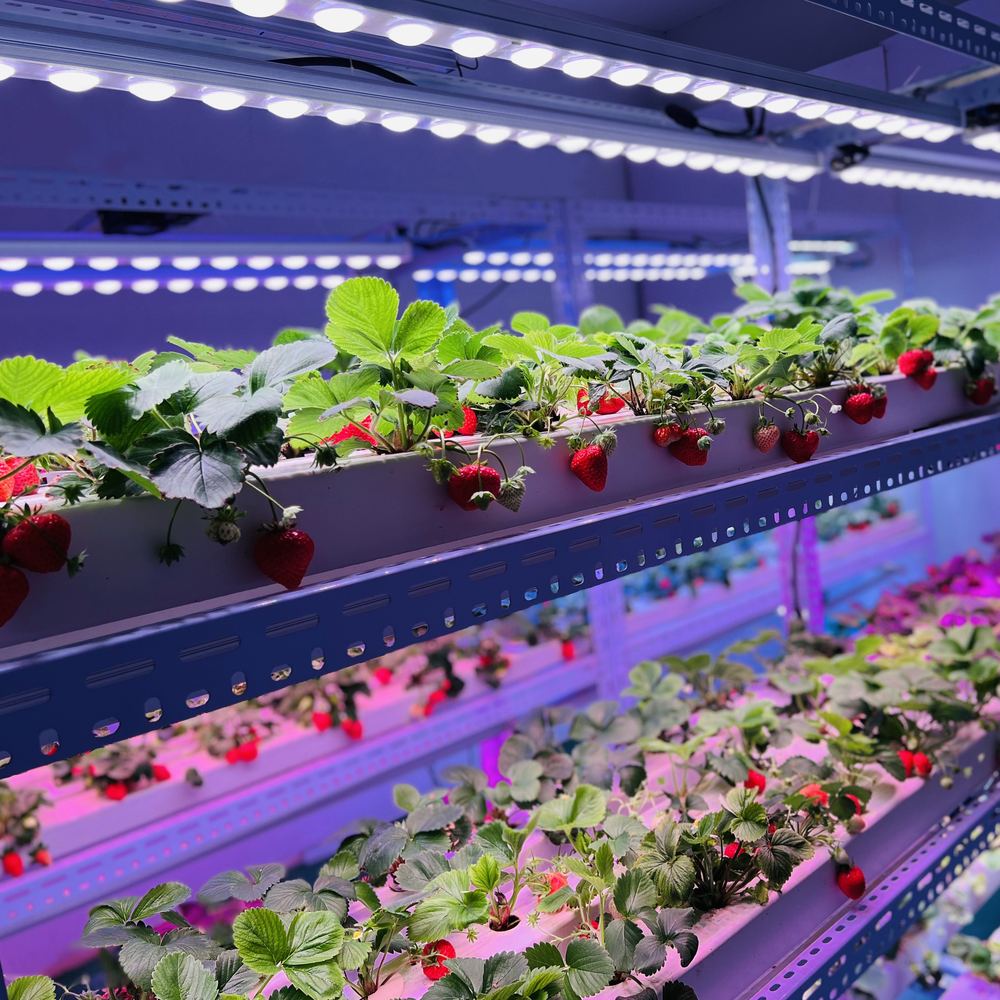
Bar and panel grow lights are usually compared on wattage, efficacy and price. Those numbers matter, but they are not what separates the two formats in a real room. The difference that decides whether a layout works is the shape and size of the surface the diodes are mounted on, because that fixes how the light spreads before any of the electrical figures are considered.
What actually changes when the form factor changes
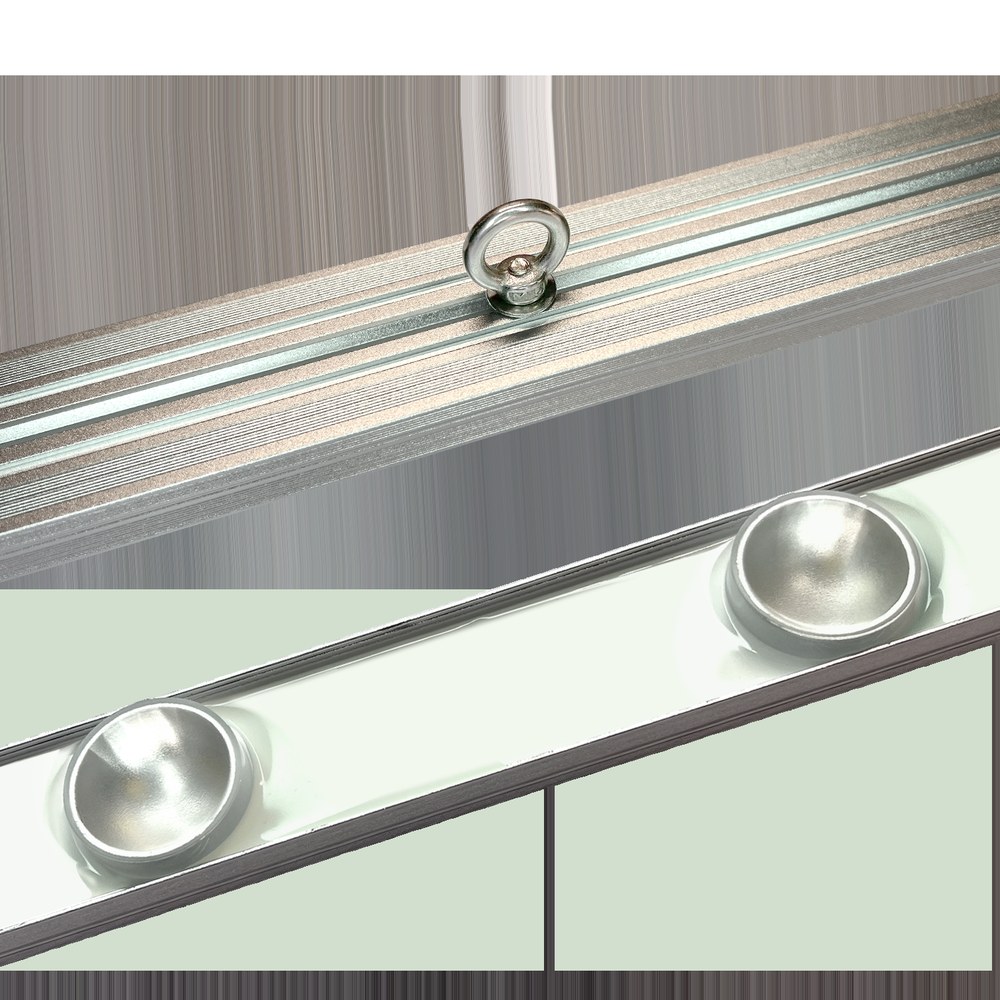
A bar fixture is a long, narrow strip with diodes distributed along its length. A panel or board fixture is a compact rectangle with diodes packed across a flat surface. Both can be built from the same diodes, run off the same driver topologies and quote the same efficacy.
What differs is the emitting area. Spreading the same number of diodes along a line rather than concentrating them in a block changes the shape of the beam that leaves the fixture, the rate at which intensity falls away towards the edges of the lit area, and how readily two neighbouring fixtures can be made to overlap. Everything else in the comparison follows from that.
Why distribution is the metric to watch
Uniformity is not a secondary concern behind intensity. Research on controlled environment agriculture treats a uniform photon irradiance distribution above the canopy as a fundamental design goal, and points out the consequence of getting it wrong: where photon irradiance varies spatially and the crop is below its light saturation point, individual plants develop differently, which reduces the value of the crop. A layout that delivers a high average with a weak corner produces uneven plants and wastes the energy spent on the brightest area.
Distribution is also the part of a specification that is hardest to recover later. A fixture that is too small for its spacing can be supplemented with another fixture, but a room whose ceiling height cannot accept a wider-spread fixture has a fixed constraint that no dimmer setting will solve.
Bars and panels, dimension by dimension
The table below compares the two formats on the structural consequences of emitting geometry. It describes how each format behaves as a design starting point, not measured performance of any specific product — absolute numbers depend on the fixture, the mounting height and the room.
| Dimension | Linear bar fixtures | Panel / board fixtures |
|---|---|---|
| Emitting geometry | Diodes spread along a narrow strip, so the emitting area is long and thin. | Diodes packed across a compact rectangle, so the emitting area is concentrated. |
| Beam shape leaving the fixture | Wider and more diffuse in the axis across the bar. | More directional, with a stronger centre. |
| Edge drop at the lit boundary | Gentler, because intensity falls away from a line rather than a point. | Steeper at the same mounting height, because the footprint contracts towards the board outline. |
| Behaviour at low mounting height | Degrades more slowly, which suits low ceilings and racks. | Needs height or a denser layout to flatten out. |
| Overlap between adjacent fixtures | Cheap to achieve: narrow strips can be interleaved and their spread crosses over. | Overlap happens mainly at the edges, so spacing between panels is less forgiving. |
| Effect on airflow | Open geometry leaves gaps between bars, so air moves through the canopy. | A large flat surface can blanket the canopy, which puts more weight on moving air deliberately. |
| Installation | More lengths, connectors and hanging points to plan and level. | Fewer units, fewer fixing points. |
| Best-fit space | Height-limited rooms, multi-tier racks, benches and narrow bays. | Open rooms with generous height and a single wide canopy. |
| Maintenance | Several narrow surfaces to clean and inspect. | Fewer, larger surfaces. |
Where linear bars win
- Low rooms and racks. When the distance from fixture to canopy is short, a format that spreads light across a line keeps the edges of the bench closer to the centre. Multi-tier production racks are the clearest case, because each tier has its own hard height limit.
- Benches and narrow bays. A bench has a length that is much greater than its width. Running bars lengthwise follows the shape of the growing area instead of fighting it.
- Overlap-intensive layouts. Where a target uniformity has to be reached by overlapping several units, narrow strips can be interleaved until the coverage is continuous.
- Rooms where heat must not be trapped. Spacing fixtures apart leaves an air path through the canopy, which makes climate control easier to manage.
Where panels win
- Generous ceiling height. Given enough distance, a panel's footprint widens and its distribution flattens, and the concentration advantage becomes less of a penalty.
- Square, open canopies. A single wide area under a high ceiling needs fewer fixing points and less cable routing.
- Fewer units to install and service. Fewer housings and drivers mean fewer connection points to check over a season.
- Rooms with active air movement. If air is already being moved deliberately through the canopy, the blanketing effect of a large flat surface is easier to offset.
The arithmetic that decides the layout
Two calculations settle most bar-versus-panel questions before any product is compared.
First, how many emitting lines fit across the width. A bench 1.2 m wide fitted with four bars laid lengthwise gives one line every 0.3 m across the width. The wider each bar's useful spread at the chosen mounting height, the more those four lines overlap each other, and the flatter the distribution across the bench.
Second, whether that spread actually overlaps. If a bar at its mounting height spreads useful light across a band wider than its spacing, neighbouring bars overlap and the profile between them fills in. If the band is narrower than the spacing, there will be a dip between every pair of bars and the layout needs either closer spacing, a lower mounting height, or a denser fixture.
A short selection procedure
- Measure the growing area and the usable height. For a rack, that is the clear distance between the shelf and the canopy at its tallest, not the shelf pitch.
- Decide the geometry. Long and narrow area with limited height points to linear bars; a square area with real headroom can use either.
- Fix the number and spacing of emitting lines from the width of the growing area.
- Check that the spread at the chosen heights overlaps. This is the step that is usually skipped.
- Only then match photon output. Convert the target daily light integral into the photon flux needed over the area, given the photoperiod, and select fixtures that reach it in the chosen geometry.
- Verify with a measurement. A grid of readings across the canopy, taken at the installed geometry, is the only way to confirm what the layout actually delivers.
What to ask a supplier
- A photon flux distribution measured on the actual fixture, at stated mounting heights, rather than a single centre-point figure.
- The recommended mounting height range and the intended spacing, so the geometry can be checked before ordering.
- Whether the product is a complete luminaire or a module, which is the distinction that qualified-product programmes draw when they assess eligibility.
- The efficacy at the fixture level, measured to a stated standard, rather than the figure for the bare diodes inside it.
About the publisher
Zhongshan City Ruixian Electronics Factory (XineLam) has 17 years of experience designing and manufacturing LED lighting, and holds 300+ patents in China and internationally. This article is written as technical reference material for growers and specifiers, not as a product brochure.
Frequently asked questions
Are bar grow lights better than panel grow lights?
Neither format is better in general. Bars distribute light along a line and tolerate short mounting distances, which suits racks, benches and low rooms. Panels concentrate output on a compact surface and suit square canopies with enough height for the footprint to widen. The room geometry decides.
Do bar grow lights penetrate the canopy better?
Penetration depends on the angle of the light reaching the lower leaves and on the canopy density, not on the housing shape. What bars do reliably is overlap more easily at a given spacing, which reduces the weak zones between fixtures that are usually described as poor penetration.
How far apart should grow light bars be spaced?
Space them so that the useful spread of each bar overlaps the next at the chosen mounting height. If the spread is wider than the spacing, the profile between bars fills in; if it is narrower, there will be a dip between every pair. The only reliable answer comes from a distribution measurement at that height.
Can I mix bars and panels in the same room?
Yes, and it is sometimes the right answer in a room with an irregular layout. The caution is that mixing formats makes the distribution harder to predict, so a measurement grid across the whole canopy becomes necessary rather than optional.
Does a higher wattage fixture give a more even spread?
No. Wattage changes how much light is emitted, not the shape of the distribution. Adding power to a fixture with a concentrated footprint makes the centre brighter and does not close the gap at the edges. Evenness is a geometry problem.
Sources
- Horticulturae (MDPI), Characterizing the Spatial Uniformity of Light Intensity and Spectrum in Controlled Environment Agriculture.
- Illuminating Engineering Society, Lighting Uniformity in Horticulture.
- Oklahoma State University Extension, LED Grow Lights for Plant Production.
- DesignLights Consortium, Horticultural Lighting Technical Requirements.